
About Bruno Hussar
Lived 1911 – 1996 (aged 84). Bruno Hussar was an Israeli catholic priest, friar and order of Preachers, known for Christian Zionism, Jewish-Catholic relations and Neve Shalom.
Bruno Hussar (, ; 5 May 1911 – 8 February 1996) was the founder of Neve Shalom / Wahat al-Salam ("Oasis of Peace"), an Arab/Jewish village in the no man's land between Israel and Palestine, dedicated to coexistence. Hussar derived the name from the book of Isaiah (32:18): "My people shall dwell in an oasis of peace". Born in Cairo, he converted to Roman Catholicism while studying engineering in France. He was a genuinely 'transnational, transcultural and multilingual' individual.
Before he founded the village, Hussar established the House of Isaiah in Jerusalem, a Jewish-Catholic ecumenical study centre. He came to Jerusalem to establish this institution in 1952. For many years, he was also a leader and priest for the Hebrew Christians, a tiny congregation of Hebrew-speaking Catholic residents and Israeli Jewish converts to Catholicism.
Early life and education He was born, André, in Egypt in 1911, the son of a Hungarian father and a French mother, both assimilated Jews. He grew up speaking several languages and used to call himself a "man with four identities". On completing his secondary schooling at the Italian School in Cairo, he moved with his family to Paris, where he studied engineering. During his university studies, he was drawn to studying the problem of the nature of evil, and the figure of Jesus, and converted to Christianity. He received his French nationality in 1937. He encountered considerable difficulties with the Latin Catholic Hierarchy of the Holy Land, whose members were predominantly of Arab origin, and assisted in the establishment of the St. James Association to cater to the minority of Jewish Catholics, a year later, on 14 December 1954, who were viewed with suspicion by Palestinian Catholics and marginalised by Israeli Jewish society. Worries existed about the reactions of the nearby Arab villagers, and of the Israeli government, though the abbot of the Latrun monastery, Elie Corbisier, was enthusiastic. Hussar, assisted by letters to the Pope written by Rina Geftman, sought not patronage, but formal authorisation for his projected Yishuv Neve Shalom from the then Latin Patriarch of Jerusalem, Alberto Gori (1949–1970), who was opposed to the plan. A feasibility study by the Patriarchate advised against the project, but Hussar and Corbisier went ahead, signing a lease on 6 November 1970, and implemented it, despite resistance from the new head of the Jerusalem Patriarchate, Giacomo Giuseppe Beltritti.
NSWAS - the name came from a phrasing in Pope Paul VI's address bidding Israel's then-president Zalman Shazar farewell on January 5, 1964 - began to be developed on 400 dunams of land, under harsh pioneering conditions, by some ten members of the same group in 1970, though the first families only arrived in 1976. With the advent of Israeli Jewish and Palestinian Arab families after 1976, and the moral and financial support of Friends of NSWAS in France, Italy, Switzerland and Belgium, the community began to grow. Wellesley Aron and his wife joined the village in 1980. In his later years, Hussar withdrew there, returning to his foundational notion of a place where prayer and meditation would play a formative role within his community, as the point of conjunction between the three Abrahamic faiths. He was even more culturally ecumenical, learning from a Japanese priest how to perform mass while practising zazen. He was to break his retreat into silence on hearing of the news of the Assassination of Yitzhak Rabin, which struck him as putting an end to illusions created by the peace previously envisaged as a result of the Oslo I Accord. He interpreted the assassination biblically as a sign of aharit ha-yamim, the end of days, and 'a major step forward in the march of the Jewish people towards messianic fullness. . .when the Jews and the Gentiles, trees that complement God’s single olive tree, will be united in the same praise.'
Death and heritage On the occasion of Brother Hussar's death, 8 February 1996, and burial at Neve Shalom, thousands of people only from Israel, gathered at NSWAS. Hussar was nominated in successive years (1988, 1989) for the Nobel Peace Prize. Until 1989, the village lacked recognition as an Israeli village, but in September of that year the Israeli Ministry of the Interior finally granted it that legal status. Difficulties arose in the increasingly conflicted years that followed, esp. during the Al Aqsa Intifada, as NSWAS found itself isolated, unable to forge significant connections with either Israeli or Palestinian society. His friend of long-standing Dubois, went on record as stating that both he and Hussar, in embarking on a naïve adventurous Zionism, had 'completely denied the Palestinian tragedy'.
Works Autobiography: When the Cloud Lifted
Don’t just read it —
keep it.
Full-length biographies made to live with: read them, listen on the way to work, watch them tonight.
- E-book
- Audio
- Video
Instant download · yours to keep · every purchase keeps this site free
Important facts
People in Bruno Hussar's life
Named in this biography and alive at the same time

Related people
Same field, nearest in time


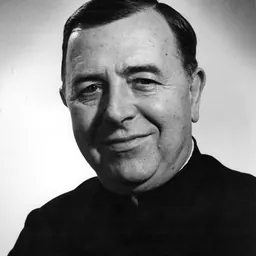
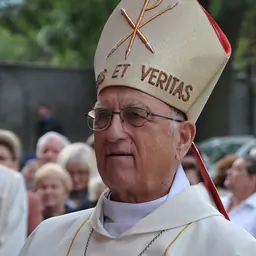
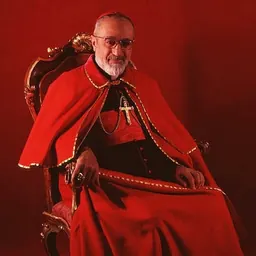
Contemporaries
People whose lives overlapped Bruno Hussar's






Frequently asked questions
Who was Bruno Hussar?
Egyptian Dominican (1911-1996)
When was Bruno Hussar born?
Bruno Hussar was born on 5 May 1911 in Cairo.
When did Bruno Hussar die?
Bruno Hussar died on 8 February 1996 in Jerusalem.
What was Bruno Hussar's occupation?
Bruno Hussar was a catholic priest, friar and order of Preachers.
What was Bruno Hussar known for?
Bruno Hussar was known for Christian Zionism, Jewish-Catholic relations and Neve Shalom.
What nationality was Bruno Hussar?
Bruno Hussar was Israeli.
Sources & further reading
Cite this page
APA: Biography.guide. (2026). Bruno Hussar. https://biography.guide/bruno-hussar/
MLA: "Bruno Hussar." Biography.guide, https://biography.guide/bruno-hussar/.
Chicago: "Bruno Hussar." Biography.guide. https://biography.guide/bruno-hussar/.
Data last updated: 2026-09-22 · Spot an error? Report a correction.
Page generated 2026-09-27 05:22 UTC