
About Bruce Woodcock
Lived 1921 – 1997 (aged 76). Bruce Woodcock was a British boxer.
Bruce Woodcock (18 January 1920 – 21 December 1997) was an English professional boxer who held the Great Britain, British Empire and European heavyweight titles from 1945-1950. He fought unsuccessfully for the BBBofC/EBU versions of the World Heavyweight Championship in 1950. In 2017, Woodcock (1942-1950) was ranked No. 9 on the Top 10 Greatest British Heavyweights of All Time.
Bruce Woodcock used his initials (B.W.) to add "Best Wishes" to autographs for fans. At 6 ft tall and weighing 190 lbs, his physique was shredded like a modern bodybuilder (David Laid). Woodcock was known as a skilled and aggressive boxer with an overhand right knockout punch. He finished with a record of 35 wins (31 KOs/88.57%) and 4 losses.
Biography Early life and amateur career Born in Doncaster, West Riding of Yorkshire in 1920 and brought up in Balby, Woodcock took up boxing at the age of 6, and was a schoolboy champion at the age of 12. He went on to work as a railway fitter in the L.N.E.R. loco sheds, joining the attached amateur boxing club. In 1938-39, he won the Northern Counties light heavyweight championship, qualifying for the ABA finals at the Royal Albert Hall in 1939, which he also won, beating A. Ford in the final. He represented England at the 1939 European Amateur Boxing Championships in Dublin, losing to Franciszek Szymura of Poland in the semi-final, and to Lajos Szigeti of Hungary in the third place bout. winning all of his first 20 bouts, 19 by stoppage, including a third-round knockout of Jack Robinson to take the BBBofC Northern Area cruiserweight title in September 1942 and a win over Canadian champion Al Delaney in October 1944. He held the Northern Area title until relinquishing in October 1944.
In September 1945, Woodcock was ranked third in the world by The Ring magazine, behind Tami Mauriello and Jimmy Bivins.
Woodcock won his next four bouts, including a win over Irish champion Martin Thornton, before suffering his first loss, by TKO at the hands of the vastly more experienced Mauriello at Madison Square Garden in May 1946. He bounced back from this by defeating Freddie Mills on points in June, before winning the European title by knocking out Paul Albert Renet in the sixth round in July. Woodcock went on to win his next three fights, stopping Gus Lesnevich in September, before rounding out the year by knocking out French champion Georges Martin in November and stopping Nils Andersson in December.
In March 1947, he successfully defended his European title against Stephane Olek, but a month later suffered his second loss, against Joe Baksi at the Harringay Arena in a fight billed as a final eliminator for the World title. He was floored three times in the first round and twice in the second and yet tried to come back before the referee stopped it in the seventh. He was later found to have suffered a broken jaw during the first round of the fight, requiring a stay of almost two weeks in hospital. Later in the year he spent several weeks in Leeds Infirmary being treated for an eye injury initially claimed to have been sustained while working in a quarry, although a hospital report later confirmed that the injury was a detached retina sustained in the Baksi fight, and he didn't return to the ring until September 1948.
In 1949, Bruce was contracted under businessman Leslie T. Salts to train at Gwrych Castle, Abergele. Whilst there, he would attract over 200,000 fans on the site to a sparring in one weekend of May, 1950.
Again, Woodcock bounced back in impressive fashion, scoring wins over Lee Oma and Lee Savold, followed by a third-round knockout of Johnny Ralph in March 1949 to win the British Empire Title (now known as Commonwealth Title) in South Africa.
On 2 June 1949, Woodcock again beat Freddie Mills, retaining the British, European and Empire heavyweight titles by a KO in round 14, in front of 50,000 people at the White City Stadium.
Woodcock was due to meet Lee Savold for the British version of the World Heavyweight Championship (vacant due to the retirement of Joe Louis) in September 1949, but in August suffered head and shoulder injuries, and a concussion after crashing his lorry. The fight was initially rescheduled for May 1950, and as part of his training, Woodcock offered £100 to any sparring partner who could knock him down and £5 to anyone who could stay on their feet for a round in training. Woodcock and Savold eventually met on 6 June 1950 at White City before over 50,000 spectators. This was done under the auspices of the British Boxing Board of Control and EBU, and recognized throughout Europe and the Commonwealth, but not in the USA. In the event, a 15-round contest, Woodcock's left eye sustained a bad cut, and his nose and mouth were bleeding profusely. The fight was stopped in the fourth round. A record 30 million peopled listened on BBC Radio.
On 14 November 1950, Woodcock lost his British and Empire Titles to Jack Gardner by an 11th-round TKO at Earl's Court. The following day he announced his retirement from boxing to avoid further damage to his eyes. In 1951, his autobiography, Two Fists and a Fortune, was published. Woodcock planned to return to boxing, but in March 1952 was refused a licence by the British Boxing Board of Control.
Personal life and retirement In December 1946, he married Nora Speight (born 14 July 1922, Doncaster - died 2 July 2008), with whom he had one son, Bruce, and one daughter, Janet.
He went on to become a boxing manager, looking after local fighters such as Peter Aldridge and Peter Bates. He later ran the Tumbler Pub in Edlington. Woodcock died on 21 December 1997, aged 77.
In 1971 actor Brian Blessed attempted to make a film about his hero Bruce Woodcock. He enlisted the help of fellow Z-Cars colleagues David Rose and Alan Plater but could not progress to production due to Woodcock's reluctance to be featured.
In 2013, a biography of Woodcock by Bryan Hughes, Battling Bruce: The Story of the Fighting Career and Rise to Fame of Bruce Woodcock, was published, with the author also starting a campaign for a statue of Woodcock to be erected.
Professional boxing record
Don’t just read it —
keep it.
Full-length biographies made to live with: read them, listen on the way to work, watch them tonight.
- E-book
- Audio
- Video
Instant download · yours to keep · every purchase keeps this site free
Important facts
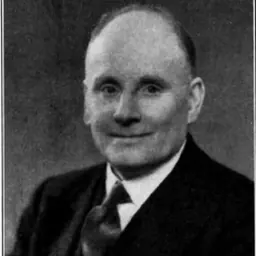
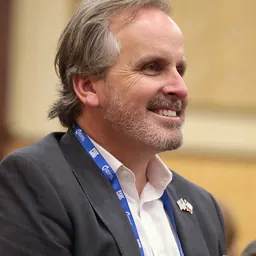
People in Bruce Woodcock's life
Named in this biography and alive at the same time





Related people
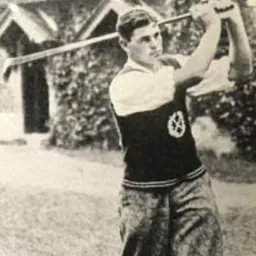
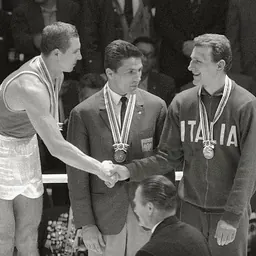
Same field, nearest in time


Contemporaries
People whose lives overlapped Bruce Woodcock's




Frequently asked questions
Who was Bruce Woodcock?
English boxer (1921–1997)
When was Bruce Woodcock born?
Bruce Woodcock was born on 18 January 1921 in Doncaster.
When did Bruce Woodcock die?
Bruce Woodcock died on 21 December 1997 in Doncaster.
What was Bruce Woodcock's occupation?
Bruce Woodcock was a boxer.
What nationality was Bruce Woodcock?
Bruce Woodcock was British.
Sources & further reading
· DBpedia: Bruce Woodcock (boxer)
Cite this page
APA: Biography.guide. (2026). Bruce Woodcock. https://biography.guide/bruce-woodcock-boxer/
MLA: "Bruce Woodcock." Biography.guide, https://biography.guide/bruce-woodcock-boxer/.
Chicago: "Bruce Woodcock." Biography.guide. https://biography.guide/bruce-woodcock-boxer/.
Data last updated: 2026-09-20 · Spot an error? Report a correction.
Page generated 2026-09-27 05:15 UTC