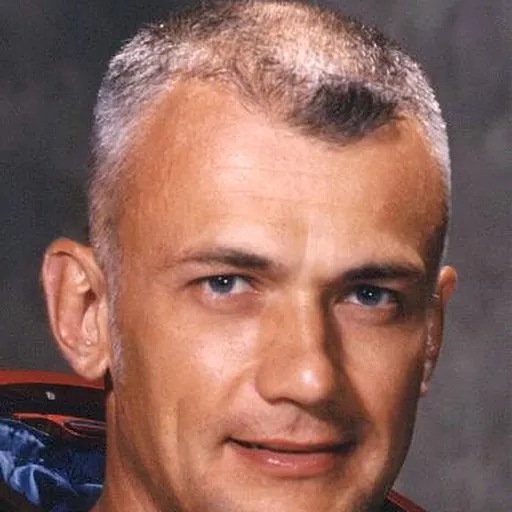
About Bruce McCandless II
Lived 1937 – 2017 (aged 80). Bruce McCandless II was an American military officer, astronaut, aircraft pilot, engineer and united States Naval Aviator.
Bruce McCandless II (born Byron Willis McCandless; was born on June 8, 1937, in Boston, Massachusetts. A third-generation U.S. Navy officer, McCandless was the son of Bruce McCandless and grandson of Willis W. Bradley, both Medal of Honor recipients. His mother changed his name on June 6, 1938, to Bruce McCandless II. According to space historian Matthew Hersch, McCandless and Group 5 colleague Don L. Lind were "effectively treated ... as scientist-astronauts" (akin to those selected in the fourth and sixth groups) by NASA due to their substantial scientific experience, an implicit reflection of their lack of the test pilot experience highly valued by Deke Slayton and other NASA managers at the time; this ultimately delayed their progression in the flight rotation.
He served as mission control capsule communicator (CAPCOM) on Apollo 11 during the launch and during the first lunar moonwalk (EVA) by Neil Armstrong and Buzz Aldrin before joining the astronaut support crew for the Apollo 14 mission, on which he doubled as a CAPCOM. Thereafter, McCandless was reassigned to the Skylab program, where he received his first crew assignment as backup pilot for the space station's first crewed mission alongside backup commander Rusty Schweickart and backup science pilot Story Musgrave. Following this assignment, he again served as a CAPCOM on Skylab 3 and Skylab 4. Notably, McCandless was a co-investigator on the M-509 astronaut maneuvering unit experiment that was flown on Skylab; this eventually led to his collaboration on the development of the Manned Maneuvering Unit (MMU) used during Space Shuttle EVAs. Although he was classified as a Shuttle pilot until 1983, McCandless ultimately chose to work on the MMU as a mission specialist due to the prestige of the program (which ensured a flight assignment) and his lack of test pilot experience.
He was responsible for crew inputs to the development of hardware and procedures for the Inertial Upper Stage (IUS), Hubble Space Telescope, the Solar Maximum Repair Mission, and the International Space Station program.
STS-41-B
Challenger launched from Kennedy Space Center, Florida, on February 3, 1984. The flight deployed two communications satellites, and flight-tested rendezvous sensors and computer programs for the first time. On February 11, 1984, after eight days in orbit, Challenger made the first landing on the runway at Kennedy Space Center.
Discovery landed at Edwards Air Force Base, California, on April 29, 1990. Smithsonian Institution National Air and Space Museum Trophy (1985) United States Astronaut Hall of Fame (2005)
He was awarded a patent for the design of a tool tethering system that was used during Space Shuttle spacewalks.
Personal life
McCandless was married to Bernice Doyle McCandless (1937–2014) for 53 years, and the couple had two children. His recreational interests included electronics, photography, scuba diving, and flying. He also enjoyed cross-country skiing.
On September 30, 2010, McCandless launched a lawsuit against British singer Dido for unauthorized use of a photo of his 1984 space flight for the album art of her 2008 album Safe Trip Home, which showed McCandless "free flying" about 320 feet away from the Space Shuttle Challenger. The lawsuit, which also named Sony Corp.'s Sony Music Entertainment and Getty Images as defendants, did not allege copyright infringement but infringement of his persona. The action was settled amicably on January 14, 2011.
McCandless wrote the foreword to the book Live TV from Orbit by Dwight Steven-Boniecki.
McCandless died on December 21, 2017, at age 80. He was survived by his second wife, Ellen Shields McCandless, two children and two grandchildren.
McCandless was buried at the United States Naval Academy Cemetery at Annapolis on January 16, 2018.
McCandless' son, author Bruce McCandless III, wrote about the journey leading to the first untethered spacewalk in the 2021 book Wonders All Around: The Incredible True Story of Astronaut Bruce McCandless II and the First Untethered Flight in Space.
Legacy John McCain, who graduated from the United States Naval Academy with McCandless in the Class of 1958, stated after McCandless' death:
Lockheed Martin later developed the McCandless Lunar Lander and named it after him. This honored him as an esteemed employee of the company, and also the fact that the MMU spacewalk was facilitated by the jetpack developed by Lockheed Martin.
Don’t just read it —
keep it.
Full-length biographies made to live with: read them, listen on the way to work, watch them tonight.
- E-book
- Audio
- Video
Instant download · yours to keep · every purchase keeps this site free
Important facts
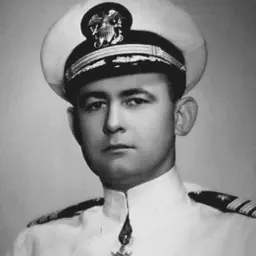
People in Bruce McCandless II's life
Named in this biography and alive at the same time




Related people
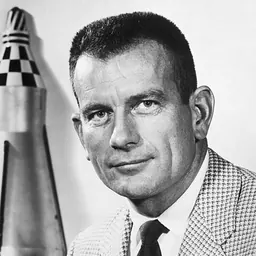
Same field, nearest in time

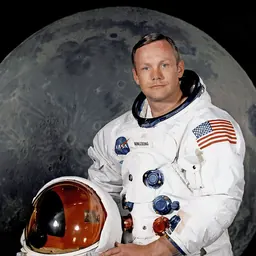
Contemporaries
People whose lives overlapped Bruce McCandless II's




Frequently asked questions
Who was Bruce McCandless II?
American astronaut (1937–2017)
When was Bruce McCandless II born?
Bruce McCandless II was born on 8 June 1937 in Boston.
When did Bruce McCandless II die?
Bruce McCandless II died on 21 December 2017 in Conifer.
What was Bruce McCandless II's occupation?
Bruce McCandless II was a military officer, astronaut, aircraft pilot, engineer and united States Naval Aviator.
What nationality was Bruce McCandless II?
Bruce McCandless II was American.
Sources & further reading
· Wikipedia: Bruce McCandless II
· DBpedia: Bruce McCandless II
Cite this page
APA: Biography.guide. (2026). Bruce McCandless II. https://biography.guide/bruce-mccandless-ii/
MLA: "Bruce McCandless II." Biography.guide, https://biography.guide/bruce-mccandless-ii/.
Chicago: "Bruce McCandless II." Biography.guide. https://biography.guide/bruce-mccandless-ii/.
Data last updated: 2026-09-20 · Spot an error? Report a correction.
Page generated 2026-09-27 05:09 UTC