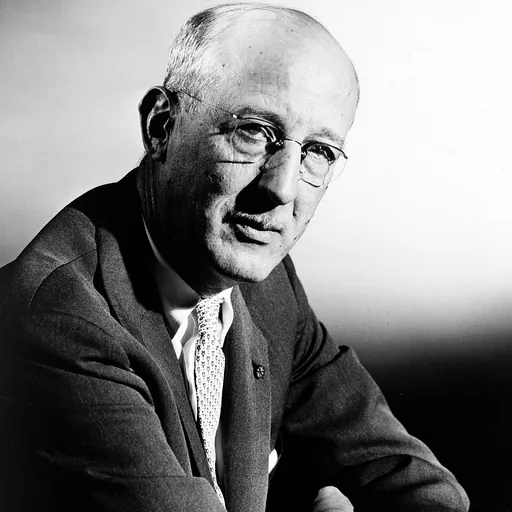
About Bruce Catton
Lived 1899 – 1978 (aged 78). Bruce Catton was an American journalist, military historian, historian and writer.
Charles Bruce Catton (October 9, 1899 – August 28, 1978) was an American historian and journalist who wrote books concerning the American Civil War. As a narrative historian, Catton specialized in popular history, featuring interesting characters and historical vignettes, in addition to the basic facts, dates, and analyses. His books were well researched and included footnotes. He won the Pulitzer Prize for History and the National Book Award for Nonfiction in 1954 for his book A Stillness at Appomattox,
Early life
Charles Bruce Catton was born in Petoskey, Michigan, to George R. and Adela M. (Patten) Catton, and raised in Benzonia, Michigan. His father was a Congregationalist minister, who accepted a teaching position in Benzonia Academy and later became the academy's headmaster. As a boy, Catton first heard the reminiscences of the aged veterans who had fought in the Civil War. In his memoir, Waiting for the Morning Train (1972), Catton explained how their stories made a lasting impression upon him: During 1916, Catton attended Oberlin College, but he quit because of World War I without completing a degree.
Journalism career
After serving briefly with the United States Navy during World War I,
Writing career
At the start of World War II, Catton was too old for military service. During 1941, he accepted a position as Director of Information for the War Production Board, and later he had similar jobs in the Department of Commerce and the Department of the Interior. His experiences as a federal employee prepared him to write his first book, The War Lords Of Washington, during 1948. Although the book was not a commercial success, it inspired Catton to quit federal employment to become a full-time author.
In 1954, Catton accepted the position as founding editor of the new magazine American Heritage. and a National Book Award for Nonfiction.
Oliver Jensen, who succeeded Catton as editor of American Heritage, wrote that "No one ever wrote American history with more easy grace, beauty and emotional power, or greater understanding of its meaning, than Bruce Catton... There is a near-magic power of imagination in Catton’s work [that] almost seemed to project him physically onto the battlefields, along the dusty roads and to the campfires of another age."
Conversely, American writer Gore Vidal criticized Catton for a hagiographic approach to writing about prominent Americans of the past, calling him "that ubiquitous clone of Parson Weems." Vidal groups Catton with American historians who "never accept as a fact anything that might obscure those figures illuminated by the high noon of Demos...." As an example, he cites Catton's dismissal of stories related to Grant's alcohol consumption during the Civil War and places Catton "in Parson Weems land where all our presidents were good and some were great and none ever served out his term without visibly growing in office."
Personal life
On August 16, 1925, Catton married Hazel H. Cherry. In 1926, they had a son, William Bruce Catton, who taught history at Princeton University and at Middlebury College, Vermont, where he was the first Charles A. Dana Professor of History.
Death and legacy
Bruce Catton died in a hospital near his summer home at Frankfort, Michigan, after a respiratory illness. He was buried in Benzonia Township Cemetery in Benzie County, Michigan.
During 1977, the year before his death, Catton received the Presidential Medal of Freedom, the nation's greatest civilian honor, from President Gerald R. Ford, who noted that the author and historian "made us hear the sounds of battle and cherish peace."
Of the many Civil War historians, Catton was arguably the most prolific and popular. Oliver Jensen, who succeeded him as editor of the magazine American Heritage, wrote: No one ever wrote American history with more easy grace, beauty and emotional power, or greater understanding of its meaning, than Bruce Catton. There is a near-magic power of imagination in Catton's work that seemed to project him physically into the battlefields, along the dusty roads and to the campfires of another age.
Bruce Catton Prize From 1984 to 2006, the Bruce Catton Prize was awarded for lifetime achievement in the writing of history. In cooperation with American Heritage Publishing Company, the Society of American Historians initiated the biennial prize that honors a writer's entire body of work. The prize consists of a certificate and $2,500.
The prize was awarded to Dumas Malone (1984), C. Vann Woodward (1986), Richard B. Morris (1988), Henry Steele Commager (1990), Edmund S. Morgan (1992), John Hope Franklin (1994), Arthur Schlesinger, Jr. (1996), Richard N. Current (1998), Bernard Bailyn (2000), Gerda Lerner (2002), David Brion Davis (2004), and David Herbert Donald (2006).
Works
Nonfiction
The War Lords of Washington. New York: Harcourt, Brace, & Co., 1948. U.S. Grant and the American Military Tradition. Boston: Little, Brown and Company, 1954. This Hallowed Ground. New York: Doubleday and Company, 1956. America Goes to War. Middletown: Wesleyan University Press, 1958. The American Heritage Picture History of the Civil War. New York: American Heritage Publishing, 1960 (republished as The Civil War without the pictures by Mariner Books in 2004 and with an introduction by author James M. McPherson). The American Heritage Short History of the Civil War. New York: American Heritage Publishing, 1960. Michigan's Past and the Nation's Future. Detroit: Wayne State University Press, 1960 Four Days: The Historical Record Of The Death Of President Kennedy. New York: American Heritage Publishing, 1964. Prefaces to History. New York: Doubleday and Company, 1970 Waiting for the Morning Train. New York: Doubleday and Company, 1972. Gettysburg: The Final Fury. New York: Doubleday and Company, 1974. Michigan: A Bicentennial History. New York: W. W. Norton & Company, 1976. Bruce Catton's America: Selections from His Greatest Works. New York: American Heritage, 1979 Reflections on the Civil War. New York: Doubleday and Company, 1981 Shiloh. Boston: New Word City, 2017. Missionary Ridge. Boston: New Word City, 2017.
Army of the Potomac trilogy
Mr. Lincoln's Army. New York: Doubleday and Company, 1951. Glory Road. New York: Doubleday and Company, 1952. A Stillness at Appomattox. New York: Doubleday and Company, 1953.
Centennial History of the Civil War trilogy
The Coming Fury. New York: Doubleday and Company, 1961. Terrible Swift Sword. New York: Doubleday and Company, 1963. Never Call Retreat. New York: Doubleday and Company, 1965.
Ulysses S. Grant trilogy
Grant Moves South. Boston: Little, Brown and Company, 1960. Grant Takes Command. Boston: Little, Brown and Company, 1969.
Note: These two volumes are sequels to historian Lloyd Lewis's posthumously published Captain Sam Grant (Boston: Little, Brown and Company, 1950.)
With William Catton
Two Roads to Sumter. New York: McGraw-Hill, 1963. The Bold & Magnificent Dream: America's Founding Years, 1492–1815. New York: Doubleday and Company, 1978.
Fiction Banners at Shenandoah: A Story of Sheridan's Fighting Cavalry. New York: Doubleday and Company, 1955.
Honors and awards 1954 National Book Award for Nonfiction for A Stillness at Appomattox 1954 Pulitzer Prize for History for A Stillness at Appomattox 1959 Meritorious Service Award in the Field of Civil War History, presented by Harry S. Truman 1977 Presidential Medal of Freedom, presented by Gerald R. Ford From 1956 to 1978, Catton received 26 honorary degrees from colleges and universities across the United States
Don’t just read it —
keep it.
Full-length biographies made to live with: read them, listen on the way to work, watch them tonight.
- E-book
- Audio
- Video
Instant download · yours to keep · every purchase keeps this site free
Important facts
People in Bruce Catton's life
Named in this biography and alive at the same time




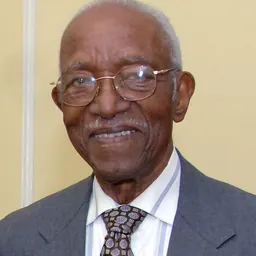
Related people
Same field, nearest in time
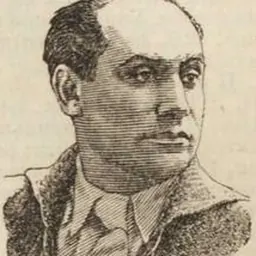



Contemporaries
People whose lives overlapped Bruce Catton's

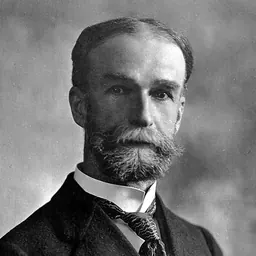

Frequently asked questions
Who was Bruce Catton?
American historian and journalist (1899-1978)
When was Bruce Catton born?
Bruce Catton was born on 9 October 1899 in Petoskey.
When did Bruce Catton die?
Bruce Catton died on 28 August 1978 in Frankfort.
What was Bruce Catton's occupation?
Bruce Catton was a journalist, military historian, historian and writer.
What nationality was Bruce Catton?
Bruce Catton was American.
Sources & further reading
Cite this page
APA: Biography.guide. (2026). Bruce Catton. https://biography.guide/bruce-catton/
MLA: "Bruce Catton." Biography.guide, https://biography.guide/bruce-catton/.
Chicago: "Bruce Catton." Biography.guide. https://biography.guide/bruce-catton/.
Data last updated: 2026-09-20 · Spot an error? Report a correction.
Page generated 2026-09-27 05:09 UTC