
About Brother Theodore
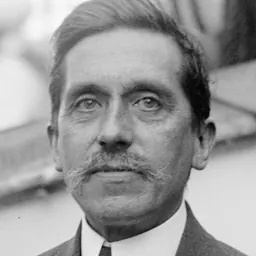
Lived 1906 – 2001 (aged 94). Brother Theodore was an American film actor.
Theodore Isidore Gottlieb (November 11, 1906 – April 5, 2001), professionally known as Brother Theodore, was a German-American actor and comedian, known for rambling, stream-of-consciousness monologues which he called "stand-up tragedy". His style is similar to Diseuse or Kabarett, which was popular in Western Germany during the 1920s and '30s. He was described as "Boris Karloff, surrealist Salvador Dalí, Nijinsky and Red Skelton…simultaneously".
Biography
Early years The son of a magazine publisher, Gottlieb was born into a Jewish family in Vienna. After his parents divorced, his mother remarried a wealthy textile manufacturer, and he moved with her to Dusseldorf in the Rhine Province. He attended the University of Cologne. At age 32, under Nazi rule, he was imprisoned at the Dachau concentration camp until he signed over his family's fortune for one Reichsmark. After being deported from Switzerland for chess hustling, he went to Austria where Albert Einstein, a family friend, helped him immigrate to the United States.
In the United States He worked as a janitor at Stanford University, where he demonstrated his prowess at chess by beating 30 professors simultaneously, These were some of the several movie appearances he made beginning in the 1940s and continuing into the 1990s. These were mostly small parts in B-movies.
He provided the voice of Gollum in the 1977 made-for-television animated version of The Hobbit and the follow-up adaptation of The Return of the King (1980). He also voiced Ruhk, Mommy Fortuna's assistant and carnival barker in The Last Unicorn (1982).
He collaborated with Marvin Kaye on a novella published in 1981 called The Possession of Immanuel Wolf.
Success Theodore's career as a monologuist began in California in the mid-1940s, with dramatic Poe recitals and darkly humorous monologues. A 1946 advertisement lists "Theodore" (not yet "Brother Theodore") performing "A One Man Show of Sinister and Diabolical Humor" weekly at the Gateway Playhouse on Sunset Boulevard. He moved to New York City, and by the 1950s, he had attracted a cult following. In 1958, he presented a one-man show that promoted "quadrupedism", the idea that human beings should walk on all fours. Jay Landesman booked him at St. Louis' Crystal Palace in the 1960s.
According to Brooks, it took multiple calls to Theodore to convince him to make a comeback. Theodore's attitude was very bleak, and he felt his career was over. Brooks wanted to charge ten or more dollars, but Theodore insisted on four dollars, so as not to scare people away. The show was a success and ran for three years. A picture of the Magic Towne House ad appeared in local New York newspapers such as the Village Voice and The New York Post.
Dick knew him. As a kid Dick used to see him around the village and they would be lined up around the block to see him. The stage was black with a pin spot on a desk which was raked towards the audience. The light comes on and there he is with a big shadow behind him. He just stares at the audience for an excruciatingly long time. Then he says, "Einstein is dead. Schopenhauer is dead... and I'm not feeling so well myself!"
He was the king of dark humor. He performed as a wacko. Truthfully, he was always depressed in real life and people thought it was his stage character. He was from a rich family in Europe and then his whole family went to concentration camps and lost it all. When he came to the States, he quickly became a huge celebrity in the Village. Then he totally disappeared and became a has been. Dick remembered him and tracked him down. We asked him to perform at the Townhouse and he turned us down saying that his life was over and he couldn't perform anymore. We insisted that he try to perform again in our place. He didn't make it easy for us. He had all these provisions that he tried to use on us to not perform.
He ended up doing the Saturday night midnight show for three years. We revived his career and it helped promote us. We did Equity Showcase Theater for out of work actors to display their talents. We had famous directors trying out their shows. One time an audition for a two-person show brought in 2000 actors vying for the parts. The line went all around the block.
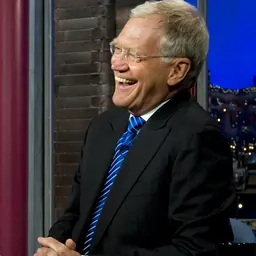
In the 1980s, Theodore made 16 appearances on NBC's Late Night with David Letterman. Letterman introduced him as “a noted philosopher, metaphysician, and podiatrist”. In the early 1980s, he was a regular on the Billy Crystal Comedy Hour. He also did voice work, including the voice-over to the American trailer for Lucio Fulci's The House by the Cemetery in 1981.
In 1989 he appeared in the Joe Dante comedy film The 'Burbs. Up until the late 1990s, he was a guest actor in several episodes of Joe Frank: Work in Progress radio show on National Public Radio (NPR). Beginning in 1982, Theodore took up residence on Saturday nights for a nearly two-decade run at the 13th Street Repertory Theatre in Greenwich Village. The film was selected for premiere, February 13, 2008, at the opening night of the Museum of Modern Art's Fortnight Series.
Death Theodore died in New York City on April 5, 2001, at the age of 94. The Joey Bishop Show: 10/31/1967, 11/8/1967 The Merv Griffin Show: 1966, 09/26/1969 The Dick Cavett Show: 07/01/1969 The Tomorrow Show with Tom Snyder: 10/31/1977 Billy Crystal: Don't Get Me Started – The Billy Crystal Special: 1986 Billy Crystal: Don't Get Me Started – The Lost Minutes: 1987 Late Night with David Letterman (NBC): 9/10/1982, 10/20/1982, 2/3/1983, 5/19/1983, 7/8/1983, 9/7/1983, 2/21/1984, 5/16/1984, 9/17/1984, 12/19/1984, 7/8/1985, 10/31/1985, 9/17/1986, 7/24/1987, 1/13/1988, 2/17/1989 (collected on YouTube) Beyond Vaudeville: 8/19/89
Radio appearances "Frequent" appearances on ABC radio's "Offbeat" or "Listen Listen" timeslot, in a "Soloscope" segment of "New Sounds for You" in 1956. Broadcast dates included 16 January and 23 February 1956. Joe Frank's radio shows The Decline of Spengler, The End, A Tour of the City, Black Light Steve Post The Outside radio show on WBAI in New York during the 1960s and 70s. Broadcast dates include 15 April 1966, 20 November 1967, 22 February 1969, and 20 September 1969. Bob Claster's Funny Stuff on KCRW in Santa Monica, September 24, 1989. The Ointment Expert: Julius Knipl, Real Estate Photographer, 1996 //www.hearingvoices.com/webwork/isay/knipl.html
Don’t just read it —
keep it.
Full-length biographies made to live with: read them, listen on the way to work, watch them tonight.
- E-book
- Audio
- Video
Instant download · yours to keep · every purchase keeps this site free
Important facts
People in Brother Theodore's life
Named in this biography and alive at the same time





Related people
Same field, nearest in time


Contemporaries
People whose lives overlapped Brother Theodore's

Frequently asked questions
Who was Brother Theodore?
German-American monologuist and comedian (1906–2001)
When was Brother Theodore born?
Brother Theodore was born on 11 November 1906 in Vienna.
When did Brother Theodore die?
Brother Theodore died on 5 April 2001 in New York City.
What was Brother Theodore's occupation?
Brother Theodore was a film actor.
What nationality was Brother Theodore?
Brother Theodore was American.
Sources & further reading
Cite this page
APA: Biography.guide. (2026). Brother Theodore. https://biography.guide/brother-theodore/
MLA: "Brother Theodore." Biography.guide, https://biography.guide/brother-theodore/.
Chicago: "Brother Theodore." Biography.guide. https://biography.guide/brother-theodore/.
Data last updated: 2026-09-26 · Spot an error? Report a correction.
Page generated 2026-09-27 05:16 UTC