
Brooke Hart
American heir and murder victim
About Brooke Hart
Lived 1911 – 1933 (aged 22).
Brooke Leopold Hart (June 11, 1911 – November 9, 1933) was the eldest son of Alexander Hart, the owner of the L. Hart & Son department store in downtown San Jose, California, United States. His kidnapping and murder were heavily publicized, and the subsequent lynching of his alleged murderers, Thomas Harold Thurmond and John M. Holmes, both white men, sparked widespread political debate.
The overnight lynchings of November 26–27 were carried out by a mob of San Jose citizens in St. James Park across from the Santa Clara County Jail, and were broadcast as a "live" event by a Los Angeles radio station. The killings were tacitly endorsed by Governor James Rolph Jr., who said he would pardon anyone convicted of the lynching.
Background
In 1933, 22-year-old Brooke Hart was the heir to one of San Jose, California's best-known businesses, the L. Hart & Son department store, located at the southeast corner of Market and Santa Clara streets. Brooke's grandfather and the store's namesake, Leopold Hart, was an Alsatian immigrant who bought a mercantile shop known as the Cash Corner store in 1866. After Leopold's son, Alex J. Hart Sr. (known as A.J.) took over the business, it expanded to the landmark status it held in San Jose for four decades – becoming as much a part of the fabric of the city as Macy's was in New York City or Neiman Marcus was in Dallas.
The Hart store was famous for its attentive customer service, and benefited from the deep loyalty of customers and employees alike. When the country found itself in the grip of the Great Depression, Hart's held on to its central place in the lives of San Jose's citizens, and continued to buy advertising in local publications. The Hart family was one of the city's most prominent, and their influence was the source of many colorful stories: one such tale recounts that the artist, Fr. Luigi D. Sciocchetti, who repainted the ceiling of the Cathedral Basilica of St. Joseph in the 1920s modeled the cherubs in his work on the family's children.
Brooke Hart had worked in his family's department store during much of his youth and was well-known and liked by the local community. After he graduated from Santa Clara University, his father, A.J., made him a junior vice president and began grooming him to take over when he retired.
Disappearance
Just before 6:00 p.m. on Thursday, November 9, 1933, Brooke Hart retrieved his 1933 Studebaker President roadster, a graduation present from his parents, from a downtown San Jose parking lot behind the department store. He had agreed to chauffeur his father, A.J., who did not drive, to a meeting of the Chamber of Commerce at the San Jose Country Club. As hours passed and there remained no sign of Brooke, the Hart family's anxiety grew; Brooke was responsible and punctual, and his absence was entirely out of character. A.J. confessed his worry to Perry Belshaw, the manager of the San Jose Country Club, during dinner; after Brooke's friend phoned to say the younger Hart had missed an appointment at 8:00 p.m., A.J. called the police to determine if his son had been involved in an accident.
According to the parking lot attendant, Brooke had left the lot heading east on Santa Clara Avenue at 6:05 p.m.; he was later spotted around 6:30 p.m. by a Hart store employee at Santa Clara and Fourteenth. Finally, a rancher in Milpitas, seven miles north of San Jose, saw a man matching Hart's description standing alone next to an automobile on Evans Lane at approximately 7 p.m.; when the rancher returned, he saw the car still parked there at approximately 8:30 p.m. with no one else present. At 10:30, what sounded like the same man called and informed the other sister, Miriam, that her brother would be returned upon payment of $40,000 (equivalent to $916,960 in 2022). Delivery instructions would be provided the next day. According to phone company records, the kidnappers had tried to reach the Hart home three times but the line was busy before they were finally connected. Belshaw lived near the site where the Studebaker had been parked and reported the abandoned car in Milpitas to the police at 11 p.m.; it was positively identified as Brooke's. the call that connected was traced to the Whitcomb Hotel. However, the search initially focused on the hilly region surrounding Calaveras Dam and the city of Oakland; the call's origin was thought to be a decoy action. One of the passengers detained during the three-hour search was Babe Ruth, who was traveling to Los Angeles to watch a football game between Southern California and Stanford. Floyd was later spotted in Almaden, near abandoned quicksilver mine shafts. While searching for Floyd or Hart at the mine, a man claiming to be Floyd boarded a bus in Modesto and robbed passengers using a gun.
The Hart family chartered an airplane to look for cabins in the hills near Milpitas starting on November 12, following up a theory that Brooke had been first lured to the area where his car was abandoned, and the kidnappers then took him from there. Because the car's lights were left on, and there were signs of a scuffle, authorities believed Brooke had been overpowered in Milpitas. In addition, witnesses who had seen Brooke driving the Studebaker said that he was alone, although in some cases visibility was poor. However, the family was not contacted again until Monday, November 13, when a letter, postmarked in Sacramento, arrived in the mail at the department store. It instructed A.J. to have a radio installed in the Studebaker (which already had a radio), because the ransom instructions would be broadcast over NBC radio station KPO. The kidnapper also instructed A.J. to be ready to drive the Studebaker to deliver the ransom, but A.J. had never learned to drive. On November 13, A.J. posted a $5,000 reward for his son's safe return, with a promise to drop any further investigation upon his return. To emphasize the validity of the reward offer, police announced they would not be tracing calls to the Hart residence. It instructed A.J. to place the ransom in a black satchel and drive to Los Angeles. That night, A.J. took a call from a man claiming to be his son's kidnapper, who instructed him to take the night train to Los Angeles. The authorities staked out the train station and mistakenly arrested a bank teller out for an evening stroll. The next day, a sign was placed in a window of the Hart store stating that A.J. did not drive. A call was received that night again demanding that Hart drive to deliver the ransom. Hart demanded proof that his son was with the caller. The caller stated that Brooke was being held at a safe location. Because a phone tap had been placed on the Hart telephone, the call was traced to a garage in downtown San Jose, but the caller was gone by the time the authorities arrived.
Arrests and confessions Confessions printed in Oakland Tribune, November 16 & 17, 1933 Harold Thurmond (Nov 16) Then we came to the San Mateo bridge and drove onto it for about a half mile to where the water flows under the bridge. We stopped the car and ordered Brooke to get out. He started to cry for help and Holmes hit him over the head a couple of times with one of the bricks.They were pretty good blows and he didn't give us much trouble after that. We then tied his arms behind him with the wire and also bound his legs with it.We picked him up hand and foot and heaved him over into the water.I don't know whether he cried out or not. I don't know whether he was conscious or not. Or whether he drowned, or was killed before he hit the water.Before we threw him over we took his wallet away from him. There was $15 in it and we split the money between us. Brooke asked for a cigarette on the way to the bridge and I gave him one. When we got to the bridge Harold [Thurmond] told him to get out of the car and started to tie him up with some wire.We led him to believe we were going to transfer him to another car. At this moment an automobile came over the bridge and Brooke started to shout for help.I hit him with my fist and knocked him down. It was a good blow and I don't think he ever snapped out of it. I wanted to show him we meant business.Harold got the concrete blocks and tied them to Brooke's feet. Then I said to Harold:"Let's give it to him."Then we picked him up and threw him overboard.He struggled around down there and Harold said:"Give me the gun. I'll fix him up."I gave him the gun and he climbed over the railing and held on to the bridge stringers and fired away. We couldn't see Brooke. It was dark. But we could hear him floundering about....The next day we got together and we were appalled by what we had done."I didn't know I could do a thing like that," Harold said. "It sure was terrible.""Yes," I said, "it sort of gets me. I didn't think I could do it either." Another demand arrived the following day, November 16, again ordering A.J. to drive with the ransom. That night, another call was received and the demand that A.J. drive was repeated. The call was traced to a payphone in a parking garage at Market near San Antonio, and Police Chief J.N. Black and Sheriff William Emig hurried to the scene just from the San Jose Police station, where they arrested Thomas Harold Thurmond as he was hanging up, at about 8:00 p.m.
A mother and daughter on a farm immediately south of Milpitas had seen a dark, long-hooded sedan with three men stopped near their barn. A few minutes after it stopped, a convertible (presumably the Studebaker roadster) with three men two on the running boards and one driving stopped near the sedan. The mother did not report the events until the following Monday (November 13), when she was visiting relatives and learned about the kidnapping. The investigators did not agree on the veracity of the story, because the number of kidnappers did not agree with the recorded confessions.
On the bridge, the men ordered Brooke out of the car, and one of the kidnappers struck him twice on the head from behind with a concrete block until he was unconscious. They then bound his arms with baling wire and tied two concrete blocks to his feet A few hours later, they placed the first telephone call to the Hart family demanding $40,000 for Hart's return.
Two men scavenging for wood in the bay, Cal Coley and Vinton Ridley, heard screams for help at approximately 7:25 p.m. on the night of November 9, when Brooke was kidnapped, and tried to rescue him, The two said the cries for help came from the bridge near the shore of Alameda, but added they did not hear any shots that night.
Search for the body Police officers from Santa Clara, San Mateo, and Alameda Counties began searching the bay around the bridge, hoping to find Brooke's body. Trace evidence, including stains on the bridge, "blonde hair on a brick" and other markings convinced authorities the confessors had truthfully described the sequence of events, including dumping Brooke. The pillowcase used to mask Brooke during the drive to the bridge was discovered, along with his hat, by November 20. The discovery of the hat ended the last hope of the family that Brooke would be found alive. A hook-studded apparatus was used to drag the bay, with no success. A weighted dummy was planned to be dropped from the bridge on November 21 in an attempt to see where it would float. discovered a badly decayed and crab-eaten body approximately south of the bridge. According to the autopsy, Brooke had died from drowning, and there were no bullet wounds found.
Lynching of Thurmond and Holmes Warning signs
Because of lynch threats, Sheriff Emig moved Thurmond and Holmes to the Potrero Hill police station in San Francisco for safekeeping soon after their arrest. Upon their return to the San Francisco jail from questioning, cries of "lynch them" were heard from the crowd surrounding that jail.
Let the sheriff handle the matter. He can appoint as many deputies as he wants; he has the power. I am not going to call the guard to protect the kidnapers who wilfully killed a fine boy like that. Let the law take its course. — Governor James "Sunny Jim" Rolph, November 23, 1933 comments to reporters in Los Angeles On November 23, California Governor James Rolph announced to shocked reporters that he would refuse to dispatch the National Guard to protect Thurmond and Holmes. Hallinan called Rolph and asked that he call out the National Guard should an effort be made to lynch his client. Rolph retorted that he would "pardon the lynchers".
Overnight lynching November 26–27 Authorities "expected trouble if and when the missing body was found". Crowds began to gather outside the jail at around 11 a.m., shortly after local newspapers had run extra editions announcing that Brooke's body had been found. Sheriff Emig ordered the erection of an improvised barricade of parked automobiles and trucks to protect the jail.
At approximately 9:00 p.m., Rolph canceled a planned trip to the Western Governors' Conference in Boise, Idaho, At approximately the same time, the crowd began demanding the jail surrender Holmes and Thurmond; they responded to the refusal by moving the improvised siege barriers aside. The assault on the jail commenced at approximately 11 p.m.
By midnight, thousands had gathered outside the jail; the sheriff's deputies fired tear gas into the crowd in an attempt to disperse them. Emig ordered his officers to abandon the bottom two floors of the jail, where Thurmond and Holmes were being held. It was later noted that both cells had been occupied by other notorious murderers. Emig also had ordered that no police officer would be allowed to use their guns or clubs to defend the jail; Emig, his nine deputies, and eight state patrolmen were all beaten, choked, and/or trampled during the course of the riot. Some women in the mob were alleged to have encouraged the violence, seemingly forgetting their prior advice to let the law "take its course".
Thurmond was the first to be lynched. As he was dragged from the jail headfirst, the mob beat him and knotted the rope around his neck; one man who attempted to stop the lynching was "picked up bodily and hurled almost over the heads of the crowd". After Thurmond was hanged, the mob tore his trousers off and souvenir hunters fought over the scraps. Thurmond was buried in an unmarked plot in Oak Hill Memorial Park on November 29, the cemetery where Brooke had been buried on November 27.
According to the San Francisco Chronicle, on December 2, after a special meeting of the city council heard testimony in support of leaving the cork elm tree as a monument and warning to evildoers, the council approved the cutting down of the tree by city workers. Police were required to keep off a crowd of souvenir hunters seeking a twig or branch of the infamous "gallows tree", the bark and lower branches having been hacked and stripped for mementos.
Impact of the case The lynching was unique in American political and criminal justice history because of the involvement of a state governor, and the eagerness by civic and business leaders and law enforcement, to allow the extrajudicial killings of two men who had not been indicted, arraigned, tried, or sentenced for the crime in a court of law. Many modern historians conclude that the two men were indeed guilty.
Royce Brier, a staff writer for the Chronicle, would later go on to win the 1934 Pulitzer Prize for Reporting for his account of the lynching. According to the prize citation, Brier worked for sixteen hours along with several assistants mingling with the mob and telephoning running updates from a garage across the street from the jail before composing the story in three hours starting at 12:30 a.m. on the morning of November 27. In addition, the Pulitzer Prize for Editorial Cartooning went to Edmund Duffy of The Baltimore Sun for his cartoon, "California Points With Pride", which lampooned Governor Rolph's response to the lynching.
Prosecution of lynch mob Governor Rolph praised the action, stating that California had sent a message to future kidnappers, and promised to pardon anyone involved in the lynching. However, Rolph died on June 2, 1934, before any charges had been filed in the case.
Alameda County District Attorney Earl Warren was the strongest supporter of prosecution for the lynching. Santa Clara County Assistant District Attorney Herbert Bridges was quoted as saying he was "not sorry [the lynching] happened in San Jose". but San Jose citizens were outspoken in their opposition to "outsider" interference. Eventually seven people were arrested for the lynchings, but none was convicted. California did not specifically define lynching as a crime, although crimes committed during the lynching such as rioting, assault, and murder could potentially be prosecuted.
One young man was charged for participating in the lynching after he publicly claimed credit for leading the mob, but the charges were dropped. The Santa Clara County grand jury met the following year, but despite literally thousands of witnesses, scores of reporters, and hundreds of photographs, they found that no witnesses could identify anyone from the lynching, so no charges were filed.
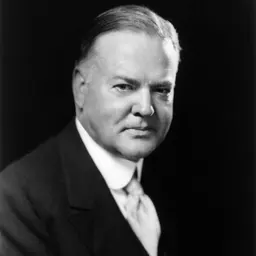
Public criticism In the aftermath of the lynching, Governor Rolph was publicly condemned for advocating "lynch law" by former President Herbert Hoover, then at Stanford University in Palo Alto. Rolph replied, "If troops had been called out, hundreds of innocent citizens might have been mowed down." Rolph accused Hoover of calling out the United States Army against the "Bonus Marchers" in 1932. The exchange continued. but the suit was dropped when the governor died of a heart attack in 1934. Holmes's widow sued Sheriff Emig and several deputies, citing their carelessness and negligence in failing to protect him. Thurmond's family took no action on his behalf and reportedly never again spoke about the matter amongst themselves.
"Last Lynching in California" This incident is sometimes referred to as "the last lynching in California", although Clyde Johnson was lynched near Yreka in August 1935. Additionally, in 1992 a man named Edward J Begley published on a website making allegations to have witnessed the last true California lynching in front of the one room schoolhouse in Callahan on January 6, 1947. Begley, then a 6 year old 1st grader, claimed that on that day, he arrived at school to find a black man with a bullet wound wrapped in a calf hide hanging from a nearby utility pole, and was quickly ushered inside by Mary Roth, the teacher. When he later went outside, he witnessed county officials including the coroner and sheriff's deputies as well as CHP officers lowering the body, and that an unidentified man present told him "That's to teach you kids what happens when you rustle cattle." Begley said that his teacher informed the students never to speak of the incident, but that in the late 1980s he began seeking out his classmates to corroborate his childhood memories, the website being published as part of the efforts. In 1994, Begley wrote to the Siskiyou County Historical Society asking for further assistance with his search.
The name of the victim, an alleged cattle rustler, said to be a butcher from Weed, who had been initially shot and wounded on a ranch owned by a well known Yreka medical doctor near Gazelle in Southern Siskiyou County before being hung in Callahan, has never been released and the event cannot be confirmed in any printed news publications. However, a 2019 investigation by Jefferson Public Radio supported Begley's claim that the January 10th, 1947 edition of the Western Sentinel, which allegedly reported on the incident, was collected and destroyed by complicit local authorities, finding every available archive of the paper to be missing that issue. Begley also made similar claims about the January 12th edition of the Etna Gazzette. Begley's son Michael was skeptical of his father's claims, stating that he was conspiratorial, but historian Ken Gonzales-Day found the claims credible enough to include as an unconfirmed case in his book on California lynchings.
Family Brooke Hart had three sisters Jeanette, Miriam, and Aleese and a brother, Alexander Joseph Jr. Alex J. Hart sold the chain of stores in 1976.
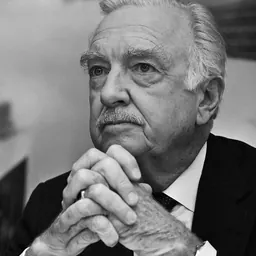
Modern coverage In 1983, Harry Farrell, a columnist for the San Jose Mercury News, wrote about the lynching in a two-part series. After he retired, he followed up with a book on the same subject, Swift Justice, published in 1992. Swift Justice was praised by Walter Cronkite and won an Edgar Award in 1993. Murphy pointed out the later phone calls placed to make ransom demands came from payphones physically close together, culminating in the arrest of Thurmond at a payphone only from the San Jose Police station. Murphy went on to write and produce a movie, Valley of the Heart's Delight, regarding the 1933 case.
In popular media At least four films have been made loosely based on this story: Fury (1936) The Sound of Fury (1950) aka Try and Get Me! Night Without Justice (2004) Valley of the Heart's Delight (2006)
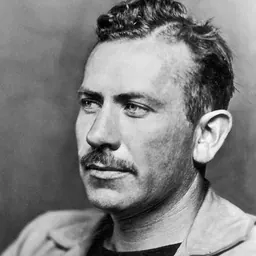
The 1933 lynching also inspired a short story by John Steinbeck, "The Lonesome Vigilante" (1936). It was subsequently published as "The Vigilante", collected in The Long Valley (1938).
Former San Jose mayor Tom McEnery wrote a play based on Farrell's 1992 book. The play, produced in early 2016 by the San Jose-based Tabard Theatre Company, shares the book's name, Swift Justice.
Don’t just read it —
keep it.
Full-length biographies made to live with: read them, listen on the way to work, watch them tonight.
- E-book
- Audio
- Video
Instant download · yours to keep · every purchase keeps this site free
Important facts
People in Brooke Hart's life
Named in this biography and alive at the same time




Contemporaries
People whose lives overlapped Brooke Hart's




Frequently asked questions
Who was Brooke Hart?
American heir and murder victim (1911-1933)
When was Brooke Hart born?
Brooke Hart was born on 11 June 1911.
When did Brooke Hart die?
Brooke Hart died on 9 November 1933 in San Francisco Bay Area.
Sources & further reading
· DBpedia: Murder of Brooke Hart and the lynching of Thomas Harold Thurmond and John M. Holmes
Cite this page
APA: Biography.guide. (2026). Brooke Hart. https://biography.guide/brooke-hart/
MLA: "Brooke Hart." Biography.guide, https://biography.guide/brooke-hart/.
Chicago: "Brooke Hart." Biography.guide. https://biography.guide/brooke-hart/.
Data last updated: 2026-09-20 · Spot an error? Report a correction.
Page generated 2026-09-27 05:27 UTC