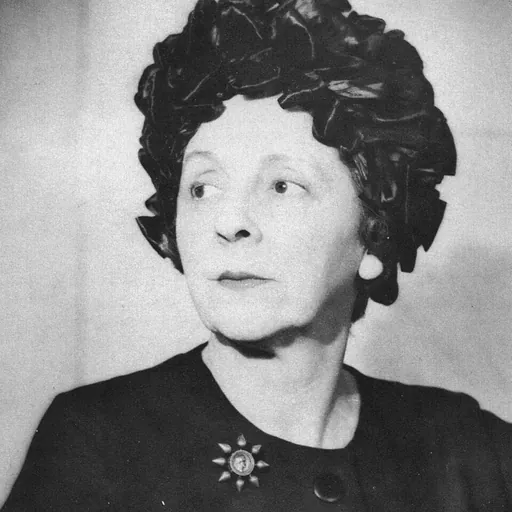
Bridget D'Oyly Carte
British opera manager
About Bridget D'Oyly Carte
Lived 1908 – 1985 (aged 77). Bridget D'Oyly Carte was a British opera director, art collector and theatrical producer.
Dame Bridget D'Oyly Carte DBE (; 25 March 1908 – 2 May 1985) was head of the D'Oyly Carte Opera Company from 1948 until 1982. She was the granddaughter of the impresario Richard D'Oyly Carte and the only daughter of Rupert D'Oyly Carte.
Though as a child she was not enthusiastic about Gilbert and Sullivan, after her father's death in 1948 Bridget D'Oyly Carte inherited all her family's business interests, including the opera company, which performed year-round and controlled the copyrights to the joint works of W. S. Gilbert and Arthur Sullivan. She had begun to assist her father in managing the Savoy Hotel in 1933 and remained active in the hotel business, of which she was a major shareholder, until her death. She also undertook child welfare work.
Carte engaged Frederic Lloyd as general manager of the opera company in 1951 and took steps to keep the Savoy operas fresh, with new productions and redesigned costumes and scenery. After the copyrights to the Gilbert and Sullivan works expired in 1961, she transferred the company to the D'Oyly Carte Opera Trust, which she headed. In the 1970s, the company experienced mounting losses. These, together with the refusal of the Arts Council to provide a grant, forced the closure of the company in 1982, although it re-formed after Carte's death and mounted productions up to 2003. Since then, the Trust has co-produced several shows with Scottish Opera.
In 1972 Carte founded the D'Oyly Carte Charitable Trust to support charitable causes in the fields of the arts, medical welfare and the environment. She was created a DBE in 1975. With no children or surviving siblings, she was the end of her family line.
Life and career Bridget Cicely D'Oyly Carte was born at Suffolk Street, Pall Mall, London. Her father was Rupert D'Oyly Carte, and her mother was the former Lady Dorothy Milner Gathorne-Hardy (1889–1977), the youngest daughter of the 2nd Earl of Cranbrook. Her grandfather was Richard D'Oyly Carte, who founded the D'Oyly Carte Opera Company. The name comes from Richard D'Oyly Carte's great-grandmother, Elizabeth D'Oyly, who was a descendant of Peregrine D'Oyly of Overbury Hall in Layham, Suffolk (c. 1625–1667). |group=n She was educated privately in England and abroad. she relinquished her title and resumed her maiden name by deed poll in 1932, dropping the name Cicely, which she disliked. She then resumed her education, enrolling at Dartington Hall in Devon from 1931 to 1933, a school with a long musical tradition, taking courses in dance, teacher training, art and design. There she met the designer Peter Goffin who became a lifelong friend.
The death of her only brother, Michael (1911–1932), in a car crash made Carte the heir to her father's hotel and theatre interests; Michael had been expected to take over the family's businesses. As a child she had been reluctant to be part of the family's heritage. She later told The Gramophone magazine:
From 1933 to 1939 Carte was an assistant to her father at the Savoy Hotel, taking responsibility for furnishing and interior decoration, for which she had training and aptitude.
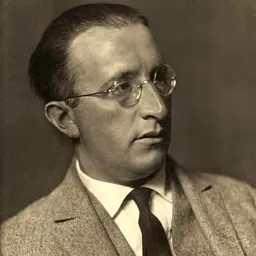
Shortly after Rupert's death Bridget sold Coleton Fishacre, which is now owned by the National Trust. In 1949 she bought Shrubs Wood, Chalfont St Peter, Buckinghamshire, an Art Deco country house designed by the architects Erich Mendelsohn and Serge Chermayeff. There she pursued her love of gardening and gave summer parties for disadvantaged or disabled children. She did not seek to succeed her father as chairman of the hotel group, in which she retained a large shareholding, but she became an active director. She moved into a suite in the Savoy Hotel and resumed control of the furnishing and decoration departments. In 1953 she was a member of the committee overseeing the decorations for the Coronation Ball at the Savoy Hotel in honour of the coronation of Queen Elizabeth II. Nevertheless, she was determined to prove herself. One of her early decisions proved unpopular: the engagement as stage director of Eleanor Evans (Mrs Darrell Fancourt) in 1949. A former chorister and small role player, Evans alienated many company members and imposed rigid production methods, described by the principal comedian, Martyn Green, "as a stereotyped plan that results in a clockwork performance devoid of spontaneity". He left at the end of the 1951 London season, as did Ella Halman, Richard Watson, Margaret Mitchell, Radley Flynn and twenty-two other artistes. Evans retired as stage director in 1953, the year in which her husband died, but she was engaged to coach new D'Oyly Carte principals in their roles for some years thereafter.
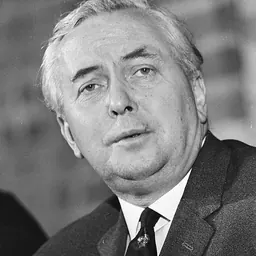
In running the company Carte took steps to keep the productions fresh, engaging a range of artists to redesign the costumes and scenery. Her old friend Goffin, who had previously redesigned The Yeomen of the Guard and Ruddigore for Rupert D'Oyly Carte, designed a unit set in 1957 to facilitate and reduce the cost of touring. He also produced new settings and costumes for Patience (1957), The Mikado (1958 – settings only, most of the celebrated Charles Ricketts costumes being retained), The Gondoliers (1958), Trial by Jury (1959), H.M.S. Pinafore (1961), and Iolanthe (1961). She commissioned new scenery or costumes, or both, from other designers for productions of Princess Ida (1954), The Gondoliers (1962 and 1968), The Sorcerer (1971), Utopia, Limited (1975) and Iolanthe (1977). The theatre historian C. M. P. Taylor, records, "Bridget D'Oyly Carte oversaw all new productions of the opera company with a keen eye for detail, especially in terms of their design. She claimed that the most important function of the operas, which in later years she advertised rather as musicals, was 'to bridge the generation gap and link serious music to pop'". Carte engaged Sir Malcolm Sargent and Sir Charles Mackerras as guest conductors for some London seasons and promoted eight tours of North America between 1950 and 1978. In 1975 she presented a centenary season at the Savoy Theatre; she made a rare public speech at the first night, alongside the then prime minister, Harold Wilson. in 1977 the company gave a Royal Command Performance at Windsor Castle, and in 1979, for the first time, toured Australia and New Zealand.
Later years
In 1972 Carte founded the D'Oyly Carte Charitable Trust – entirely separate from the D'Oyly Carte Opera Trust and the D'Oyly Carte Opera Company – supporting charitable causes in the fields of the arts, medical welfare and the environment. In 2001, the trust endowed the D'Oyly Carte Chair in Medicine and the Arts at King's College London with £2 million. In 1974 she was elected an Honorary Member of the Royal Society of Musicians of Great Britain, and in 1975 was created a DBE. Even after it closed, however, the company's productions and style continued to influence the productions of other Gilbert and Sullivan companies around the world.
Death and legacy Memorial window to the Carte family in the Savoy Chapel, London. A heavy smoker, Carte died of lung cancer at Shrubs Wood in 1985, aged 77. The group's hotels remained among the most prestigious in London, with the London Evening Standard calling the Savoy "London's most famous hotel" in 2009.
The Gilbert and Sullivan operas, nurtured by the Carte family for over a century, continue to be produced frequently today throughout the English-speaking world and beyond. By keeping the Savoy operas popular for so long, the Carte family influenced the course of the development of modern musical theatre throughout the 20th century.
Notes, references and sources
Don’t just read it —
keep it.
Full-length biographies made to live with: read them, listen on the way to work, watch them tonight.
- E-book
- Audio
- Video
Instant download · yours to keep · every purchase keeps this site free
Important facts
People in Bridget D'Oyly Carte's life
Named in this biography and alive at the same time





Related people
Same field, nearest in time





Contemporaries
People whose lives overlapped Bridget D'Oyly Carte's



Frequently asked questions
Who was Bridget D'Oyly Carte?
British opera manager (1908-1985)
When was Bridget D'Oyly Carte born?
Bridget D'Oyly Carte was born on 25 March 1908.
When did Bridget D'Oyly Carte die?
Bridget D'Oyly Carte died on 2 May 1985.
What was Bridget D'Oyly Carte's occupation?
Bridget D'Oyly Carte was an opera director, art collector and theatrical producer.
What nationality was Bridget D'Oyly Carte?
Bridget D'Oyly Carte was British.
Sources & further reading
· Wikipedia: Bridget D'Oyly Carte
· DBpedia: Bridget D'Oyly Carte
Cite this page
APA: Biography.guide. (2026). Bridget D'Oyly Carte. https://biography.guide/bridget-d-oyly-carte/
MLA: "Bridget D'Oyly Carte." Biography.guide, https://biography.guide/bridget-d-oyly-carte/.
Chicago: "Bridget D'Oyly Carte." Biography.guide. https://biography.guide/bridget-d-oyly-carte/.
Data last updated: 2026-09-23 · Spot an error? Report a correction.
Portrait: Wikimedia Commons · author & licence
Page generated 2026-09-27 05:05 UTC