
About Brian Syron
Lived 1934 – 1993 (aged 58). Brian Syron was an Australian film director.
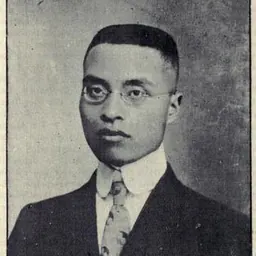
Brian Gregory Syron (19 November 1934 – 14 October 1993) was an actor, teacher, Aboriginal rights activist, stage director and Australia's first Indigenous feature film director; who has also been recognised as the first First Nations feature film director. After studying in New York City under Stella Adler, he returned to Australia and was a co-founder of the Australian National Playwrights Conference, the National Black Playwrights Conference, and the Aboriginal National Theatre Trust. He worked on several television productions and was appointed head of the ABC's new Aboriginal unit in 1988.
Life Brian Syron was born on 19 November 1934 in the inner Sydney suburb of Balmain. His mother, Elizabeth Murray, was from Newcastle-upon-Tyne, England, and his father, Daniel Syron, a general labourer, was a Birrippi-Worimi Aboriginal man. Brian was one of eight children.
Syron also spent half of his childhood living with his paternal Birripi-Worimi grandmother, Susie Syron, I have no mortgage on being dispossessed or having a tough life. We've all had it. Every Aboriginal person I know of in my generation has had one hell of a time. Nobody has a mortgage on that. We've all been through it. Our obligation, our mandate, as artists is to communicate with our people first.{Syron, HREOC, 15.11.92}
Brian Syron died of leukaemia Syron left Australia in 1961 to work in Europe as a fashion model with Dior, Cardin and Balenciaga. In 1961, he moved to New York City, living initially on Fifth Avenue with one of Australia's first "supermodels", Pauline Kiernan. He was accepted as a student with the Stella Adler Studio, where he studied with fellow students Robert De Niro, Warren Beatty and Peter Bogdanovich, and became a teacher himself. Lloyd Richards, then head of acting at Yale University and artistic director of the American National Playwrights Conference wrote to the Aboriginal Arts Board of the Australia Council in September 1993: The National Playwrights Conference of Australia exists because Brian Syron visited the National Playwrights Conference in Waterford, Conn. and recognised it as an important idea for Australia, and he went back to champion the possibility. Others visited and the rest is history." {Lloyd G. Richards, 9.5.1993}
Syron returned to the theatre again in 1976 with his direction of Dimboola (written by Jack Hibberd) in Newcastle as well as at Bonapartes Theatre Restaurant, Kings Cross, Sydney, where his stage production ran continuously for the next two years and four months. He followed "Dimboola" with a production of the American play Falling Apart by Monte Merrick at the New Theatre, Newtown, Sydney, and in 1978 he played the role of "The Actor" in a production of Maxim Gorky's The Lower Depths which ran for six weeks at the Sydney Opera House. In this same year, he opened the New Group Theatre at the All Nations Club, Kings Cross, where he directed among other productions A Tribute to Tennessee Williams, before the ongoing costs of keeping an independent theatre going forced Syron to close after 12 months.
Aboriginal Theatre Company
He co-founded the Aboriginal Theatre Company (ATC) in 1981 with scriptwriter/playwright/director Bob Merritt in order to tour Merritt's play The Cake Man, under Syron's direction, to the 1982 World Theatre Festival in Denver, Colorado, where the play received a tremendous audience response. Following this success, the play then toured various colleges around the United States. The Cake Man was performed at the World Theatre Festival in Denver, Colorado, Returning to Australia, Syron directed a season of The Cake Man at the Universal Theatre in Fitzroy, Melbourne after which it was funded by Australian federal government's Ministry of Aboriginal Affairs to play at the 1983 Warana – Commonwealth Arts Festival, Brisbane in Queensland where it was performed at the Edward Street Theatre.
In 1986, Syron, on behalf of the Aboriginal Arts Board, published a "Questionnaire seeking support for establishment of National Aboriginal Theatre Company", ahead of a National Black Playwrights Workshop at James Cook University in Townsville.
National Black Playwrights Conference In January 1987, Syron founded the National Black Playwrights Conference (NPBC), which was held at the Australian National University, Canberra. In an interview with Angela Bennie, Australia's leading Indigenous actress Justine Saunders commented : It was Brian Syron, in fact, who was the instigator not only of the first National Black Playwrights Conference but the National Playwrights Conference. Syron always said our culture is an oral one, it comes through our painting, through our singing, through our stories that's how we pass down our laws, that's how we have passed down our history for 60,000 years
Eva Johnson was writer/director of the conference. During the conference, the delegates awarded Syron the 1987 inaugural Harold Blair Award for his Lifetime Achievements in the Performing Arts, which brought with it the additional honour of the title "Elder".
ANTT
As a result of the first NBPC, Syron, as a member of a steering committee which included Rhoda Roberts, Kevin Gilbert, Lydia Miller, Michael Johnson (who presented two SBS Television series in 1989 and 1991 ), Suzanne Butt, and Lesley Fogarty, with Justine Saunders as adviser, proposed and co-founded the Aboriginal National Theatre Trust (ANTT).
ANTT was constituted as a limited company in May 1988, and was staffed by Aboriginal artists who were committed to the promotion and protection of all Aboriginal arts. It founded a National Aboriginal Theatre, and provided advice to a number of Aboriginal and non-Indigenous production companies, theatre companies and educational institutions, and individuals. ), at the Victorian Arts Centre.
In June 1991, after its board of directors in protest against the lack of financial support from government, the ANTT ceased operations.
Last work
Syron carried out a two-week workshop, a stage reading, plus a production in 1991 at the Belvoir Street Theatre, Redfern, Sydney of Mudrooroo Narogin's "courageous and brave new play" The Aboriginal Demonstrators Confront the Declaration of the Australian Republic on 26 January 2001 with the Production of "Der Auftrag" by Heiner Muller and starring Justine Saunders, Michael Watson, David Kennedy, Pamela Young, Ray Kelly and Graham Cooper. The play and the production are also the subject of Mudrooroo Narogin's book The Mudrooroo/Muller Project – A Theatrical Casebook, with a chapter by Syron and edited by Gerhard Fischer in collaboration with leading Indigenous academic Paul Behrendt and Syron. Syron was too ill to do more than direct the stage reading of the play.
Over the period 1986–1987 Syron became the first Indigenous Australian to lecture at the Australian Film, Television and Radio School (AFTRS). In Australia's Bi-Centennial Year, 1988, Syron, as representative of actors and the Aboriginal National Theatre Trust, was invited back to AFTRS as a guest lecturer for the "Writing '88" Course.
Television
Syron was employed as children's dialogue coach on ABC Television's award-winning television production Seven Little Australians (1974), a series adapted from the Ethel Turner novel of the same name. In 1976 Syron was cast as Sweet William in the television adaptation of the Robert Merritt play The Cake Man (1977). Almost immediately after this production Syron was cast as Ray in "Ray's Story" a one-hour episode of Pig in a Poke (1977) a five-part series screened on ABC TV starring Justine Saunders, Athol Compton, Gary Foley and Paul Coe, and described as the first modern urban Aboriginal drama screened on Australian television. Syron then played the leading role of "The Wife Abuser" in director Stephen Wallace's telemovie Women Who Kill (1983) which screened on ATN Channel 9.
In 1987 Syron was executive producer of the documentary-drama film production Karbara: First Born (1987), directed and produced by Richard Guthrie, during and following the 1987 Australian National Playwrights Conference. The film featured Lydia Miller and Ernie Dingo and screened at the Sydney Film Festival in 1987 and on ABC TV.
In 1988 he was appointed head of the ABC's new Aboriginal unit. Syron and Saunders were co-presenters of the ABC TV Aboriginal entertainment series The First Australians (1988–1990). This series of 18 × 1-hour programs featured leading Aboriginal people in the fields of performance, music and art, and presented Indigenous Australian political and commercial leaders in discussions on various topics important to Indigenous Australians.
Film
In 1970 Syron left Australia for the USA where he took up a position as Attachment / Assistant on the feature film What's Up Doc? directed by Peter Bogdanovich. Syron's next film project was the short film Jeremy and Teapot (1976) starring Patrick Thompson as Jeremy and Syron as Teapot with the Narrator Jack Thompson, shot on location at Thompson's property at Upper Bo Bo, via Ulong, northern New South Wales. The film went on to win Best Film, 1982 Women's International Film/Video Festival, Tucson, Arizona, USA.
Syron was employed on director Peter Weir's feature film The Last Wave (1977) as a consultant.
The Australian Film Commission awarded Syron a grant in 1980 for his script Australian Aboriginal Achievers (1980), which was a biographical documentary recounting the achievements of seven leading Aboriginal achievers: actor/historian Gary Foley, potter Thancoupie, artist Jean Jimmi, bureaucrat Charles Perkins, academic Miriam Rose Ungunmeer-Bauman and artists Jimmy Bienderry and Stumpy Martin Jempijimpa. The script never received production funding and was later used as the basis for the Clare Dunn book People Under the Skin – An Irish Immigrant's Experience of Aboriginal Australia.
In 1981, Syron played a small role of "The Neighbour" in The City's Edge (1983) (aka Running Man Edge of the City)", co-written by Robert Merritt the first Australian Indigenous scriptwriter of a feature film and the Nightclub Manager in Coolangatta Gold (1983).
Backlash (1986) directed and produced by Bill Bennett featured Lydia Miller with Syron in the role of The Executioner or Kadachi Man. Syron and the lead actors were the co-writers of this production although they were uncredited by Bennett. The script improvisation by the actors is confirmed by Encore "Bill Bennett's "Backlash", for instance, is a film for which the principals improvised their dialogue...in this his latest effort he tested this technique to its limit" (Encore, 24 April – 7 May 1986 : 6)
Syron and Rosalie Kunoth-Monks were employed as Co-Aboriginal Consultants on the television production Naked Under Capricorn (1989) directed by Rob Stewart, produced by Syron's brother-in-law Ray Alchin and starring Nigel Havers.
From 1990 to 1992 Syron directed the first feature film by an Indigenous Australian, Jindalee Lady (1992), and he is recognised as being the first First Nations director of a feature film. Nearly all cast and crew were also Aboriginal, and one scene featured the Bangarra Dance Theatre. Lowitja O'Donoghue, Chair of the Aboriginal and Torres Strait Islander Commission wrote saying Mr Syron is held in high esteem by both indigenous and non-indigenous Australians for his work as our first indigenous feature film director..He has made a valuable contribution to indigenous art in this country and has been a strong and articulate advocate in the movement to raise and promote the status of indigenous theatre and film as an integral part of Australia's cultural heritage" (O'Donoghue, letter to Russell Mulvey, Edmonton, Canada, 8.12.1992)
Briann Kearney and Syron applied in a joint application for a Literary Fellowship from the Australia Council and were awarded $20,000 to co-write Kicking Down the Doors – a History of Indigenous Filmmaking from 1968–1993 including non-Indigenous films for and about Indigenous people, based on research collected by Syron for his submission to the 1992 HREOC submission.
Founder / member Black Theatre Arts & Cultural Centre (1972) – artistic director / foundation member Bondi Pavilion Theatre (1973) – co-founder / artistic director Peter Summerton Foundation (1969) – foundation member / organiser "Stella Adler Master Classes" (1973) The Artists' Group Theatre (1973) – foundation member The Australian National Playwrights Conference (1973) – co-founder The New Group Theatre(1978) – founder The Aboriginal Theatre Company (1981) – co-founder Black Women's Action Group (1985) – foundation member / honorary secretary The Australian Black Playwrights Conference (1987) – founder The Aboriginal National Theatre Trust (1987) – co-founder / co-director
Recognition 1969 Winner, Inaugural Drama Critics Award – Best Production, Fortune and Men's Eyes 1970 Polish Government Scholarship to study with Jerzy Grotowski in Wrocław ($10,000) 1978 Script development grant, Australian Film Commission, "Cape Hawk – A Work in Progress" 1978 Department of Aboriginal Affairs, Aboriginal Overseas Study Grant 1978 BBC TV Specials Directors' Course for Emerging Nations 1987 Winner, inaugural Harold Blair Award for Lifetime Achievement in the Performing Arts 1987 Awarded the title of "Elder" by BNPC Delegates 1990 Ikkeman Sacred Feather, International First Nations Film and Art Festival, Canada 1992 Best Feature Film and first feature film by a First Nations Director, Dreamspeaker International Film and Arts Festival, Edmonton, Alberta, Canada 1992 Nominee, East West Award – Best Feature Film, Hawaii International Film Festival, Hawaii, USA 1993 Co-recipient, Literary Fellowship – Australia Council, for "Kicking Down the Doors: A History of Australian Indigenous Filmmakers: 1968 to 1993"
Selected publications
Entertainment Arts in Australia, 1968, Ed. John Allen, Paul Hamlyn, Dee Why, Australia, 81:82 People Under the Skin – An Irish Immigrant's Experience of Aboriginal Australia, Clare Dunne, Lotus Publishing House, Carlingford, Australia. 1988 : vi:viii + Aboriginal Voices – Contemporary Aboriginal Artists, Writers and Performers 1990, 138:142, Liz Thompson, Simon & Schuster, Brookvale, Australia, Voices of the First Day – Awakening in the Aboriginal Dreamtime, 1991, 1 : 5, Robert Lawlor, Inner Traditions International, Vermont, USA, Interview – 23 June 1993 – Brian Syron with Trevor Ellis, National Films Canberra, ACT, Australia – 16 mm – Last Interview "Screening the Past : The Sixth Australian History & Film Conference Papers – Aboriginal Cultural Identity", 1993, 54 : 58, Media Centre, La Trobe University, Bundoora, Melbourne, Australia, Kicking Down the Doors – A History of Indigenous Filmmakers from 1968-1993, 1996, with co-author Briann Kearney, Donobri International, Hawaii/Sydney, (2nd Edition 2007. Lulu Inc. ) Mudrooroo/Mueller Project – A Theatrical Casebook, Edited by Gerhard Fisher, Paul Behrendt, 1993, New South Wales University Press, Kensington, Australia, Media Ethics, an Aboriginal Film and the Australian Film Commission, 2002, Thomas G. Donovan, Brody T. Lorraine, Universe, Lincoln, U.S.A.,
Papers "The Population Future of Indigenous Peoples", 1983 United Nations Working Group on Indigenous Populations, Representative of the Aboriginal Arts Board of Australia Council, Bucharest Romania "Colonialism, Loss of Land & Our Legal Rights", 1988 Fifth Festival of Pacific Arts, Representative of the Aboriginal National Theatre Trust, Townsville, North Queensland, Australia "Indigenous Feature Filmmaking", 1991 World Festival of Indigenous Motion Pictures, Pincher Creek, Canada "Indigenous Fimmaking in Australia". 1991 AFC Film Funding Policy Conference, Institute of Cultural Policy, Griffith University, Brisbane, Qld. Australia. 1992 Human Rights & Equal Right Commission submission dealing with Australian Film Commission's denial of Equal opportunity in the Australian feature film industry. "The Making of an Indigenous Feature Film", 1992 Hawaii International Film Festival, Honolulu, Hawaii, USA "Aboriginal Films in Focus", The 1993 Writers Festival, Mitchell Library, Sydney, NSW, Australia "History of Indigenous Oppression", 1993 Pacific Islanders in Communication, Honolulu, Hawaii "Aboriginal Theatre in the 90s – Still Working from the Fringe", 1993 National Playwrights Conference, Australian National University, Canberra, ACT, Australia
Don’t just read it —
keep it.
Full-length biographies made to live with: read them, listen on the way to work, watch them tonight.
- E-book
- Audio
- Video
Instant download · yours to keep · every purchase keeps this site free
Important facts
People in Brian Syron's life
Named in this biography and alive at the same time





Related people
Same field, nearest in time

Contemporaries
People whose lives overlapped Brian Syron's


Frequently asked questions
Who was Brian Syron?
Indigenous Australian film director
When was Brian Syron born?
Brian Syron was born on 19 November 1934 in Balmain.
When did Brian Syron die?
Brian Syron died on 14 October 1993 in Balmain.
What was Brian Syron's occupation?
Brian Syron was a film director.
What nationality was Brian Syron?
Brian Syron was Australian.
Sources & further reading
Cite this page
APA: Biography.guide. (2026). Brian Syron. https://biography.guide/brian-syron/
MLA: "Brian Syron." Biography.guide, https://biography.guide/brian-syron/.
Chicago: "Brian Syron." Biography.guide. https://biography.guide/brian-syron/.
Data last updated: 2026-09-20 · Spot an error? Report a correction.
Page generated 2026-09-27 05:28 UTC