
Brian J. Brown
South African Methodist minister and anti-apartheid activist
About Brian J. Brown
Born 1938. Brian J. Brown is a theologian and anti-apartheid activist.
Brian J. Brown (born 1938) is a South African-born Methodist minister, theologian, author and anti-apartheid activist. He served as a minister of the Methodist Church of Southern Africa from 1962 to 1978 and joined the staff of the Christian Institute of Southern Africa in 1970. He subsequently became the Institute's administrative director and deputy to its national director, Beyers Naudé.
Brown worked with African independent churches, Black Consciousness activists and communities affected by forced removal, detention and political repression. When the government outlawed the Christian Institute in October 1977, he was served with a five-year banning order. He defied its prohibition on addressing gatherings by continuing to preach and was prosecuted, although the charge was subsequently withdrawn. Brown left South Africa for Britain in 1978.
In 1980 Brown became Africa Secretary of the British Council of Churches. During the 1980s he helped move the principal British churches towards support for economic sanctions and disinvestment, strengthened church contacts with southern African liberation movements and helped establish the Southern Africa Coalition in 1989. He later served as Secretary for Africa of the Methodist Missionary Society, taught at the Selly Oak Colleges in Birmingham and returned to parish ministry.
Brown's publications include the memoir Born to Be Free: The Indivisibility of Freedom and, as a co-editor, At Home with God and in the World: A Philip Potter Reader. His later activism has included Christian advocacy concerning Israel and the Palestinian territories.
Early life and ministerial formation
Brown was born in Cape Town in 1938. Brown later recalled that the reaction to Mokitimi's election caused him to question why racial equality within the church was regarded as threatening by white Christians.
One of Brown's early responsibilities was advising and assisting the African Independent Churches associated with the African Independent Churches Association (AICA). An archival photograph from approximately 1969–1971 records Brown meeting an AICA office-bearer at the Christian Institute's offices in Braamfontein, Johannesburg, and identifies him as an adviser to the association.
The Christian Institute had helped independent church leaders establish AICA in the mid-1960s and supported theological education, organisational development and representation for churches outside the principal mission denominations.
Schlebusch Commission
In 1972 the government established the Schlebusch Commission to investigate the Christian Institute, the National Union of South African Students, the South African Institute of Race Relations and the University Christian Movement.
Brown was among the Christian Institute figures subpoenaed by the commission who refused to give evidence, arguing that its procedures denied the organisations ordinary judicial safeguards. The state prosecuted several of those who declined to cooperate.
Anti-apartheid work in Britain
British Council of Churches
After arriving in Britain, Brown spent approximately two years in Methodist circuit ministry. In 1980 he was appointed Africa Secretary, or Secretary for International Affairs with responsibility for Africa, at the British Council of Churches.
Brown worked closely with Anti-Apartheid Movement president Trevor Huddleston and executive secretary Mike Terry. He nevertheless distinguished the role of the churches from that of a political solidarity organisation. He argued that churches should support liberation while retaining the freedom to criticise abuses committed by movements with which they were aligned.
Later ministry and writing
After his British Council of Churches appointment, Brown served as Secretary for Africa of the Methodist Missionary Society, a position previously held by ecumenical leader Philip Potter. He also worked as a pastor and lecturer at the Selly Oak missiological colleges in Birmingham.
Brown was one of five editors of At Home with God and in the World: A Philip Potter Reader, published by the World Council of Churches in 2013. The volume collected writings by Potter on mission, ecumenism, racism, liberation and Christian social responsibility.
From 2018 to 2022 Brown convened the theology group of Sabeel-Kairos UK, a Christian organisation campaigning on issues concerning Palestinians and Israel.
Theology and political thought
Brown's theology developed from Methodist teaching about the unity of the church, his experience of racial inequality within South African Methodism and his work alongside communities subjected to apartheid repression.
He came to reject a distinction between personal Christianity and political or economic justice. In his view, the institutional violence of apartheid made political resistance an implication of Christian discipleship rather than an optional activity undertaken by individual clergy.
Brown interpreted solidarity through the description of the final judgement in Matthew 25, in which actions towards people who are hungry, imprisoned or marginalised are treated as actions towards Christ. He described solidarity with oppressed people as an encounter with Christ in those who suffered rather than solely as political alliance.
He nevertheless advocated what he called “critical solidarity”. Brown rejected both the government's demonisation of liberation movements and attempts by their supporters to present those movements as incapable of error. He believed that Christian support for the ANC, SWAPO and other liberation organisations should include a willingness to question abuses, internal authoritarianism or violence while continuing to recognise the justice of their central struggle.
Brown was also critical of retrospective institutional claims about the churches' role in opposing apartheid. He argued that prophetic resistance had often come from relatively small groups and individuals within churches whose governing bodies had remained cautious, divided or complicit.
Legacy
Brown's career connected Christian opposition inside South Africa with the international church campaign against apartheid. His work moved from multiracial Methodist ministry and assistance to African independent churches to the administration of one of South Africa's principal Christian anti-apartheid organisations.
In Britain, he helped translate the experience of South African church dissidents into policies pursued by major denominations. The Anti-Apartheid Movement archives identify his role in moving British churches towards sanctions and in forming the Southern Africa Coalition as part of the churches' contribution to the international campaign.
Brown's interviews, writings and memoir also provide first-person accounts of the Christian Institute, banning orders, relations between churches and liberation movements and debates over the responsibilities of white Christians under apartheid.
Selected publications
Brown, Brian J. (1971). A Report on Recent Developments within the African Independent Churches Association. Christian Institute of Southern Africa. Naudé, Beyers; Brown, Brian; and Meyer, Roelf (1974). “The SACC's Call Concerning Conscientious Objection: White Reaction Evades the Issue.” Pro Veritate. August 1974: 7–8. Fröchtling, Andrea; Jagessar, Michael N.; Brown, Brian; Hinz, Rudolf; and Werner, Dietrich, eds. (2013). At Home with God and in the World: A Philip Potter Reader. Geneva: World Council of Churches. . Brown, Brian J. (2015). Born to Be Free: The Indivisibility of Freedom: A Methodist Minister's Quest for Justice and Freedom on Two Continents. Church in the Market Place. . Brown, Brian J. (2022). Apartheid South Africa! Apartheid Israel!: Ticking the Boxes of Occupation and Dispossession. .
Don’t just read it —
keep it.
Full-length biographies made to live with: read them, listen on the way to work, watch them tonight.
- E-book
- Audio
- Video
Instant download · yours to keep · every purchase keeps this site free
Important facts
People in Brian J. Brown's life
Named in this biography and alive at the same time

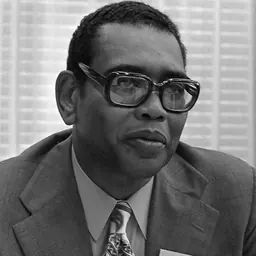

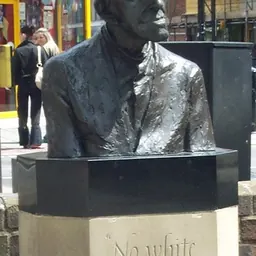


Related people
Same field, nearest in time
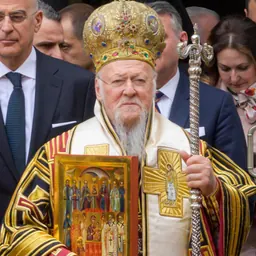
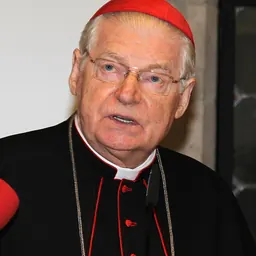


Contemporaries
People whose lives overlapped Brian J. Brown's


Frequently asked questions
Who is Brian J. Brown?
South African Methodist minister and anti-apartheid activist
When was Brian J. Brown born?
Brian J. Brown was born in 1938.
What is Brian J. Brown's occupation?
Brian J. Brown is a theologian and anti-apartheid activist.
Sources & further reading
· DBpedia: Brian Brown (minister)
Cite this page
APA: Biography.guide. (2026). Brian J. Brown. https://biography.guide/brian-j-brown/
MLA: "Brian J. Brown." Biography.guide, https://biography.guide/brian-j-brown/.
Chicago: "Brian J. Brown." Biography.guide. https://biography.guide/brian-j-brown/.
Data last updated: 2026-09-20 · Spot an error? Report a correction.
Page generated 2026-09-27 05:10 UTC