
About Brian Fargo
Born 1962. Brian Fargo is an American video game producer, screenwriter and CEO.
Frank Brian Fargo is an American video game designer, producer, programmer and executive, and founder of Interplay Entertainment, inXile Entertainment and Robot Cache.
In 2009, he was chosen by IGN as one of the top 100 game creators of all time.
Biography
Early life A descendant of the family that created the banking giants Wells Fargo and American Express, Fargo was born in Long Beach, California, and grew up in Whittier and Newport Beach. The only child of Frank Byron Fargo and Marie Curtis Fargo, he attended Corona del Mar High School, where he participated in track and field and developed a desire to create video games after his parents bought him an Apple II computer in 1977.
Brian Fargo wrote his first video game, Labyrinth of Martagon, with his friend Michael Cranford while still in high school. The team's first widely distributed game was the graphical text adventure The Demon's Forge, which Brian self-published and guerilla marketed in 1981 (and was later re-released by Boone Corporation). In 1982, Softline Magazine printed a letter from Fargo asking how On-Line Systems stored graphics in its graphic adventure The Wizard and the Princess. During this time period, he also wrote educational games for the World Book Encyclopedia.
Interplay In 1983, Fargo founded Interplay Productions prior to landing his first contract in 1983 with Activision for Mindshadow, a graphical text adventure game for the Apple II and Commodore 64. After the release of Mindshadow, Fargo hired an old high school friend and started work to create a role-playing game Bard's Tale for the Apple II and C64 for a then-new publisher Electronic Arts. Fargo subsequently co-designed Interplay's early RPGs, including the critically acclaimed Wasteland, where a character named Faran Brygo is a play on his name.
Interplay at the time was utilizing small development teams of one to three people to produce games for other companies to publish, which only allowed Interplay to break even at best. In 1988, Fargo decided to make the transition from a development house to a developer/publisher, adding the additional costs of production and marketing, with both the risk and possible reward of publishing successful games. The first title produced by Interplay in this era was the internally developed Battle Chess, followed by Quicksilver Software's Castles. The company was also experimenting at the time with new ideas and products such as Neuromancer, a video game version of the novel by William Gibson.
By 1992, Interplay contracted with an old friend of Fargo's, Allen Adham, and his partner, Michael Morhaime, to create RPM Racing. This was Adham and Morhaime's first contract to produce a game as Silicon & Synapse and was one of the first of such finds for Fargo, who had an eye for recognizing talent in small development teams. Adham and Morhaime eventually changed the name of their company to Blizzard Entertainment, future developer of the Warcraft, StarCraft, Diablo and Overwatch franchises.
Interplay continued to expand in the mid-1990s, adding licensed titles to its own intellectual properties such as Stonekeep, by acquiring rights to the original Star Trek and creating a series of its adaptations. Fargo also continued to find talented small developers designing innovative games. One was Parallax Software, whose demo game eventually became the hit game Descent. Parallax, later renamed Volition, was eventually bought by THQ. In 1994, Universal/MCA bought a 45% stake in Interplay, which later went public in 1998.
Interplay grew to over 600 employees at its zenith in the mid-1990s. One of the most successful groups within Interplay was formed during this period, Black Isle. Black Isle focused on role-playing games and eventually included the games of a new developer called BioWare, which was initially contracted by Interplay to make Shattered Steel. The next game they developed for Interplay, through the Black Isle division, was Baldur's Gate, which proved to be a big hit, followed by others, such as Icewind Dale and the critically acclaimed Planescape: Torment.
In 1996, the company expanded again, adding a division focusing on sports games called VR Sports and buying Shiny Entertainment. Fargo's goal in the acquisition of Shiny was to help Interplay transition into the console business, in addition to its successful PC game releases. That same year, Computer Gaming World ranked Fargo as the third most influential "industry player" of all time, as he "has shown both brilliant product vision and great business talents."
In 1998, Interplay filed for an initial public offering (IPO) of stock to fund future development and retire debt the company held. At the time, the market for IPOs had started to slow from the boom years of the early and mid-1990s, yet the need for capital drove Fargo to file the offering. Increased competition, less than stellar returns on Interplay’s sports division and the lack of console titles forced the company to seek additional funding two years later with an investment from Titus Software, a Paris-based game company. In 1999, the relationship between Fargo and majority shareholder Titus deteriorated, according to Fargo, due to a "different ideology of management".
InXile Entertainment released a new Bard's Tale as one of its first titles, released by Vivendi Universal Games, but has found success in a new category of downloadable games, such as Line Rider and Fantastic Contraption.
In 2012, inspired by the success of Double Fine Adventures fan funded model, Fargo announced that he was going to attempt to fan-fund Wasteland 2 using the webservice Kickstarter. The project's fundraising campaign reached its $900,000 funding goal in its second day and Fargo said hopes that all of his future projects involve Kickstarter as it "offers all the freedoms that a developer hopes for." The Wasteland 2 Kickstarter campaign ended on April 17, 2012, raising a total of $2,933,252, making it the third highest crowd funded video game on Kickstarter to date, with an additional $107,152 in PayPal pledges. The Kickstarter campaign was documented in the documentary, Capital C.
On March 6, 2013, Fargo followed through on his promise to fund future projects through Kickstarter and launched Torment: Tides of Numenera, described as "a story-driven CRPG crafted in the tradition of Planescape: Torment and set in the world of Monte Cook's Numenera." The project reached its goal of $900,000 in just six hours and went on to break the Kickstarter record for fastest project to reach $1 million. The previous record had been held by the Ouya video game console which reached $1 million in 8 hours 22 minutes; Torment reached this amount in less than seven hours.
In May 2015 Fargo revealed The Bard's Tale IV and his intentions to launch a Kickstarter for it on June 2, 2015. It is a direct continuation of that story from the previous The Bard's Tale games. The Kickstarter concluded on July 10, 2015 with a final pledge total of $1,519,681 USD and 33,741 backers.
In March 2017, Fargo had announced his plans to retire from inXile following the release of Wasteland 3. However, in November 2018, Microsoft Studios announced their intention to buy inXile and make the studio a subsidiary. Because this would provide the studio with significantly more resources, Fargo stated he no longer plans to retire but instead will continue to lead the company.
Robot Cache Fargo announced the founding of Robot Cache, a new digital games storefront for personal computer games expected to go live in Q2 2018. Robot Cache will deliver games via blockchains which can be decrypted or re-encrypted through the service; this will effectively allow players to buy and sell digital games without publishers fearing that the original owner can retain a copy after selling. This allows the service to ensure a higher percentage of each game sale goes back to the publisher; publishers are set to receive 95% of original game sales, and 70% of used game sales. While the site will accept normal forms of payment, it will also use a new cryptocurrency called Iron, which users will receive when reselling games and can be applied towards the purchase of new or used games.
Others Fargo was a founder member of the board of advisors for Fig, a mixed investment/crowdfunding platform, since its launch in December 2015. As part of his involvement, he used Fig to crowdfund development of Wasteland 3. With inXile's purchase by Microsoft Studios, Fargo plans to remain on the board to help determine which games that Fig should support, but otherwise does not plan to use Fig for funding.
Games
Year Title Role 1981 The Demon's Forge Designer, programmer, writer 1985 Tales of the Unknown: Volume I - The Bard's Tale Writer 1985 Borrowed Time Writer 1986 The Bard's Tale II: The Destiny Knight Writer 1986 Tass Times in Tonetown Director 1988 The Bard's Tale III: Thief of Fate Director 1988 Battle Chess Producer, director 1988 Wasteland Director 1989 Dragon Wars Producer 1989 Neuromancer Designer, director 1990 The Adventures of Rad Gravity Designer, programmer 1990 Total Recall Programmer 1990 Battle Chess II: Chinese Chess Producer 1990 Swords and Serpents Producer 1990 J.R.R. Tolkien's The Lord of the Rings, Vol. I Executive producer 1991 J.R.R. Tolkien's The Lord of the Rings, Vol. II: The Two Towers Executive producer 1991 Castles Designer, producer 1991 Track Meet Designer, producer 1992 Castles: The Northern Campaign Executive producer 1992 The Bard's Tale Construction Set Executive producer1992 Battle Chess 4000 Executive producer 1992 Star Trek: 25th Anniversary Executive producer 1992 The Lost Vikings Executive producer 1992 Mario Teaches Typing Executive producer 1992 Castles II: Siege and Conquest Executive producer 1993 ClayFighter Executive producer 1993 Claymates Executive producer 1993 Rags to Riches: The Financial Market Simulation Executive producer 1993 RoboCop Versus The Terminator Executive producer 1993 Rock 'n Roll Racing Executive producer 1993 SimCity Enhanced CD-ROM Executive producer 1993 Star Trek: Judgment Rites Executive producer 1993 Interplay's 10 Year Anthology Executive producer 1993 Buzz Aldrin's Race into Space Executive producer 1994 ClayFighter 2: Judgment Clay Executive producer 1994 Heart of the Alien Executive producer 1994 Out of This World Executive producer 1995 Mario's Game Gallery Executive producer 1995 Stonekeep Executive producer 1996 Blood & Magic Executive producer 1997 Fallout Executive producer 1997 Star Trek: Starfleet Academy Director (project leader) 1998 Of Light and Darkness: The Prophecy Executive producer 1998 Fallout 2 Executive producer 2000 Wild Wild Racing Executive producer 2004 The Bard's Tale Designer, executive producer, writer 2007 Line Rider Executive producer 2011 Hunted: The Demon's Forge Executive producer, writer 2014 Wasteland 2 Executive producer 2017 Torment: Tides of Numenera Executive producer 2018 The Bard's Tale IV: Barrows Deep Executive producer 2020 Wasteland 3 Studio headTBAClockwork RevolutionExecutive producer
Don’t just read it —
keep it.
Full-length biographies made to live with: read them, listen on the way to work, watch them tonight.
- E-book
- Audio
- Video
Instant download · yours to keep · every purchase keeps this site free
Important facts
People in Brian Fargo's life
Named in this biography and alive at the same time





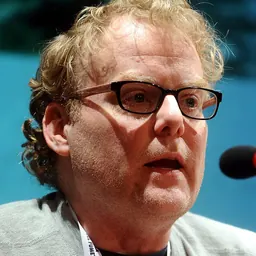
Related people
Same field, nearest in time


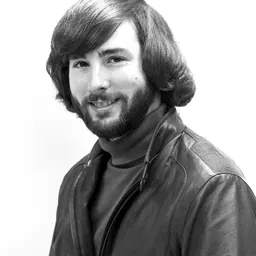



Contemporaries
People whose lives overlapped Brian Fargo's



Frequently asked questions
Who is Brian Fargo?
American video game producer and developer
When was Brian Fargo born?
Brian Fargo was born on 15 December 1962 in Long Beach.
What is Brian Fargo's occupation?
Brian Fargo is a video game producer, screenwriter and CEO.
What nationality is Brian Fargo?
Brian Fargo is American.
Sources & further reading
Cite this page
APA: Biography.guide. (2026). Brian Fargo. https://biography.guide/brian-fargo/
MLA: "Brian Fargo." Biography.guide, https://biography.guide/brian-fargo/.
Chicago: "Brian Fargo." Biography.guide. https://biography.guide/brian-fargo/.
Data last updated: 2026-09-27 · Spot an error? Report a correction.
Page generated 2026-09-27 05:17 UTC