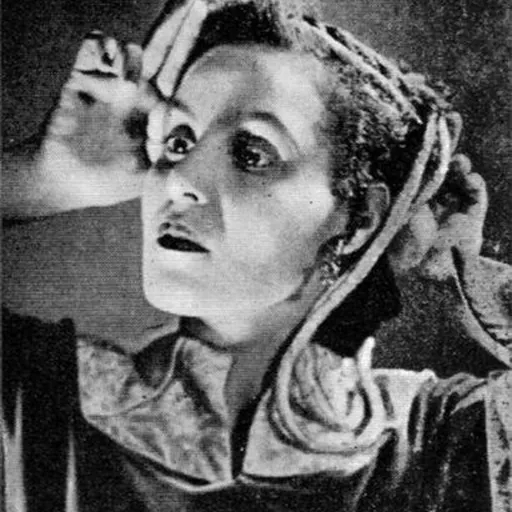
About Bracha Tzfira
Lived 1910 – 1990 (aged 79). Bracha Tzfira was an Israeli and Turkish singer and stage actor.
Bracha Zefira (, also spelled Braha Tzfira; 15 April 1910 – 1 April 1990) was a pioneering Israeli folk singer, songwriter, musicologist, and actress of Yemenite Jewish origin. She is credited with bringing Yemenite and other Middle Eastern Jewish music into the mix of ethnic music in Palestine to create a new "Israeli style", and opening the way for other Yemenite singers to succeed on the Israeli music scene. Her repertoire, which she estimated at more than 400 songs, included Yemenite, Bukharan, Persian, Ladino, and North African Jewish folk songs, and Arabic and Bedouin folk songs and melodies.
Born in Jerusalem to Yemenite Jewish immigrants, she was orphaned of both parents by the age of three. She was raised by a succession of Sephardi Jewish foster families in the city and imbibed the musical tradition of each, as well as the local Arabic songs. She rose to stardom in the 1930s with her musical interpretations of Yemenite and Middle Eastern Jewish folk songs, accompanied by Western arrangements on piano by Nahum Nardi. In the 1940s she began collaborating with art music composers such as Paul Ben-Haim, Marc Lavry, Alexander Uriah Boskovich, Noam Sheriff, and Ben-Zion Orgad, performing her songs with classical music ensembles and orchestras. She was popular in Palestine, Europe, and the United States. In 1966, she received the Engel Prize for her musical contribution.
Early life Bracha Zefira was born in Jerusalem, in the Ottoman Mutasarrifate of Jerusalem, in 1910. Her father, Yosef Zefira, had immigrated to the Land of Israel from Sanaa, Yemen, in 1877, and resided in the Nachalat Zvi neighborhood of Jerusalem. Here he married Na'ama Amrani, also a Yemenite Jew. Na'ama died giving birth to Bracha, and Yosef succumbed to typhus when Bracha was three years old. She was adopted by a family in the Bukharim Quarter, where she was surrounded by Persian Jewish neighbors. Three years later, when that family left Jerusalem, Bracha lived with a widow in the Yemin Moshe neighborhood, where the neighbors were mostly Sephardi Jews from Salonika. She was also exposed to Arabic songs that she heard in the city; she and her friends would append lyrics from Hebrew poems to them. the two first appeared together in concert in Berlin in 1929 and went on to perform in Poland, Romania, the Czech Republic, and Austria.
Zefira's interpretation and presentation of Yemenite musical traditions influenced other European Jewish composers who were contributing new works to Hebrew song. While folk songs from the Jewish diaspora had been shunned in favor of new, Hebrew-language folk songs, Yemenite melodies were considered the original "Israeli idiom". Zefira is credited with bringing Yemenite and other Middle Eastern Jewish music into the mix of ethnic music in Palestine to create a new "Israeli style", and opening the way for other Yemenite singers to succeed on the Israeli music scene.
Other collaborations
Zefira and Nardi parted ways both professionally and personally in 1939. preferred Sephardi song. He used many of the melodies he learned from her in her major compositions. though his and other composers' approach to Zefira, and to the melodies they learned from her, has been critqued as reflecting a superficial, exotic attitude. Ödön Pártos composed arrangements for her Yemenite songs; and Marc Lavry opted to arrange "songs with a light and danceable style". Zefira also collaborated with the composers Alexander Uriah Boskovich, Mendel Mahler-Kelkshtein, Noam Sheriff, and Ben-Zion Orgad. In 1950, she sang in a Histadrut Hanukkah Festival at Carnegie Hall. She gave her farewell performance at Town Hall on 6 April 1950. The latter concert included "traditional, folk, shepherd and children's songs" based on "authentic Hebrew melodies", and "love songs, prayers, psalms, and poems" from Yemenite, Persian, and Ladino traditions, accompanied by a 35-piece orchestra.
Musical repertoire
Zefira estimated she had more than 400 songs in her repertoire. Because she made them wider known, some ethnic melodies were later adapted into Hebrew songs.
Zefira was also noted for her performance style. She wore exotic, Yemenite-styled clothing and jewelry, and performed in bare feet. This costuming "evoked the myths about women of the Orient". She accentuated her performances with dramatic hand gestures. In 1949 the American-British sculptor Sir Jacob Epstein created a bronze sculpture of her hand in one of its expressive poses.
Later life Zefira's popularity in Israel waned in the 1950s, possibly because of public dissatisfaction with her choice of art music over Hebrew song. The book details "the folk songs of Oriental Jews in Israel, and songs of the Bedouin and the peasants, which had influenced the songs of the Land of Israel in the 1920s and 1930s". Streets in Jerusalem and Beersheba were named for her. The Tel Aviv municipality posted a commemorative plaque in her honor in 2008.
Musical legacy Zefira's success in blending Eastern melodies with Western harmonies influenced the later music careers of European composers who worked with her, including Nahum Nardi and Paul Ben-Haim. who also became a singer, performing at La Scala. In 1940 Zefira married Ben-Ami Zilber, a violinist with the Palestine Symphony Orchestra; they were married until his death in 1984. Their son, Ariel Zilber (born 1943), became a popular Israeli singer-songwriter.
Zefira died on 1 April 1990 and was buried in the Kiryat Shaul Cemetery in Tel Aviv. News of her death was not broadcast in the media and her funeral was sparsely attended.
Discography Zefira's 78 rpm phonograph records were: "Ein Adir" (Columbia Records) "Ein Adir K'Adonai" (Kol Zion) "Eshtachave"/"Yismach Har Zion" (Reena, Tslil) "Hamavdil" (Reena) "I Have a Garden" (Columbia Records) "Tsuri Goali Yah/Hamavdil" (Tslil)
Don’t just read it —
keep it.
Full-length biographies made to live with: read them, listen on the way to work, watch them tonight.
- E-book
- Audio
- Video
Instant download · yours to keep · every purchase keeps this site free
Important facts
People in Bracha Tzfira's life
Named in this biography and alive at the same time



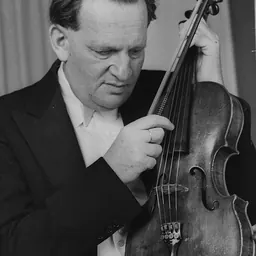
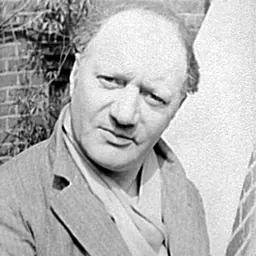
Related people
Same field, nearest in time
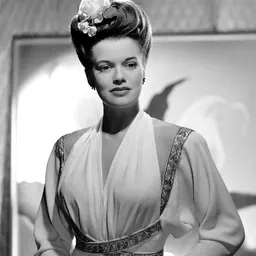



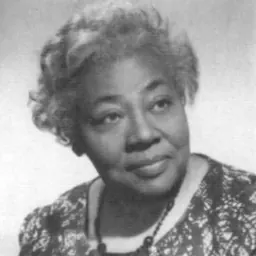

Contemporaries
People whose lives overlapped Bracha Tzfira's





Frequently asked questions
Who was Bracha Tzfira?
Israeli singer
When was Bracha Tzfira born?
Bracha Tzfira was born on 15 April 1910 in Jerusalem.
When did Bracha Tzfira die?
Bracha Tzfira died on 1 April 1990 in Tel Aviv.
What was Bracha Tzfira's occupation?
Bracha Tzfira was a singer and stage actor.
What nationality was Bracha Tzfira?
Bracha Tzfira was Israeli and Turkish.
Sources & further reading
Cite this page
APA: Biography.guide. (2026). Bracha Tzfira. https://biography.guide/bracha-tzfira/
MLA: "Bracha Tzfira." Biography.guide, https://biography.guide/bracha-tzfira/.
Chicago: "Bracha Tzfira." Biography.guide. https://biography.guide/bracha-tzfira/.
Data last updated: 2026-09-21 · Spot an error? Report a correction.
Portrait: Wikimedia Commons · author & licence
Page generated 2026-09-27 04:59 UTC