
Borys Liatoshynsky
Ukrainian composer, conductor, teacher
About Borys Liatoshynsky
Lived 1894 – 1968 (aged 73). Borys Liatoshynsky was a Russian and Ukrainian conductor, composer, music educator, university teacher and pedagogue.
Borys Mykolaiovych Lyatoshynsky, also known as Boris Nikolayevich Lyatoshinsky, (15 April 1968) was a Ukrainian composer, conductor, and teacher. A leading member of the new generation of 20th century Ukrainian composers, he was awarded a number of accolades, including the honorary title of People's Artist of the Ukrainian SSR and two Stalin Prizes.
He received his primary education at home, where Polish literature and history was held in high esteem. After completing school in 1913, he entered the Faculty of Law at Kyiv University, and as a graduate was employed to teach music at the Kyiv Conservatory. During the 1910s, Lyatoshynsky wrote 31 works of various musical genres. During the 1930s he travelled to Tajikistan to study folk music and compose a ballet about the life of local people. From 1935 to 1938, and from 1941 to 1944, he taught orchestration at the Moscow Conservatory. During the war, Lyatoshynsky was evacuated and taught at the Conservatory's branch in Saratov, where he worked on arrangements of Ukrainian songs, and organised the transportation of Ukrainian musical manuscripts away to safety.
Lyatoshynsky's main works are his operas The Golden Ring (1929) and Shchors (1937), the five symphonies, the Overture on Four Ukrainian Folk Themes (1926), the suites Taras Shevchenko (1952) and Romeo and Juliet (1955), the symphonic poem Grazhyna (1955), his "Slavic" piano concerto (1953), and the completion and orchestration of Reinhold Glière's violin concerto (1956). Many of his compositions were rarely or never performed during his lifetime. A 1993 recording of his symphonies first brought his music to worldwide audiences.
Despite his music being criticised by the Soviet authorities, who officially banned such compositions as his Second Symphony, Lyatoshynsky never adhered to a style of socialist realism. His music was written with a modern European style, and skilfully includes Ukrainian themes. His early musical style was influenced by his family, his teachers (including Glière), and by Margarita Tsarevich. The existence of a Polish side to Lyatoshynsky's family resulted in Polish themes being central for many of his works. He also drew inspiration for his early compositions from Tchaikovsky, Glazunov, and Scriabin. His musical style later developed in a direction favoured by Shostakovich. Soviet and Ukrainian composers who studied under Lyatoshynsky, and were influenced by him, include Myroslav Skoryk and Valentyn Sylvestrov.
Biography Family and early life
Borys Lyatoshynsky was born on 3 January 1895, in Zhytomyr, Ukraine (then part of the Russian Empire). His parents were both musical and well-educated, and their son received his primary education at home. The Lyatoshynsky family lived in towns and cities throughout Ukraine during Borys's childhood. His father was a history teacher, who during his career was the head teacher of high schools in Zhytomyr, Nemyriv, Kyiv, and—from 1908 to 1911—in Zlatopil. During the 1920s, the Communists introduced a policy of korenizatsiia ("indigenization"), designed to foster indigenous cultures as a way to undermine what was perceived as imperial domination. Korenizatsia produced a cultural climate that encouraged Lyatoshynsky and his contemporaries to be experimental and innovative.
During the first half of the decade, Lyatoshynsky concentrated mainly on composing chamber music for the violin and the piano, writing pieces such as his String Quartet No 2, the Trio for piano, violin and cello, and two piano sonatas. He also composed songs, some of them set to the lyrics of the Chinese ancient poets. the year he composed an overture based on Ukrainian folk music—the Overture on Four Ukrainian Themes, his first attempt at integrating his own musical style with original folk tunes. In June that year, Glière performed the premiere of Lyatoshynsky's First Symphony in a concert programme.
The Second Symphony in B minor was commissioned in 1933 by the Organizing Bureau of the Union of Soviet Composers, to be premiered in Moscow along with a number of other works by Ukrainian composers. Lyatoshynsky worked on the symphony for six months during 1934. The work was criticised in the press, even though it had yet to be performed, with one critic writing: "The second symphony, with its external complexity and imposing sound, leaves the impression of an extremely empty, far-fetched work”. Due to the national mourning at the time for the Soviet politician Sergo Ordzhonikidze, the premiere was cancelled.
The Third Symphony was not heard by the public for several years. The conductor Natan Rakhlin was brave enough to perform it to a packed concert hall during a daytime performance. Lyatoshynsky wrote to Glière that "the crowded hall literally gave me a standing ovation". However, the composer was accused of "abstract understanding of the struggle for peace", and told by the authorities that the symphony did not "reveal the true Soviet reality". He died on 15 April 1968, and was buried in the Baikove Cemetery in Kyiv; a bust has since been added to the grave.
Honours, awards, and commemorations
Two Stalin Prizes (second class): (1946)for the Ukrainian Quintet; first class (1952)for the music for the 1951 film Taras Shevchenko Honored Art Worker of the Ukrainian SSR (1945) Order of Lenin (1960) Order of the Red Banner of Labour Two Orders of the Badge of Honour (1938, 1951) The Polish state prize‘for the strengthening of Russo-Polish friendship’ (1963)
A monument to Lyatoshynsky was erected in Zhytomyr in honour of the composer. A commemorative plaque was erected in Kyiv at the house where he lived from 1944 to 1968 (now 68 B. Khmelnytskoho Street), and in 1977 a street in Kyiv was renamed in his honour. A room is dedicated to Lyatoshynsky in the . The is also named after Lyatoshynsky.
Works
Lyatoshynsky wrote a variety of works, including five symphonies, symphonic poems, and several shorter orchestral and vocal works, two operas, chamber music, and a number of works for solo piano. He wrote nearly 50 songs. Lyatoshynsky wrote music with a modern European style and technique, skillfully combining it with Ukrainian themes. In 1940, Dmitri Shostakovich visited a plenum of the Union of Soviet Composers in Kyiv. There he singled out the music of both Lyatoshynsky and Levko Revutsky for their "high level of craftsmanship" which "pleasantly amazed" him. After the war, Lyatoshynsky was accused of formalism and creation of degenerative art.
Lyatoshynsky's main works are his operas The Golden Ring and Shchors, the five symphonies, the Overture on Four Ukrainian Folk Themes (1926), the suites Taras Shevchenko (1952) and Romeo and Juliet (1955), the symphonic poem Grazhyna (1955), his "Slavic" concerto for piano and orchestra (1953), and the completion and orchestration of Glière's violin concerto (1956). More tuneful and Scriabinesque in comparison with his four other symphonies, The First Symphony is described in the 1999 edition of The Penguin Guide to Compact Discs as "a well-crafted, confident score" that "abounds in contrapuntal elaboration and abundant orchestral rhetoric". A vision of the war similar to that in Nikolai Myaskovsky's Symphony No. 5 was expressed in the symphony. The reflective second movement is balanced by a finale that is, according to the music historian Ferrucio Tammaro, "not only dynamic, but even heroic, in close conformity with the tastes of emerging Soviet symphonism".
The music for the Second Symphony (19351936) can be interpreted as depicting images of the reality of Soviet life, often using atonality. Written in the conventional three-movement form, the symphony is full of contrasting moods and dramatic contrasts. The longest and perhaps his most popular symphony, it is as lyrical-sounding as the First, but less derivative and more assured. According to the musicologist , they have become regarded by Ukrainians as the pinnacle of modern Ukrainian musical culture.
In his Fifth Symphony (the 'Slavonic', in C major, (1965–1966)), which includes liturgical melodies from the Orthodox Church, the music is more post-Nationalist in nature than other works composed during this period in the composer's career, Lyatoshynsky included a Russian folk song as the main theme and a song from Yugoslavia as a secondary theme. Like Gliere's Symphony No. 3, it alludes to Ilya Muromets, a legendary Russian warrior.
Other works Critics have praised smaller-scale works by Lyatoshynsky. They include Intermezzo from the Second String Quartet, op.4 (1922) orchestrated in the early 1960s, and the Lyric Poem (1964), an elegy written in memory of Glière. The orchestrated version of the Intermezzo, which according to the British classical music journalist Michael Oliver consists of "delicate melodies floating over a gently rocking pulse", is praised by him as being "magical". and a key figure of the modern school in Ukrainian music, whose works consistently demonstrate his mastery of composition and orchestration.
There is a permanent exhibition about Lyatoshynsky at , in Vorzel.
Don’t just read it —
keep it.
Full-length biographies made to live with: read them, listen on the way to work, watch them tonight.
- E-book
- Audio
- Video
Instant download · yours to keep · every purchase keeps this site free
Important facts
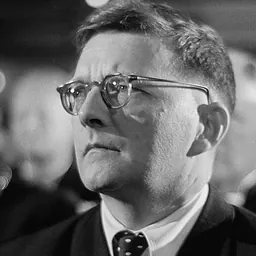
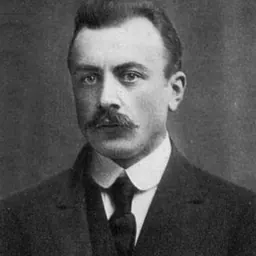
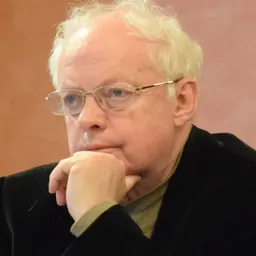
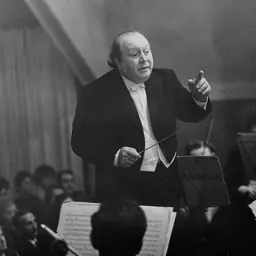
People in Borys Liatoshynsky's life
Named in this biography and alive at the same time


Related people
Same field, nearest in time



Contemporaries
People whose lives overlapped Borys Liatoshynsky's


Frequently asked questions
Who was Borys Liatoshynsky?
Ukrainian composer, conductor, teacher (1894–1968)
When was Borys Liatoshynsky born?
Borys Liatoshynsky was born on 22 December 1894 in Zhytomyr.
When did Borys Liatoshynsky die?
Borys Liatoshynsky died on 15 April 1968 in Kyiv.
What was Borys Liatoshynsky's occupation?
Borys Liatoshynsky was a conductor, composer, music educator, university teacher and pedagogue.
What nationality was Borys Liatoshynsky?
Borys Liatoshynsky was Russian and Ukrainian.
Sources & further reading
· Wikipedia: Borys Liatoshynsky
Cite this page
APA: Biography.guide. (2026). Borys Liatoshynsky. https://biography.guide/borys-liatoshynsky/
MLA: "Borys Liatoshynsky." Biography.guide, https://biography.guide/borys-liatoshynsky/.
Chicago: "Borys Liatoshynsky." Biography.guide. https://biography.guide/borys-liatoshynsky/.
Data last updated: 2026-09-20 · Spot an error? Report a correction.
Page generated 2026-09-27 05:23 UTC