
About Boris Slutsky
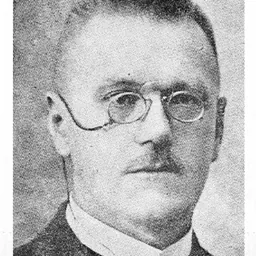
Lived 1919 – 1986 (aged 66). Boris Slutsky was a Russian poet, translator and writer.
Boris Abramovich Slutsky (; 7 May 1919 – 23 February 1986) was a Soviet poet, translator, Great Patriotic War veteran, major, and member of the Soviet Union of Writers.
Biography Slutsky was born in Sloviansk, Ukrainian SSR in 1919 to a Jewish family. His father, Abram Naumovich Slutsky, was a junior official and his mother, Aleskandra Abramovna, was a music teacher. His father's family originated from Starodub, in the Principality of Chernigov. Slutsky had a younger brother, Efim (Haim, 1922-1995), and a sister, Maria. His cousin Meir Amit was an Israeli Military Intelligence director from 1962 to 1963 and a Mossad director from 1963 to 1968.
Slutsky grew up in Kharkov. He first attended a lito (literary studio) at the Kharkov Pioneers Palace but left due to pressure from his father, who dismissed Russian poetry as a viable career. In 1937, he entered the Law Institute of Moscow, Slutsky became the only Russian poet to make the Holocaust a central focus of his writing.
Between 1941–1945 he served in the Red Army as a politruk of an infantry platoon. His war experiences are reflected in his poetry. After the war, he had the rank of major. In 1946, he lived on a small disability pension and began working as an editor and translator for a radio station.
Slutsky died on 23 February 1986 in Tula, Russia.
Works Together with David Samoylov, Slutsky is representative of the War generation of Russian poets and, due to the nature of his verse, is a crucial figure in the post-Stalin literary revival. His poetry is deliberately coarse, jagged, prosaic and conversational. It has a dry, polemic quality that perhaps reflects the poet's early training as a lawyer. He represented an opposing tendency to that of neo-romantic or neo-futuristic poets such as Andrey Voznesensky. In his works he approached Jewish themes, including material from the Jewish tradition about antisemitism (including in Soviet society) and the Holocaust.
As early as 1953–1954, prior to the 20th Congress of CPSU, verses condemning the Stalinist regime were attributed to Slutsky. These were circulated in "Samizdat" in the 1950s and were published in an anthology in the West (in Munich) in 1961. Slutsky neither confirmed nor denied their authorship.
In 1956, Ilya Ehrenburg created a sensation by quoting a number of previously unpublished poems by Slutsky in an article. In 1957, Slutsky's first book of poetry, Memory, was published, containing many poems written much earlier.
Slutsky edited The Poets of Israel, a landmark publication considered the first anthology of Israeli poetry, which was published in 1963.
He also translated the Yiddish poetry of Leib Kvitko, Aron Vergelis, Shmuel Galkin, Asher Shvartsman, and Jacob Sternberg to Russian.
Don’t just read it —
keep it.
Full-length biographies made to live with: read them, listen on the way to work, watch them tonight.
- E-book
- Audio
- Video
Instant download · yours to keep · every purchase keeps this site free
Important facts
People in Boris Slutsky's life
Named in this biography and alive at the same time
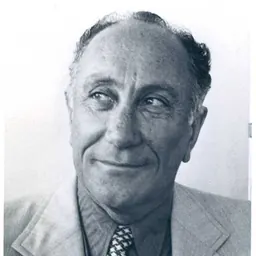
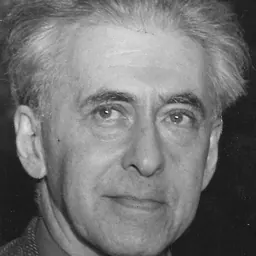


Related people
Same field, nearest in time

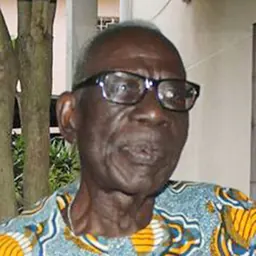
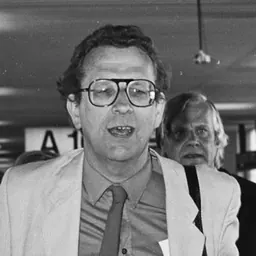
Contemporaries
People whose lives overlapped Boris Slutsky's




Frequently asked questions
Who was Boris Slutsky?
Russian poet (1919–1986)
When was Boris Slutsky born?
Boris Slutsky was born on 7 May 1919 in Sloviansk.
When did Boris Slutsky die?
Boris Slutsky died on 23 February 1986 in Tula.
What was Boris Slutsky's occupation?
Boris Slutsky was a poet, translator and writer.
What nationality was Boris Slutsky?
Boris Slutsky was Russian.
Sources & further reading
Cite this page
APA: Biography.guide. (2026). Boris Slutsky. https://biography.guide/boris-slutsky/
MLA: "Boris Slutsky." Biography.guide, https://biography.guide/boris-slutsky/.
Chicago: "Boris Slutsky." Biography.guide. https://biography.guide/boris-slutsky/.
Data last updated: 2026-09-20 · Spot an error? Report a correction.
Page generated 2026-09-27 05:28 UTC