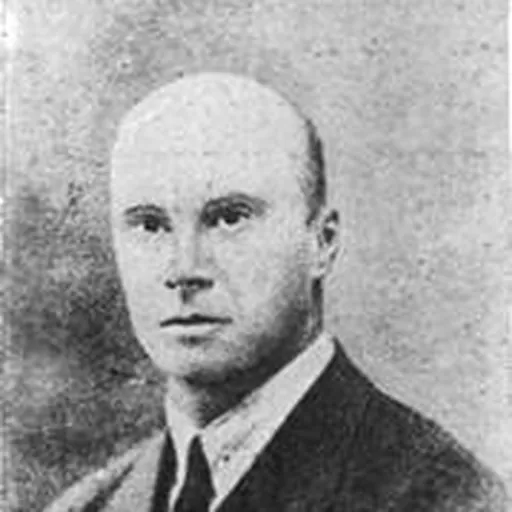
About Boris Kozo-Polyansky
Lived 1890 – 1957 (aged 67). Boris Kozo-Polyansky was a Russian botanist and evolutionary biologist, known for Endosymbiosis.
Boris Mikhailovich Kozo-Polyansky (; 20 January 1890 – 21 April 1957) was a Soviet and Russian botanist and evolutionary biologist, best known for his seminal work, Symbiogenesis: A New Principle of Evolution, which was the first work to place the theory of symbiogenesis into a Darwinian evolutionary context, as well as one of the first to redefine cell theory.
Life Boris Kozo-Polyansky was born in Ashgabat, which at the time was part of the Russian Empire. He relocated to Voronezh in his early youth. He graduated from Moscow University in 1914 at the age of 24, before returning to Voronezh where he worked as an assistant at Voronezh Agricultural University until 1918. In 1920 he then became a professor at Voronezh State University, where he taught for the remainder of his life and served as a Dean, Chair of Botany and Vice President of the University. "Tea plants of Kazakhstan", and "The main biogenetic law from the botanical point of view" during his lifetime, and a fourth book on botany, "Course in the Systematics of Higher Plants", was published posthumously.
Kozo-Polyansky became the director of the Voronezh Botanical Gardens in 1937, which today are named in his honor.
Evolutionary theory of symbiogenesis Symbiogenesis, the theory which describes the endosymbiotic origin of Eukaryotic cells, which endocytosed smaller prokaryotes that later became DNA containing organelles such as mitochondria and plastids, was first suggested by Andreas Franz Wilhelm Schimper (1856 –1901) in his 1883 seminal paper: "On the development of chlorophyll grains and color bodies." However, the theory wasn't detailed in a substantial manner until Konstantin Mereschkowski (1855–1921) published his 1905 paper, "The nature and origins of chromatophores in the plant kingdom," where the term Symbiogenesis was first coined. It was in this academic landscape that Kozo-Polyansky pioneered the idea that symbiogenesis could be explained through the classical Darwinian notion of evolution, something his two predecessors failed to do. He first publicly related this theory in 1921 at the All Russian Congress of Russian Botanists in Petrograd.
B. M. Kozo-Polyansky's abstract given to the All-Russian Congress of Russian Botanists in Petrograd 1921. Translation below.
Yet, it wasn't until 1924, through the publication of Kozo-Polyansky's seminal work "The New Principle of Biology: An Essay on the Theory of Symbiogenesis," that the evolutionary context and importance of symbiogenesis was fully detailed for the first time. The novel views that he proposed in the text, are the following:
Life arose before Eukaryotic Cells; from bioblasts, cytodes, and Cyanophyceae or simpler cells. These life forms (generally classified as prokaryotes today) were the closest descendants of the earliest life forms. Cytodes and bioblasts, are simpler than cells with nuclei yet still have all the properties of life. He noted the environmental impacts of bacteria with complex and unique metabolic pathways. Cells are made up of sub-units called "organoids" (known as organelles today). The green photosynthetic sub-units originated as a Cyanophyceae, that were engulfed by larger cells and were able to form a symbiotic relationship with its host. This symbiogenesis led to the evolution of chloroplasts, and mitochondria. Symbiogenesis and evolution together have led to rapid changes in organisms, such as the acquisition of plastids over a few generations through endosymbiosis, rather than over many generations as suggested by many evolutionists. This conception of rapid evolution followed by long periods of stasis, first supported in this work, was the precursor to the idea of punctuated equilibrium. There is a greater force for an evolutionary drive when two species engaged in a symbiotic relationship are very distinct.
Kozo-Polyansky ultimately posited that symbiogenesis was a source of evolutionary novelty and that Darwinian mechanisms, such as natural selection, were responsible for maintaining the heritable changes brought about by symbiotic interactions.
Legacy and impact Boris Kozo-Polyansky (1915)At the time of the publication of Kozo-Polyansky's theory and work on evolution and symbiogenesis, was ridiculed and rejected, and was never recognized for its merit during his lifetime. However, the entirety of his original book was not translated into English until 2010 by Victor Fet, and Lynn Margulis.
Today, his views are held to be correct by nearly the entire biological sciences community, and is regarded as one of the first thinkers to detail the endosymbiotic evolution of eukaryotic cells, the theory of punctuated equilibrium and the distinction between prokaryotic and eukaryotic life forms. A special issue of the journal BioSystems (2021) "Symbiogenesis and Progressive Evolution" is dedicated to Boris Kozo-Polyansky and Lynn Margulis.
Works and honors
Published works
Introduction to the phylogenetic systematics of higher plants, Voronezh, 1922
New principle of biology. Essay on the Theory of Symbiogenesis, Moscow, 1924
The main biogenetic law from the botanical point of view, Voronezh, 1937
Tea plants of Kazakhstan / Kazakh branch of the USSR Academy of Sciences; Otv. Ed. I. A. Polyakov. – Alma-Ata, 1943. – 26 p.
Course in the Systematics of Higher Plants, Voronezh, 1965
Honors Order of Lenin (2 awards) Order of the Red Banner of Labour Medal "For Valiant Labour in the Great Patriotic War 1941–1945" Corresponding Member of the Academy of Sciences of the Soviet Union (1932)
Don’t just read it —
keep it.
Full-length biographies made to live with: read them, listen on the way to work, watch them tonight.
- E-book
- Audio
- Video
Instant download · yours to keep · every purchase keeps this site free
Important facts
People in Boris Kozo-Polyansky's life
Named in this biography and alive at the same time


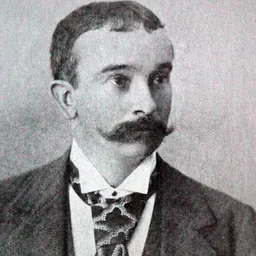


Related people
Same field, nearest in time
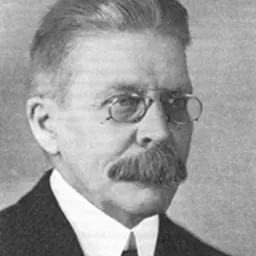
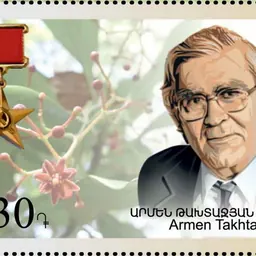
Contemporaries
People whose lives overlapped Boris Kozo-Polyansky's



Frequently asked questions
Who was Boris Kozo-Polyansky?
Russian (Soviet) botanist (1890-1957)
When was Boris Kozo-Polyansky born?
Boris Kozo-Polyansky was born on 8 January 1890 in Ashgabat.
When did Boris Kozo-Polyansky die?
Boris Kozo-Polyansky died on 21 April 1957 in Voronezh.
What was Boris Kozo-Polyansky's occupation?
Boris Kozo-Polyansky was a botanist and evolutionary biologist.
What was Boris Kozo-Polyansky known for?
Boris Kozo-Polyansky was known for Endosymbiosis.
What nationality was Boris Kozo-Polyansky?
Boris Kozo-Polyansky was Russian.
Sources & further reading
· Wikipedia: Boris Kozo-Polyansky
· DBpedia: Boris Kozo-Polyansky
Cite this page
APA: Biography.guide. (2026). Boris Kozo-Polyansky. https://biography.guide/boris-kozo-polyansky/
MLA: "Boris Kozo-Polyansky." Biography.guide, https://biography.guide/boris-kozo-polyansky/.
Chicago: "Boris Kozo-Polyansky." Biography.guide. https://biography.guide/boris-kozo-polyansky/.
Data last updated: 2026-09-20 · Spot an error? Report a correction.
Page generated 2026-09-27 05:10 UTC