
About Bona Malwal
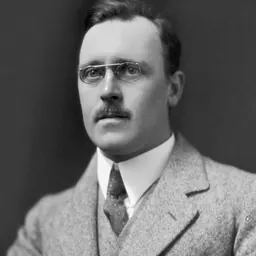
Lived 1928 – 2025 (aged 96–97). Bona Malwal was a Sudanese journalist, politician, official and civil servant.
Bona Malwal Madut Ring (1928 – 2 November 2025) was a South Sudanese journalist, politician and government official known for his advocacy for self-determination and secession for southern Sudan (today's South Sudan). A member of the Dinka ethnic group, he pursued his education in journalism and economics in the United States, earning degrees from Indiana University Bloomington and Columbia University. His career transitioned from an early stint as an Information Officer to journalism, including Editor-in-Chief positions at various Sudanese newspapers including the Southern Front's mouthpiece, The Vigilant.
Malwal co-founded the Southern Front, served in the national assembly, and held ministerial positions, advocating for cultural, informational policies, and economic development before and during Gaafar Nimeiry's era. He also notably resigned in protest against the imposition of Sharia law and Arabic as Sudan's official language after the 1977 National Reconciliation, before later joining the Southern Sudan Autonomous Region's government. In the 1990s, he advocated against human right abuses in Sudan while in self-exile.
He played a role in peace negotiations and South Sudan's independence, occasionally aligning with controversial figures like Omar al-Bashir, who is wanted by the International Criminal Court for orchestrating the Darfur genocide. was born in 1928 in Twic Mayardit County, Bahr El Ghazal, Anglo-Egyptian Sudan (today in South Sudan). He is from the Dinka ethnic group and is the son of a Gogrial Dinka chief. Malwal completed a diploma in journalism from Indiana University Bloomington in 1963 on a scholarship, The journal was founded on 23 March 1965. The Vigilant was closed in May 1969 following Gaafar Nimeiry's 1969 coup d'état. In March 1974, he became an editorial board member of Al Sahafa newspaper. He later founded and became the editor-in-chief for Sudanow Magazine (1976–1978), and Sudan Democratic Gazette (1989–2001). (1978–1979), and visiting academic at St. Antony's College, University of Oxford, as part of the Sudanese Programme. The Sudanese Programme was co-founded in 2002 by Malwal and Ahmed al-Shahi within the Middle East Centre and the African Studies Centre at St Antony's College.
Among many books, Malwal authored Sudan and South Sudan: From One to Two, published in 2015, which is regarded as his political memoir and provides insights into the history and challenges of the two nations. The book reflects his strong advocacy for self-determination and secession for South Sudan.
Political career Malwal co-founded and served as the secretary-general of the Southern Front (SF), a political organisation, in 1965. He was elected to the National Assembly in April 1968, but was later dismissed after a coup by General Nimeiry in 1969. being appointed at the Political Bureau of the ruling and the only legal political party, the Sudanese Socialist Union. El-Salahi was Malwal's undersecretary at the Ministry of Culture and Information until his arrest in September 1975 following an anti-government coup.
In July 1976, a force of one thousand insurgents under Sadiq al-Mahdi, armed and trained by Libya, crossed the border from Ma'tan as-Sarra. After passing through Darfur and Kordofan, the insurgents engaged in three days of house-to-house fighting in Khartoum and Omdurman that killed some 3000 people. Malwal and Abel Alier continued to broadcast the news from Juba instead of Omdurman. During that time, President Gaafar Nimeiry was able to rally the nation via Radio Juba, and his government was saved after a column of army tanks entered the city to end the coup attempt. Some 3,000 were killed during the coup.
In 1977, a National Reconciliation took place in Port Sudan between Sadiq al Mahdi and Nimeiry, which saw the return of Hassan Al-Turabi, an Islamist leader who had been imprisoned and then exiled after the May Revolution, as the Justice Minister and Attorney General in 1978. Relations between Khartoum and the South Sudan leadership worsened after the National Reconciliation. Malwal publicly opposed the National Reconciliation. In 1978, he resigned in protest against the shift to Sharia law, and Arabic becoming the country's official language. Afterwards he left for the US. During his tenure, the World Bank funded a rice project in Aweil, which initially faced opposition from the local Dinka community but was eventually accepted and implemented. The project, covering a million acres, aimed to make Sudan self-sufficient in rice. But once the Sudanese Civil War (1983–2005) started, it reduced the project productivity and disrupted transportation, affecting marketability. Malwal also leveraged his contacts for a US$9 million for the southern region's development. and opposing Sadiq al Mahdi's new government that came after the 1985 coup d'état. which killed approximately 250,000 to 500,000 people. Malwal also later testified in front of the US Congress in 1987 about Slavery in Sudan.
Malwal left for the UK again following the 1989 Sudanese coup d'état led by Brigadier Omar al-Bashir and supported by Hassan al-Turabi, the leader of the National Islamic Front. Malwal was a visiting academic at St. Antony's College, University of Oxford, and co-founding the Sudanese Programme in 2002. With other exiled southern Sudanese politicians, Malwal launched the South Sudan Democratic Forum (SSDF). and his personal experience in "Surviving Dictatorship" in seminars sponsored by the National Endowment for Democracy, US. In 1993, he appeared on the Charlie Rose talk show with Paul Simon, Judith Ann Mayotte, and Suzan Mazur to discuss the ongoing civil war in Sudan. In the UK, in 1998, he testified to the Parliament of the United Kingdom about the famine in Sudan in 1998,
In 2004, Malwal returned to Sudan to supported the ongoing negotiations for a peace agreement between the Sudan People's Liberation Movement and the Government of Sudan. In September 2005, after the Comprehensive Peace Agreement that ended the Second Sudanese Civil War and set up a timeline for a Southern Sudanese independence referendum, Malwal became an adviser to President Omar al-Bashir. In March 2008, Malwal called for the creation of a reconciliation body in South Sudan stating that
It is necessary for the Government of Southern Sudan, therefore, led by the SPLM/SPLA that was largely responsible for the war atrocities within Southern Sudan, to now establish a truth and reconciliation commission, to lay to rest the ghosts of war and to enable the society to reconcile and to move on — Bona Malwa
Malwal was the co-director for the al-Bashir campaign for April 2010 Sudanese general election which al-Bashir won. Malwal also stood for election for National Legislature in Warrap but later withdrew his candidacy citing "detention and harassment" by the Sudan People's Liberation Army (SPLA), which the SPLA denied. Malwal facilitated the reconciliation between 23 southern political parties and armed factions, and the SPLA.
Political views Malwal was known for his strong political stances, which sparked controversies as evidenced by his disagreement with Hassan al-Turabi and Sadiq al-Mahdi for their role in imposing Islam and Arabic language on the south. Following the National Reconciliation in 1977 which brought al-Mahdi and al-Turabi back to politics, Malwal criticised the Arab countries, saying that they talk about Arab-Muslim Sudan as if the south were without people. He also stated that "the Arabs are biased towards the north, and call for the unity of Sudanese soil without regard for the southerners," noting that "the timing of the Arab contribution to development in the south raises doubts about their intentions." Regarding the situation of southerners in Sudan, he said, "During the colonial era, we were second-class citizens, but now we are fourth-class citizens." Malwal has had long held sharp opinions against the group and its leader John Garang. Malwal accused the northern government and John Garang's movement of not being serious about achieving peace in South Sudan. In letters shared by the two that later became public, Malwal also urged Garang's deputy, Salva Kiir Mayardit, to oppose Garang. Leaked diplomatic cables described him as a sworn enemy of Garang. Following Garang death in 2005, in an official press release from the Chairman of Dinka Caucus of Mainstream Democratic Forum in the US, they alleged that Malwal attended Garang's funeral "to laugh at his dead body". Malwal faced criticism from political analysts and individuals who questioned his intentions and allegedly divisive politics. For example, he was accused of spreading hate messages against certain ethnic groups, such as the Nuer people. In an article published in the Sudan Tribune in 2007, the Dinka members of the South Sudan Democratic Forum (SSDF) voiced their strong disapproval of Malwal, a prominent figure in the SSDF. They attributed the split within the party to Malwal's actions. The Dinka members accuse him of potentially jeopardising the party's electoral chances due to his association with a controversial government and making statements that could alienate Southerners. They further condemn Malwal for his past "racist" and "tribalistic" views towards other ethnic groups, particularly the Nuer and Equatorians.
Malwal was also a member of the Jieng Council of Elders, and undermining the United Nations Mission in South Sudan.
Furthermore, a report suggested that Malwal and Francis Deng fuelled the Abyei conflict, between the Twic Mayardit Dinka of Warrap state and the Ngok Dinka, through their publications. In December 2017, Malwal stated in a press conference in Khartoum that Abyei, a region claimed by both Sudan and South Sudan, is part of Sudan. The statement angered South Sudanese politicians.
Personal life and death Malwal was Catholic. an international law expert and diplomat in the South Sudanese government. to 2023. His other son, Makol, is a trustee of the Sudanese Programme. His daughter, Sandra, is the Secretary General of the Sudan People's Liberation Movement-Democratic Change Party (Lam Akol faction). His other daughter, Natalina, is an Executive Board Member and President of the Southern Sudanese Community in Montgomery County, Maryland, US.
According to Malwal, his sister, who was a nurse, was captured into slavery.
In the memory of the British anthropologist Godfrey Lienhardt (1921–1993), who extensively studied and wrote about the Dinka in southern Sudan, Malwal translated three Dinka songs about Lienhardt into English.
Malwal died on 2 November 2025, and buried in his home town in Twic County, Warrap state.
Books
Don’t just read it —
keep it.
Full-length biographies made to live with: read them, listen on the way to work, watch them tonight.
- E-book
- Audio
- Video
Instant download · yours to keep · every purchase keeps this site free
Important facts
People in Bona Malwal's life
Named in this biography and alive at the same time




Related people
Same field, nearest in time


Contemporaries
People whose lives overlapped Bona Malwal's


Frequently asked questions
Who was Bona Malwal?
South Sudanese journalist and politician
When was Bona Malwal born?
Bona Malwal was born in 1928.
When did Bona Malwal die?
Bona Malwal died on 2 November 2025.
What was Bona Malwal's occupation?
Bona Malwal was a journalist, politician, official and civil servant.
What nationality was Bona Malwal?
Bona Malwal was Sudanese.
Sources & further reading
Cite this page
APA: Biography.guide. (2026). Bona Malwal. https://biography.guide/bona-malwal/
MLA: "Bona Malwal." Biography.guide, https://biography.guide/bona-malwal/.
Chicago: "Bona Malwal." Biography.guide. https://biography.guide/bona-malwal/.
Data last updated: 2026-09-20 · Spot an error? Report a correction.
Page generated 2026-09-27 05:19 UTC