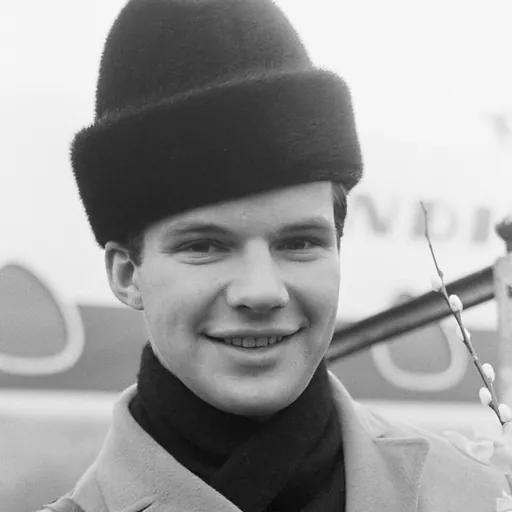
About Bobby Vee
Lived 1943 – 2016 (aged 73). Bobby Vee was an American singer-songwriter, musician, singer, actor and animator.
Robert Thomas Velline (April 30, 1943 – October 24, 2016), known professionally as Bobby Vee, was an American singer who was a teen idol in the early 1960s and also appeared in films. He had six gold singles in his career. He attended Central High School in Fargo where he learned to play the saxophone.
Career
The Day the Music Died Vee's career began in the midst of tragedy. On February 3, 1959, "The Day the Music Died", three of the four headline acts in the lineup of the traveling Winter Dance Party—Buddy Holly, Ritchie Valens, and the Big Bopper—were killed in the crash of a V-tailed 1947 Beechcraft Bonanza airplane, along with the 21-year-old pilot, Roger Peterson. It crashed near Clear Lake, Iowa, en route to the next show on the tour itinerary, in Moorhead, Minnesota. Vee, then 15 years old, and a hastily assembled band of Fargo schoolboys (including his older brother Bill)
Vee's follow-up single, a cover of Adam Faith's UK number-one "What Do You Want?", charted in the lower reaches of the Billboard pop chart in early 1960. His fourth release, a revival of the Clovers' doo-wop ballad "Devil or Angel" (U.S. number six), brought him into the big time with U.S. buyers. His next single, "Rubber Ball" (1961, U.S. number six, Australia number one), made him an international star. He has cited as influences producer Snuff Garrett and his personal manager, Arnold Mills. and number three in the UK Singles Chart.
Known primarily as a performer of so-called "Brill Building pop" material,
However, Bobby Vee's chart performance declined, and none of his records reached the top 40 in 1964 and 1965. Vee returned to the top 10 with the single "Come Back When You Grow Up" (1967, US number 3). On the recording of "Come Back When You Grow Up", Bobby Vee and the Strangers are credited. However, that was merely the record label giving a name to the studio musicians working that day. Bobby's original band, the Shadows, backed him on the road; upon learning of the UK band the Shadows who backed Cliff Richard, the band changed its name to the Strangers. Following the success of the comeback single, Vee had a string of contemporary singles which performed well enough for Liberty to issue three more studio albums in the late 1960s: Just Today, Do What You Gotta Do, and Gates, Grills & Railings. Just Today marked Vee's final appearance on the Billboard Top LP's chart as well.
Vee was also a pioneer in the music video genre, appearing in several musical films and in the Scopitone series of early film-and-music jukebox recordings.
Connection with Bob Dylan Early in Vee's career, a musician calling himself Elston Gunnn briefly toured with the band. This was Robert Allen Zimmerman, who later went on to fame as Bob Dylan. Dylan's autobiography mentions Vee and provides complimentary details about their friendship, both professional and personal.
In a concert at Midway Stadium in St. Paul, Minnesota, on July 10, 2013, Dylan said he had been on the stage with many stars, but that none of them were as meaningful as Vee. He said Vee was in the audience and then played Vee's hit "Suzie Baby" with emotion. Dylan said (in a video recording of the concert):
Dylan also recalled that Vee "had a metallic, edgy tone to his voice and it was as musical as a silver bell." Vee remembered that the musician he knew as Gunnn (Bob Dylan) "played pretty good in the key of C." On April 29, 2012, Vee announced publicly that he had been diagnosed with Alzheimer's and consequently would withdraw from the music business. He had been in memory care (long-term care to meet the needs of those with Alzheimer's disease, dementia or other types of memory problems) for 13 months in a long-term care facility in Rogers, Minnesota, just outside of Minneapolis, and eventually received hospice care in the weeks prior to his death. On October 24, 2016, Vee died from complications of the disease at the age of 73.
Personal life
Vee and Karen Bergen married on December 28, 1963. In the early 1980s, Vee moved his family from Los Angeles to near St. Cloud, Minnesota, where he and Karen organized annual fundraising concerts to provide music and arts facilities for local children.
Awards and honors Vee received the North Dakota Roughrider Award in 1999.
He is mentioned in the film No Direction Home regarding his brief musical association with Bob Dylan and Dylan's suggestion that he was "Bobby Vee" after Vee's regional hit.
The Very Best of Bobby Vee, released by EMI/UK on May 12, 2008, charted in the UK top five. On January 17, 2011, EMI/UK released Rarities, a double-CD package with 61 tracks, many of which were previously unreleased. Others included were alternate takes and first-time stereo releases as well as tracks from the album Bobby Vee Live on Tour, without the "canned" audience.
On March 28, 2011, Vee became the 235th inductee into the Rockabilly Hall of Fame.
An active live performer into 2011, Vee was diagnosed with Alzheimer's disease, at which time he completed his scheduled tour obligations and recorded his final CD, released three years later.
Discography
Over the course of his career Vee achieved six gold singles
Filmography Swingin' Along (1961), Lippert Films, color, 74 minutes, director: Charles Barton, producer: Jack Leewood, screenplay: Arthur Morton. - Himself
A comedy about a songwriting contest, originally released in 1961 as Double Trouble. Scenes were added of Ray Charles (doing "What'd I Say") and Bobby Vee ("More Than I Can Say").
Play It Cool (1962), Allied Artists, black and white, 82 minutes, director: Michael Winner, producers: Leslie Parkyn, Julian Wintle, screenplay: Jack Henry. - Himself
Selection of early 1960s performers woven through a plot about a bratty, rich teenage girl looking for her boyfriend. Vee sings "At A Time Like This".
Just for Fun (1963), Columbia Pictures, black and white, 85 minutes, director: Gordon Fleming, producer and screenplay: Milton Subotsky. - Himself
British teens win the right to vote, so the two major political parties strive to win this new voting bloc to their sides. Meanwhile, there's a parade of pop stars including Freddy Cannon, Ketty Lester, Jeremy Lloyd, Bobby Vee, the Crickets, the Springfields, Jet Harris, Tony Meehan, Joe Brown and the Bruvvers, the Tornados, Brian Poole and the Tremeloes, and Johnny Tillotson. Vee sings "All You Gotta Do Is Touch Me" and "The Night Has A Thousand Eyes".
C'mon, Let's Live a Little (1967), Paramount Pictures, color, 85 minutes; director: David Butler; producers: John Herelandy, June Starr; screenplay: June Starr. - Jesse Crawford
Don’t just read it —
keep it.
Full-length biographies made to live with: read them, listen on the way to work, watch them tonight.
- E-book
- Audio
- Video
Instant download · yours to keep · every purchase keeps this site free
Important facts
People in Bobby Vee's life
Named in this biography and alive at the same time



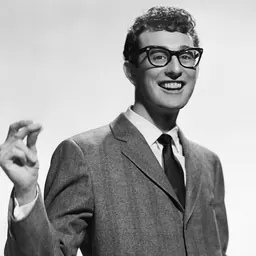

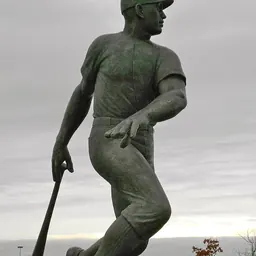
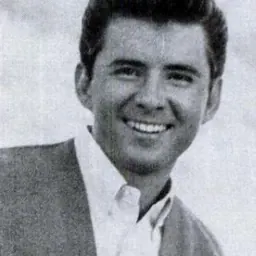

Related people
Same field, nearest in time
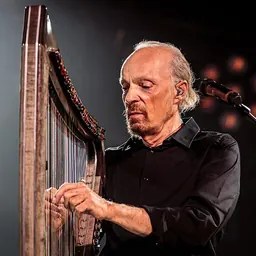





Contemporaries
People whose lives overlapped Bobby Vee's
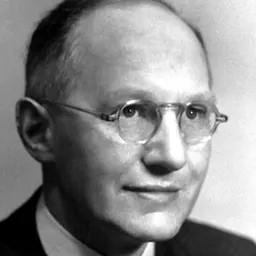

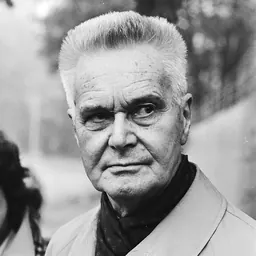
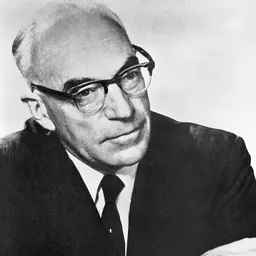

Frequently asked questions
Who was Bobby Vee?
American singer (1943–2016)
When was Bobby Vee born?
Bobby Vee was born on 30 April 1943 in Fargo.
When did Bobby Vee die?
Bobby Vee died on 24 October 2016 in Rogers.
What was Bobby Vee's occupation?
Bobby Vee was a singer-songwriter, musician, singer, actor and animator.
What nationality was Bobby Vee?
Bobby Vee was American.
Sources & further reading
Cite this page
APA: Biography.guide. (2026). Bobby Vee. https://biography.guide/bobby-vee/
MLA: "Bobby Vee." Biography.guide, https://biography.guide/bobby-vee/.
Chicago: "Bobby Vee." Biography.guide. https://biography.guide/bobby-vee/.
Data last updated: 2026-09-20 · Spot an error? Report a correction.
Portrait: Wikimedia Commons · author & licence
Page generated 2026-09-27 04:57 UTC