
About Bobby Timmons
Lived 1935 – 1974 (aged 38). Bobby Timmons was an American composer, pianist, jazz musician, songwriter and musician.
Robert Henry Timmons (December 19, 1935 – March 1, 1974) was an American jazz pianist and composer. He was a sideman in Art Blakey's Jazz Messengers for two periods (July 1958 to September 1959; February 1960 to June 1961), between which he was part of Cannonball Adderley's band. Several of Timmons' compositions written when part of these bands – including "Moanin'", "Dat Dere", and "This Here" – enjoyed commercial success and brought him more attention. In the early and mid-1960s he led a series of piano trios that toured and recorded extensively.
Timmons was strongly associated with the soul jazz style that he helped initiate. This link to apparently simple writing and playing, coupled with drug and alcohol addiction, led to a decline in his career. Timmons died, aged 38, from cirrhosis. Several critics have commented that his contribution to jazz remains undervalued.
Early life Timmons was born in Philadelphia, Pennsylvania, the son of a minister. He had a sister, Eleanor. Both of his parents, and several aunts and uncles, played the piano. Timmons first played at the church where his grandfather was minister; this influenced his later jazz playing. ), Sonny Stitt in 1957, and Maynard Ferguson in 1957–58. Hank Mobley, and Morgan. all for Blue Note Records in 1957.
Timmons became best known as a member of Art Blakey's band the Jazz Messengers, which he was first part of from July 1958 to September 1959, including for a tour of Europe. From around the time he joined Blakey, Timmons, along with some of his fellow band members, was a heroin user. "This Here" (sometimes "Dis Here") was a surprise commercial success for Adderley: recorded in concert in 1959, it was released as part of The Cannonball Adderley Quintet in San Francisco album while the band was still on tour, and they discovered its popularity only when they arrived back in New York and found crowds outside the Village Gate, where they were due to play.
Timmons was reported to be dissatisfied with the money he had received from "This Here", and was enticed in February 1960 into leaving Adderley and returning to Blakey's band by the offer of more pay.
Summer 1961 to 1974 Timmons left Blakey for the second time in June 1961, They toured around the US, including the West Coast, but played most in and around New York. According to Tootie Heath, Timmons was at the peak of his fame at that point, but was addicted to heroin, and used a lot of the money that the band was paid maintaining his habit.
In 1963, Timmons' playing, with Lewis Powers on bass and Roy McCurdy on drums, was described by a Washington Post reviewer as "flexible and adventuresome [...] Glossing over everything is an undeniable sheen of church music and spirituals." In 1965, the same reviewer commented that Timmons was employing musicians who were of much lower ability: "Timmons lacks a certain passion but I wonder if this is not the fault of his sidemen." Timmons started playing vibes in the mid-1960s. He occasionally played organ, but recorded only one track on that instrument – a 1964 version of "Moanin on From the Bottom. Timmons' album Got to Get It! featured him as part of a nonet, playing arrangements by Tom McIntosh. and alcoholism, and partly as a result of being typecast as a composer and player of seemingly simple pieces of music. with Dexter Gordon on one of the saxophonist's temporary returns to the US from Europe, and in a trio backing vocalist Etta Jones. Timmons continued to play in the early 1970s, mostly in small groups or in combination with other pianists, and mainly in the New York area.
According to saxophonist Jimmy Heath, Timmons joined Clark Terry's big band for a tour of Europe in 1974. He was unwell and drank on the plane to Sweden, and fell while drinking at the bar before the band's first concert, in Malmö. He had been in hospital for a month. and was survived by his wife, Estelle, and son, also Bobby. His use of them was more aggressive, and less melodic, than that of Red Garland. In the opinion of Scott Yanow, stylistically, "somehow Bobby Timmons never grew beyond where he was in 1960." Gary Giddins, however, highlighted other facets of Timmons' playing: the "lush [Bud] Powell-inspired ballads, his clear, sharp, unsentimental long lines." Timmons is often mentioned as being under-rated; jazz writer Marc Myers commented in 2008 that "today, Timmons' contribution to jazz – as an accompanist, writer, leader and innovator of a new sound – is vastly overlooked and undervalued."
Compositions Timmons wrote "a steady stream of infectious funky tunes", stated Giddins. He suggested that his method of composing a new song might involve "whistling, playing around with the notes, or at a club. I'll tell one musician to play this note, another that note, and we kick it around."
Personality Tootie Heath reported that, when they were on tour and Timmons was addicted to heroin, Timmons would routinely lie and sometimes pull out a knife to threaten people. In Golson's words, Timmons "had no ego about him, [...] He was always upbeat, never downbeat, and he never maligned anybody unless it was in a humorous way". 1964 Little Barefoot Soul Prestige Trio, with Sam Jones (bass), Ray Lucas (drums) 1964 Holiday Soul Prestige Trio, with Butch Warren (bass), Walter Perkins (drums) 1964 Chun-King Prestige Trio, with Keter Betts (bass), Albert Heath (drums) 1964 Workin' Out! Prestige Quartet, with Johnny Lytle (vibes), Keter Betts (bass), William Hinnant (drums); one track is trio, with Sam Jones (bass), Ray Lucas (drums) 1965 Chicken & Dumplin's Prestige Timmons plays vibes on two tracks. Trio, with Mickey Bass (bass), Billy Saunders (drums) 1966 The Soul Man! Prestige Quartet, with Wayne Shorter (tenor sax), Ron Carter (bass), Jimmy Cobb (drums) 1966 Soul Food Prestige Trio, with Mickey Bass (bass), Billy Higgins (drums) 1967 Got to Get It! Milestone Nonet, with Joe Farrell and James Moody (flute, tenor sax), Hubert Laws (flute), George Barrow (baritone sax), Jimmy Owens (trumpet, flugelhorn), Eric Gale and Howard Collins (guitar; separately), Ron Carter (bass), Billy Higgins and Jimmy Cobb (drums; separately); four tracks are quartet, with Joe Beck (guitar), Carter, Cobb 1968 Do You Know the Way? Milestone Quartet, with Joe Beck (guitar), Bob Cranshaw (electric bass), Jack DeJohnette (drums); 3 tracks are trio, without Beck
As sideman
Sources:
Don’t just read it —
keep it.
Full-length biographies made to live with: read them, listen on the way to work, watch them tonight.
- E-book
- Audio
- Video
Instant download · yours to keep · every purchase keeps this site free
Important facts
People in Bobby Timmons's life
Named in this biography and alive at the same time


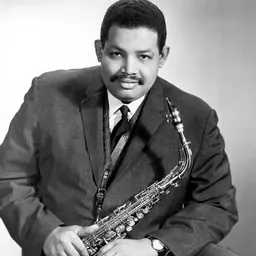
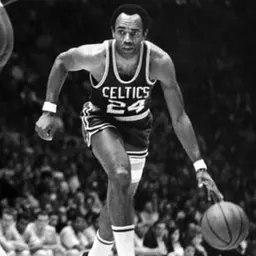
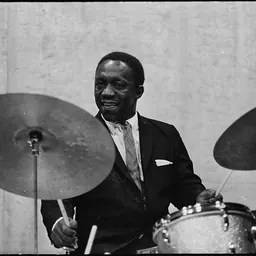
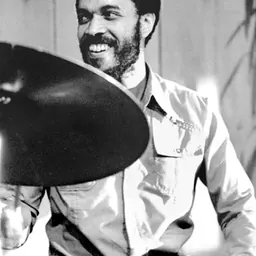

Related people
Same field, nearest in time



Contemporaries
People whose lives overlapped Bobby Timmons's


Frequently asked questions
Who was Bobby Timmons?
American pianist (1935-1974)
When was Bobby Timmons born?
Bobby Timmons was born on 19 December 1935 in Philadelphia.
When did Bobby Timmons die?
Bobby Timmons died on 1 March 1974 in New York City.
What was Bobby Timmons's occupation?
Bobby Timmons was a composer, pianist, jazz musician, songwriter and musician.
What nationality was Bobby Timmons?
Bobby Timmons was American.
Sources & further reading
Cite this page
APA: Biography.guide. (2026). Bobby Timmons. https://biography.guide/bobby-timmons/
MLA: "Bobby Timmons." Biography.guide, https://biography.guide/bobby-timmons/.
Chicago: "Bobby Timmons." Biography.guide. https://biography.guide/bobby-timmons/.
Data last updated: 2026-09-20 · Spot an error? Report a correction.
Page generated 2026-09-27 05:12 UTC