
About Bobby Kirk
Lived 1927 – 2010 (aged 82). Bobby Kirk was a British association football player and association football coach.
Robert Kirk (12 August 1927 – 1 February 2010) was a Scottish footballer best known for winning five senior trophies with Heart of Midlothian in the late 1950s and early 60s. He also played for Dunfermline Athletic and Raith Rovers.
Dunfermline Athletic Kirk was born in Arniston in Midlothian and played for various school and youth teams before joining his home town team, Arniston Rangers. He was their first player to be selected for the Scottish junior team thus attracting senior club attention. Aged 20, Dunfermline Athletic signed him in Autumn 1947. He was initially a £40 provisional signing continuing to play for Arniston. In January 1948 he was then called up to East End Park where he debuted for the Dunfermline first team the subsequent March. He made 180 first team appearances scoring 12 goals including collecting a runners-up medal in the October 1949 Scottish League Cup final defeat to Scot Symon's East Fife. Kirk was commended for his semi final subduing of Hibernian's Willie Ormond. He stayed with the Pars until the 1953 close season.
Raith Rovers He then moved up a division to play in the top tier for a fee of £750 for Raith Rovers. He stayed there for two seasons.
Kirk and Hearts proceeded to win the 1955–56 Scottish Cup. They thrashed Rangers 4–0 in the quarter-finals with goals from Crawford, Conn and a Bauld double. Kirk could play in either full back role
Seventeen-year-old Gordon Marshall debuted in 1956 as did George Thomson in February 1957. Marshall, a future England under 23 internationalist, became a Hearts goalkeeping regular until 1963. Hearts led the Scottish League for most of the 1956–57 season. The title hinged on Rangers visit to Tynecastle on 13 April. A capacity crowd watched a tense game in which Rangers keeper, George Niven, was man of the match. Hearts could not beat him and the only goal came from Billy Simpson of Rangers who scored on the break in 35 minutes. Rangers had games in hand which they won to overtake Hearts and lift the trophy. This precipitated a poor run of only two wins from the next seven games without injured Mackay. Hearts beat Queen of the South in a 2–1 home league win on 7 March 1959. After that QoS game Rangers with six games to play were firm favourites for the title, six points ahead of second placed Hearts. Rangers would still have to drop two points elsewhere and give away a superior goal average. meant Hearts were four points behind with a game in hand. In midweek they next won 4–2 at Aberdeen with Rankin scoring a hat-trick. The last day of the season began with Rangers two points clear with an identical goal average to Hearts. Rangers thus needed a point to clinch the title but lost 2–1 at home to Aberdeen. Despite missing Kirk at right back with a knee injury, Rankin's ninth goal from his fifth Hearts game had Hearts 1-0 up at half time at Celtic Park. Any victory would have given Hearts the title. Then Celtic's Bertie Auld playing at left wing equalised before Eric Smith scored Celtic's winning second goal to seal the title for their cross city rivals leaving those at the Tynecastle to wonder what would have happened if Mackay hadn't been sold when he was.
The 1960s saw Hearts fortunes fluctuate as Walker attempted to adapt to football's tactical changes by implementing a 4–2–4 formation. Young and Thomson departed for Everton in November 1960.Hearts lost the 1961 Scottish League Cup Final after a replay. Cumming scored a deserved equalising penalty for Hearts in the first game 1–1 draw they largely dominated against the Scot Symon managed Rangers. Norrie Davidson scored a then equalising Hearts goal when they went down poorly in the 3–1 replay defeat.
Hearts won the 1962 Scottish League Cup Final win. However Kirk didn't play having happily dropped into the reserves helping develop younger players for his last season on the Hearts playing staff. he was already looking to beyond his playing days having qualified as a physiotherapist in 1961.
Kirk made 364 Hearts first team appearances over eight seasons. He scored 12 Hearts goals all of which were penalties. A quiet, efficient and unflustered, he was never booked.
After playing He took charge of Gala Fairydean where he won Scottish Qualifying Cups and East of Scotland League trophies. He returned to Tynecastle in 1967 to spend four years looking after the young players in the club's third team. He left Hearts for the last time in 1971 by which time he had a successful physiotherapy business. He worked as physio for a number of East of Scotland senior and junior clubs, especially Linlithgow Rose whom he was connected with for 20 years.
Death Kirk died from dementia in Midlothian on 1 February 2010. He is survived by his wife Tina and two sons.
Don’t just read it —
keep it.
Full-length biographies made to live with: read them, listen on the way to work, watch them tonight.
- E-book
- Audio
- Video
Instant download · yours to keep · every purchase keeps this site free
Important facts
People in Bobby Kirk's life
Named in this biography and alive at the same time



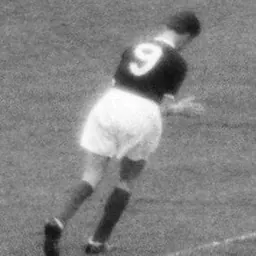


Related people
Same field, nearest in time
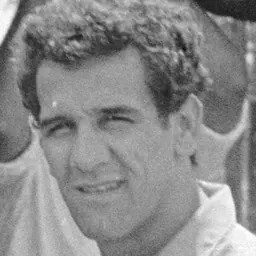
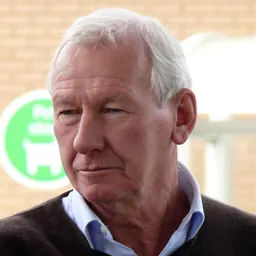


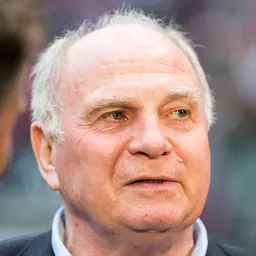

Contemporaries
People whose lives overlapped Bobby Kirk's

Frequently asked questions
Who was Bobby Kirk?
Scottish footballer (1927-2010)
When was Bobby Kirk born?
Bobby Kirk was born on 12 August 1927 in Arniston.
When did Bobby Kirk die?
Bobby Kirk died on 1 February 2010 in Lasswade.
What was Bobby Kirk's occupation?
Bobby Kirk was an association football player and association football coach.
What nationality was Bobby Kirk?
Bobby Kirk was British.
Sources & further reading
· DBpedia: Bobby Kirk (footballer)
Cite this page
APA: Biography.guide. (2026). Bobby Kirk. https://biography.guide/bobby-kirk/
MLA: "Bobby Kirk." Biography.guide, https://biography.guide/bobby-kirk/.
Chicago: "Bobby Kirk." Biography.guide. https://biography.guide/bobby-kirk/.
Data last updated: 2026-09-20 · Spot an error? Report a correction.
Page generated 2026-09-27 05:10 UTC