
About Bob Tizard
Lived 1924 – 2016 (aged 91). Bob Tizard was a New Zealand politician.
Robert James Tizard (7 June 1924 – 28 January 2016) was a Labour politician from New Zealand. He served as the sixth deputy prime minister, the minister of Finance, minister of Health and minister of Defence.
Biography Early life and career Born in Auckland on 7 June 1924, Tizard was the son of Jessie May Tizard (née Phillips) and Henry James Tizard. He was educated at Meadowbank School and Auckland Grammar School, and earned a university scholarship in 1940. He was the dux of the school in 1941. In March 1943 he joined the Royal New Zealand Air Force. A navigator, he was commissioned as a pilot officer in February 1945, and promoted to flying officer in August 1945.
After the war, Tizard studied at Auckland University College, graduating with a Bachelor of Arts in 1948 and a Master of Arts in 1950. Majoring in history, his MA thesis was entitled Mr H.E. Holland's Blueprint for New Zealand and the World, Harry Holland having been a previous leader of the New Zealand Labour Party. He was involved in student politics and unionism and was president of the Auckland University Students' Association in 1948.
Member of Parliament
Tizard was the Member of Parliament for Tamaki for the next three years. For the duration of the Second Labour Government Tizard was a backbencher. In the dying days of the government, Prime Minister Walter Nash overruled security services advice and approved the naturalization of a European emigrant living in Tizard's constituency who had in his youth been linked with Marxist circles, but had lived in New Zealand for many years and had a New Zealand wife and children. The police had not given him a clearance because, in their view, he had not accepted "New Zealand ideals". Nash minuted in 1960 that he should be allowed to naturalise. The file lay on his desk without action for many months however. Tizard found the file and took it to the Minister of Internal Affairs, Bill Anderton (who was the only minister in Wellington during the 1960 election period because he was not standing) and he signed the necessary approval. At the 1960 general election he was defeated by National's Robert Muldoon. Thereafter Tizard and Muldoon developed an intense rivalry with each other, occasionally bitter.
He returned to parliament in a in the electorate, but in the 1963 general election was elected MP for Pakuranga. When United States Vice President Spiro Agnew visited Wellington in mid-January 1970, Tizard along with several other Labour Members of Parliament including Arthur Faulkner, Jonathan Hunt, and Martyn Finlay boycotted the state dinner in protest at American policy in Vietnam. However, other Labour MPs including Opposition Leader Norman Kirk attended the function which dealt with the Nixon Doctrine. In 1972 he became MP for Otahuhu again. In 1984 he became MP for Panmure, until he retired in 1990.
Third Labour Government Tizard was Shadow Minister of Finance under leader Norman Kirk. Contrary to expectation, Tizard was instead appointed as Minister of Health and Minister of State Services when the Third Labour Government was elected in 1972. Bill Rowling was made Minister of Finance. Tizard was unhappy when informed of the decision but vowed he would put his all in to the job he was given. When exiting Kirk's office he said to colleague Warren Freer "I'll show the bastard what can be done with health". Tizard and Muldoon (the outgoing finance minister) believed Kirk withheld the finance portfolio for personal reasons and that Kirk's ill health made him impatient to achieve his objectives and wanted to eliminate the possibility of progress being hampered by a potentially reluctant minister. Both Freer and Deputy Prime Minister Hugh Watt had favoured Tizard for Finance, but Kirk thought he was not steady enough for the role and was suspicious of him as an "intellectual". Regardless, he soon proved one of Kirk's most effective ministers. As health minister he established a new practice nurse scheme, instigated changes to group practices and amalgamated several hospitals. At his retirement in 1990 Tizard said he was still then complimented on his work in the health portfolio. On 1 November 1979 he was challenged for the deputy leadership by David Lange the new MP for Mangere. Lange succeeded in the challenge, narrowly defeating Tizard 20 votes to 18. Tizard did not take the defeat graciously, repeatedly referring in the caucus meeting to colleagues who voted against him as 'bastards'. Tizard even went as far as to tell Lange "I will never vote for you while your arsehole points to the ground". Tizard made no secret of his displeasure in the demotion stating "If he [Lange] wants to give jobs for the boys that is his business."
Fourth Labour Government In the Fourth Labour Government he was elected to the cabinet, due to being one of the few MPs with previous ministerial experience. Initially he held the roles of Minister of Energy, Minister of Statistics and Minister of Science and Technology during the governments first term from 1984 to 1987. After attaining cabinet rank again he found himself amongst colleagues belonging to a younger generation of thought different from his own leading him to once again be blocked from an economic portfolio. He turned his attention instead to safeguarding his portfolios from the privatisation agenda of finance minister Roger Douglas and his backers (the "Rogernomes"), fighting against energy corporatisation wherever he could. As Minister of Defence he pushed for the approval of purchasing four new Anzac-class frigates which was contentious due to significant opposition to the idea from the Labour Party membership.
In August 1989 Tizard announced he would retire from politics at the next general election. When Lange's replacement as Prime Minister Geoffrey Palmer held a complete reelection of cabinet in early 1990 Tizard was dropped from the cabinet due to his impending retirement. This went against a promise made to him by Lange that he could stay on as a minister until the end of the term. Angry with the outcome Tizard threatened to resign and force a by-election unless he could come to an agreement with the government over a car and housing arrangements for himself and his wife.
Life after parliament His daughter Judith replaced him as MP for Panmure in 1990. She was a member of the Auckland Regional Council (ARC) and resigned after entering parliament. Tizard stood as the Labour candidate to fill the vacancy on the ARC. In a surprise result he was defeated in the by-election by Bruce Jesson of the incipient Alliance party. Tizard was annoyed but not surprised with the loss saying "It's no skin off my nose if the public want to be misguided and vote for a bunch of splinters." At the 1992 local-body elections he stood as a candidate for the newly created Auckland Regional Services Trust, but was unsuccessful.
In 2007 Tizard announced his candidacy for the Auckland District Health Board. He was elected to the board, at the age of 83.
In 2009, at the age of 85, Bob Tizard was asked to speak, as a historian, on aspects of World War II at a dinner held to honour Captain Jack Lyon, a New Zealand war hero and former Labour Party Member of Parliament. An mp3 recording of the 25-minute speech is available.
Death Tizard died in Auckland on 28 January 2016, aged 91.
Honours and awards Tizard was appointed a member of Her Majesty's Privy Council in 1985. In the 2000 Queen's Birthday Honours, Tizard was appointed a Companion of the New Zealand Order of Merit, for public services.
Personal life While at university, Tizard met Catherine Maclean, while he was president of the Auckland University Students Association. On their second date Tizard told Maclean he was "going into politics. And I'm going to marry you."
Tizard later met Mary Nacey, with whom he had a son, Joe, in 1982. They married in 1983 with fellow Labour MP Russell Marshall (a Methodist minister) performing the ceremony and another MP, Sir Basil Arthur, was the best man. They subsequently divorced.
He then married Beryl Vignale of Canada in 1989. The couple had previously been engaged in 1944 during World War II. While Minister of Defence, following his second divorce, Tizard advertised in a Canadian Air Force magazine to find Beryl. He received ten replies, eight giving information on her whereabouts and two saying 'If you find her please tell me where she is'. While visiting Canada en route to attend the 50th anniversary of the Commonwealth Air Training Plan he visited Beryl for the first time since the war. Also having been married twice, she later repaid the visit before moving to New Zealand permanently to marry Tizard.
Tizard was interested in sport, particularly cricket, squash and golf. He was a member and administrator of the Auckland University Cricket Club. He was a captain at the Remuera Golf Club and represented it in several inter-club competitions. He also possessed an extensive stamp collection which in 1990 was valued at $500,000.
Don’t just read it —
keep it.
Full-length biographies made to live with: read them, listen on the way to work, watch them tonight.
- E-book
- Audio
- Video
Instant download · yours to keep · every purchase keeps this site free
Important facts
Family & relationships
People in Bob Tizard's life
Named in this biography and alive at the same time


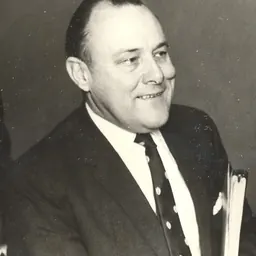

Related people
Same field, nearest in time




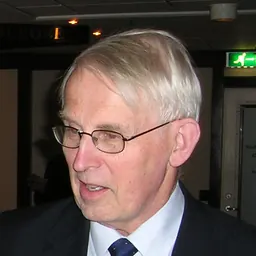

Contemporaries
People whose lives overlapped Bob Tizard's
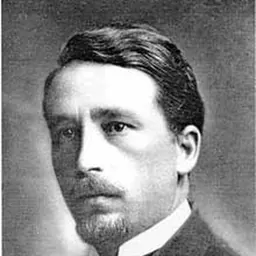

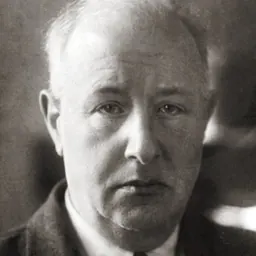

Frequently asked questions
Who was Bob Tizard?
New Zealand politician
When was Bob Tizard born?
Bob Tizard was born on 7 June 1924 in Auckland.
When did Bob Tizard die?
Bob Tizard died on 28 January 2016 in Auckland.
What was Bob Tizard's occupation?
Bob Tizard was a politician.
What nationality was Bob Tizard?
Bob Tizard was New Zealand.
Sources & further reading
Cite this page
APA: Biography.guide. (2026). Bob Tizard. https://biography.guide/bob-tizard/
MLA: "Bob Tizard." Biography.guide, https://biography.guide/bob-tizard/.
Chicago: "Bob Tizard." Biography.guide. https://biography.guide/bob-tizard/.
Data last updated: 2026-09-25 · Spot an error? Report a correction.
Page generated 2026-09-27 05:09 UTC