
About Bob Randall
Lived 1934 – 2015 (aged 80–81). Bob Randall was an Australian non-fiction writer.
Robert James Randall (1934 – 12 May 2015), also known as Uncle Bob, was an Aboriginal Australian elder, singer and community leader. He was a member of the Stolen Generations and became an elder of the Yankunytjatjara people from Central Australia. He was the 1999 NAIDOC Person of the Year. He is known for his 1970 song, "My Brown Skin Baby (They Take 'Im Away)".
Early life Randall was born at Middleton Pond on Tempe Downs Station in the Central Desert region of the Northern Territory. His mother, Tanguawa, was a Yankunytjatjara domestic servant at the station. His father, William Liddle, was the White Australian owner of the station.
Around the age of seven, Randall was taken away from his mother and family under government policy which forcibly removed thousands of "half-caste" (part-Aboriginal) children from their families. This policy produced what came to be known as the "Stolen Generations". Randall was taken to The Bungalow, an institution for half-caste children in Alice Springs, Northern Territory, then later was moved to an Aboriginal reserve on Croker Island in Arnhem Land, thousands of kilometres away from his home and family. Randall was given a new identity and date of birth. He explains the Pitjantjatjara word as "best expressed in English as the combination of the two words 'responsibility' and 'love', but it is actually a relationship; it is an enormous caring with no limit – it has no timeframe: it is eternal... The interconnectedness of my belief system, my spirituality, my land, and my family... I've got to connect with each of these to be whole...".
He established Aboriginal and Torres Strait Islander Centres at Australian National University, University of Canberra, and University of Wollongong.
On 26 May 1998, Randall and his daughter Dorothea Randall performed at Parliament House, Canberra, as part of the first National Sorry Day commemoration.
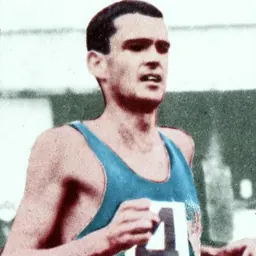
In 2008, he served as one of three national patrons of the World Harmony Run, along with former athlete and then mayor of the Gold Coast, Ron Clarke, and former Governor-General Sir William Deane. As part of his role, he invited a small team of athletes to spend time with the Mutitjulu community, where he was living by then. It was first produced on vinyl in 1977, on The First Australians: Songs by Aboriginal and Torres Strait Islanders, an album featuring both traditional and contemporary Indigenous Australian music, produced by the Aboriginal Artists Agency. The song was later described as "the first anthem" for the Stolen Generations.
Film and TV
In March 1970, "Brown Skin Baby" was featured in an episode of ABC Television's documentary series Chequerboard. The episode, entitled "My Brown Skin Baby, They Take 'im Away" was the first exposure of the practice of taking Aboriginal children from their families in Australian media.
Randall appeared in the documentary films Mixed Up Man and Secret Country by John Pilger, had roles in the movies Picnic at Hanging Rock and The Last Wave.
In 2006, Randall co-produced and narrated the documentary Kanyini with Melanie Hogan. It was voted "best documentary" at the London Australian Film Festival 2007, winner of the Inside Film Independent Spirit Award, and winner of the Discovery Channel "Best Documentary Award" in 2006. and released two documentary films with Andrew Harvey, Songman and Living Kanyini.
Recognition Randall was the 1999 NAIDOC Person of the Year, recognised for his lifelong efforts to retain Aboriginal culture and restore equal rights for all living people.
In 2004, he was inducted into the NT Indigenous Music Hall of Fame, recognising the historical significance of his classic story songs.
He was known by the honorific "Tjilpi", a word meaning "old man" that is often translated as "uncle" – "Uncle Bob".
Later life, death and legacy He returned to his mother's country (his Ngura), Mutitjulu, after many years of living in other places, and is a recognised traditional owner of Uluru.
In 2011, he was interviewed by John Bannister as part of the Bringing Them Home after the Apology oral history project.
Randall died in Mutitjulu on 12 May 2015, aged approximately 81.
Don’t just read it —
keep it.
Full-length biographies made to live with: read them, listen on the way to work, watch them tonight.
- E-book
- Audio
- Video
Instant download · yours to keep · every purchase keeps this site free
Important facts
People in Bob Randall's life
Named in this biography and alive at the same time





Related people
Same field, nearest in time


Contemporaries
People whose lives overlapped Bob Randall's




Frequently asked questions
Who was Bob Randall?
Australian Aboriginal writer and musician
When was Bob Randall born?
Bob Randall was born in 1934.
When did Bob Randall die?
Bob Randall died on 13 May 2015 in Mutitjulu.
What was Bob Randall's occupation?
Bob Randall was a non-fiction writer.
What nationality was Bob Randall?
Bob Randall was Australian.
Sources & further reading
· DBpedia: Bob Randall (Aboriginal Australian elder)
Cite this page
APA: Biography.guide. (2026). Bob Randall. https://biography.guide/bob-randall/
MLA: "Bob Randall." Biography.guide, https://biography.guide/bob-randall/.
Chicago: "Bob Randall." Biography.guide. https://biography.guide/bob-randall/.
Data last updated: 2026-09-22 · Spot an error? Report a correction.
Page generated 2026-09-27 05:23 UTC