
About Bob Rafelson
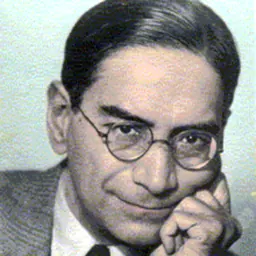
Lived 1933 – 2022 (aged 89). Bob Rafelson was an American film director, screenwriter, film producer, writer, director and actor.
Robert Jay Rafelson (February 21, 1933 – July 23, 2022) was an American film director, writer, and producer. He is regarded as one of the key figures in the founding of the New Hollywood movement of the 1970s. Among his best-known films as a director include those made as part of the company he co-founded, Raybert/BBS Productions, Five Easy Pieces and The King of Marvin Gardens (1972) as well as acclaimed later films, The Postman Always Rings Twice (1981) and Mountains of the Moon (1990). Other films he produced as part of BBS include two of the most significant films of the era, Easy Rider (1969) and The Last Picture Show (1971). Easy Rider, Five Easy Pieces and The Last Picture Show were all chosen for inclusion in the Library of Congress' National Film Registry. He was also one of the creators of the pop group and TV series The Monkees with BBS partner Bert Schneider. His first wife was the production designer Toby Carr Rafelson.
Early life Robert Jay Rafelson was born in Manhattan on February 21, 1933 the son of Marjorie (Blumenfeld) and Sydney Rafelson, a hat ribbon manufacturer. His much-older first cousin, once removed, was screenwriter and playwright Samson Raphaelson, the author of The Jazz Singer, who wrote nine films for director Ernst Lubitsch. "Samson took an interest in my work," Rafelson told critic David Thomson. "If he liked a picture, then I was his favorite nephew. But if he didn't like it, I was a distant cousin!"
Rafelson attended the Trinity-Pawling School, a boarding school in Pawling, New York, from which he graduated in 1950. As a teenager he would often run away from home to pursue an adventurous lifestyle, including riding in a rodeo in Arizona and playing in a jazz band in Acapulco. After studying philosophy at Dartmouth College (where he had made friends with screenwriter Buck Henry), and graduating in 1954, Rafelson was drafted into the U.S. Army and stationed in Japan. In Japan he worked as a disk jockey, translated Japanese films and was an adviser to the Shochiku Film Company as to what films would be financially successful in the United States. In an interview with critic Peter Tonguette, Rafelson said he was fascinated by the films he saw in Japan, especially those of Yasujirō Ozu, whose original approach to editing captivated him as a young man: "I'd have to watch an Ozu movie over and over again—say, Tokyo Story—and I was hypnotized by the stillness of his frames, his sureness of composition," he said. "So, I suppose my own aesthetic evolved from looking at certain kinds of pictures—Bergman and Ozu and John Ford, if you will."
Rafelson began dating Toby Carr in high school and they later married in the mid-1950s. The couple had two children: Peter Rafelson, born in 1960, and Julie Rafelson, born in 1962. Toby Rafelson was a production designer on many films, including her husband's Five Easy Pieces, The King of Marvin Gardens, and Stay Hungry, as well as Martin Scorsese's Alice Doesn't Live Here Anymore and Jonathan Demme's Melvin and Howard.
Early television career Rafelson's first professional job was as a story editor on the TV series Play of the Week for producer David Susskind in 1959. The series produced televised stage plays from contemporary and classical authors. Rafelson's job required him to read hundreds of plays, select which were to be produced, and write some additional dialogue uncredited. Rafelson's first writing credits were for an episode of the TV series The Witness in 1960 and an episode of the series The Greatest Show on Earth in 1963.
In 1965, while working at Screen Gems, Rafelson met fellow producer Bert Schneider. They became fast friends and created the company Raybert Productions together that year. Raybert would later become BBS Productions and produce films as a subsidiary of Columbia Pictures. Rafelson said that the idea for the show, which was inspired by his own misadventures while playing in a band in Mexico, predated A Hard Day's Night. Rafelson said, "I had conceived the show before The Beatles existed," and it was based on his time as an itinerant musician more "interested in having fun" than "in earning a living." Rafelson has said that "the whole show was created in effect in the editing room. The tempo was of paramount importance...I had to direct one or two of the shows for television to set the pattern of how these things should be made." Rafelson had said that "of the first 32 shows, 29 were directed by people who had never directed before, including me. So the idea of using new directors not perhaps too encumbered by traditional ways of thinking was initiated on that series and just continued on the movies we made later."
Head is a plotless, stream-of-consciousness film that, amongst other things, attempts to deconstruct the musical personas of the Monkees and satirize the consumer ideals of "image". In a song sung by the Monkees, they seem to confess by saying: Hey, hey, we are The Monkees/ You know we love to please/ A manufactured image/ With no philosophies. Other scenes use psychedelic or surrealistic theatrics such as the Monkees being sucked through a giant vacuum cleaner and turning into specks of dandruff on Victor Mature's head. The film ends with the Monkees being loaded into a truck and driven out of the Columbia Studio gates. The film was a financial failure and the popularity of the Monkees was already in decline,
The New York Times critic Manohla Dargis has highlighted Rafelson and Schneider for founding "the groovy 1960s company Raybert (later known as BBS Productions) — and gave us Easy Rider, Five Easy Pieces, The Last Picture Show and Hearts and Minds, and lamenting the absence of such risk-taking companies today."
Five Easy Pieces was written by Rafelson and Carole Eastman (under the alias Adrien Joyce) and starred Nicholson, Karen Black, and Susan Anspach. Nicholson plays Bobby Dupea, a gifted classical piano player who works on an oil rig in California and spends most of his time drinking beer and bowling with his put-upon girlfriend Rayette (Black). Bobby is constantly dissatisfied and a non-conformist, stating: "I move around a lot. Not because I'm looking for anything really, but to get away from things that go bad if I stay."
Rafelson's next film was The King of Marvin Gardens, released in 1972 through BBS. The film was written by Jacob Brackman, from a story by Rafelson and Brackman, and starred Jack Nicholson, Bruce Dern, Ellen Burstyn, Julia Anne Robinson, Scatman Crothers and Charles Lavine. The title refers to the original Atlantic City version of the Monopoly game board, where the misspelled and misplaced "Marvin Gardens" was one of the Yellow squares in the children's game of capitalistic success.
In the film, Nicholson plays David Staebler, a melancholy Philadelphia disk jockey who tells long, angst-ridden stories of his childhood over the radio and lives with his elderly Grandfather (Lavine). David receives a call from his extroverted con artist brother Jason (Dern) asking him to bail him out of jail in Atlantic City. When David arrives he gets caught up in Jason's scheme to develop a South Pacific island into a gambling casino so that the brothers can "fulfill their childhood dream of an island kingdom of their own". David joins up with Jason, his girlfriend Sally (Burstyn) and Sally's stepdaughter Jessica (Robinson) to make the dream a reality. But David soon learns that Jason is in over his head and owes money to a real gangster named Lewis (Crothers), who is not amused with Jason's idealism.
The King of Marvin Gardens received mixed reviews and was not a financial success, although critics have since re-evaluated it. David Thomson wrote that it "may be an even better film" than Five Easy Pieces, and was .
The late 1970s Rafelson then spent more than a year researching a film that would never be made about the slave trade in Africa. He traveled over five thousand miles in West Africa and has said that he "lived the life of many of the characters that I'd read about." Rafelson then "wanted to turn to something more cheerful, to project a more exhilarating aspect of myself."
Bridges stars as Craig Blake, a millionaire in Alabama who has recently inherited his parents' fortune after their tragic deaths in a plane crash. He lives a lonely life in his mansion with only his butler (Crothers) to keep him company as he idles away his days. When he becomes involved in a shady investment firm, he visits the Olympic Spa gym, where bodybuilders are training for the upcoming Mr. Universe contest. He befriends bodybuilder Joe Santo (Schwarzenegger), who teaches him that "You can't grow without burning. I don't like to be too comfortable. Once you get used to it it's hard to give up. I like to stay hungry." He also begins dating the gym's receptionist Mary Tate (Field), but his upper-class friends do not approve of his new lower-class friends. In the end Blake chooses his new friends and buys the gym with Santo. He was replaced by Stuart Rosenberg.
Later film career Rafelson again teamed up with Jack Nicholson in 1981, directing him in their fourth collaboration, The Postman Always Rings Twice, based on the novel by James M. Cain which had been adapted as a film in 1946 with John Garfield and Lana Turner. The remake was written by David Mamet — the first screenplay by the playwright — and co-starred Jessica Lange. Nicholson plays a Depression-era drifter who happens upon a rural diner and becomes involved with the owner's wife in a plot to kill her husband. Rafelson has said of the film's reception, "The critics in America—at least when it first came out, now they have switched – didn't like it very much, but in France and in Germany and in Russia and in places that I have traveled since the making of this movie, this seems to have emerged as one of the movies that they like most of mine because of its unlikely romantic nature."
In 1987, Rafelson directed Black Widow, starring Debra Winger and Theresa Russell, and written by Ronald Bass. The film received favorable reviews, with The Washington Post critic Paul Attanasio writing that "the joys of Black Widow are the joys of a film well made—the cinematography of Conrad Hall, the production design of Gene Callahan, and a fabulous cast," which also featured Dennis Hopper, Nicol Williamson, and Diane Ladd. Rafelson's next project was Mountains of the Moon (1990), a film about the 1857–58 journey of Richard Francis Burton and John Hanning Speke in their expedition to central Africa — the project that culminated in Speke's discovery of the source of the Nile River. It starred Patrick Bergin as Burton and Iain Glen as Speke, and was hailed by Chicago Sun-Times critic Roger Ebert as "completely absorbing". Ebert continued: "It tells its story soberly and intelligently, and with quiet style... It's the kind of movie that sends you away from the screen filled with curiosity to know more about this man Burton." In Newsweek, critic Jack Kroll wrote: "The exploits of Sir Richard Francis Burton make Lawrence of Arabia look like a tourist. . . . From scene to scene this film grips you as few movies do, moving between Africa and England to spotlight an extraordinary range of characters in both 'primitive' and 'civilized' cultures: from the African tribal chiefs, mild or murderous, to the nabobs of the Royal Geographical Society, honest or treacherous." Rafelson later observed, "I was very lucky to make that movie. And I can tell you, if there was ever a movie that I enjoyed making, it was that one."
Rafelson has been honored at numerous international film festivals, including in Argentina, Brazil, England, France, Greece, Japan, Serbia and Turkey, and has given many masterclasses. He contributed commentaries or interviews to the DVD or Blu-ray releases of Head, Five Easy Pieces, The King of Marvin Gardens, Stay Hungry, The Postman Always Rings Twice, and Blood and Wine. Rafelson has also contributed essays to the Los Angeles Times Magazine and John Brockman's collection The Greatest Inventions of the Past 2,000 Years.
Personal life Bob Rafelson married Toby Carr in 1955. They lived near Aspen, Colorado, in a house "built in the '50s by a climber and his 11-year-old son" that Rafelson bought in 1970. "We live here and nowhere else," he said. Rafelson's 10-year-old daughter Julie died of injuries when a propane stove exploded in the Rafelsons' Aspen home in August 1973. Shortly after that Toby Rafelson was diagnosed with cancer, but eventually recovered. While they later divorced, they remained close friends, and Rafelson referred to his first wife as his "head nurse, teacher, brujo."
Rafelson married Gabrielle Taurek in 1999 and the couple had two sons, E.O. and Harper. He died from lung cancer at his home in Aspen, Colorado on July 23, 2022, at the age of 89.
Filmography Film
Short film
As uncredited producer
Easy Rider The Last Picture Show The Mother and the Whore
Television
Don’t just read it —
keep it.
Full-length biographies made to live with: read them, listen on the way to work, watch them tonight.
- E-book
- Audio
- Video
Instant download · yours to keep · every purchase keeps this site free
Important facts
People in Bob Rafelson's life
Named in this biography and alive at the same time





Related people
Same field, nearest in time


Contemporaries
People whose lives overlapped Bob Rafelson's




Frequently asked questions
Who was Bob Rafelson?
American film director (1933–2022)
When was Bob Rafelson born?
Bob Rafelson was born on 21 February 1933 in New York City.
When did Bob Rafelson die?
Bob Rafelson died on 23 July 2022 in Aspen.
What was Bob Rafelson's occupation?
Bob Rafelson was a film director, screenwriter, film producer, writer, director and actor.
What nationality was Bob Rafelson?
Bob Rafelson was American.
Sources & further reading
Cite this page
APA: Biography.guide. (2026). Bob Rafelson. https://biography.guide/bob-rafelson/
MLA: "Bob Rafelson." Biography.guide, https://biography.guide/bob-rafelson/.
Chicago: "Bob Rafelson." Biography.guide. https://biography.guide/bob-rafelson/.
Data last updated: 2026-09-26 · Spot an error? Report a correction.
Page generated 2026-09-27 05:16 UTC