
About Bob Kuechenberg
Lived 1947 – 2019 (aged 71). Bob Kuechenberg was an American american football player.
Robert John Kuechenberg (October 14, 1947 – January 12, 2019) was an American professional football player who was a guard in the National Football League (NFL) for the Miami Dolphins for 14 seasons between 1970 and 1983, spending the 1984 season on injured reserve. He was a mainstay in a line that included Hall of Famers Jim Langer, Larry Little, and Dwight Stephenson and played in six Pro Bowls in the late 1970s and early 1980s. He was selected as one of the top 15 finalists for the Pro Football Hall of Fame from 2002 to 2006, and one of the top 17 finalists from 2007 to 2009, but missed the cut every year. He was inducted into the Miami Dolphin's Honor Roll on December 15, 1995. He was the brother of the retired Chicago Bears linebacker Rudy Kuechenberg.
Early life Kuechenberg was born on October 14, 1947, in Gary, Indiana to Rudy and Marion Kuechenberg, and grew up in Hobart, Indiana (located about 10 minutes from Gary and 30 minutes/35–40 miles from Chicago ). He attended Hobart High School, and played football for the Hobart Brickies during high school. Kuechenberg called his father the toughest man he ever knew, and said his father had such occupations as iron worker, boxer, rodeo clown, and human cannonball. Kuechenberg himself would go on to play football with injuries that would have prevented most people from playing. Kuechenberg's older brother Rudy also attended Hobart High, would also become an NFL player, and they would be inducted together on June 23, 1996, into the Indiana Football Coaches Association Hall of Fame.
College career Kuechenberg attended college at the University of Notre Dame, where he studied economics, earning a Bachelor's degree in 1969. He played both the offensive and defensive lines for the Fighting Irish, including offensive tackle and defensive tackle on Notre Dame's 1966 National Championship team. He was a starting offensive tackle on the 1966 team. In 1968, he was the Notre Dame Defensive Lineman of Year (the Monogram Club MVP ). In the same year, he was also an Honorable Mention All-American Defensive End. Kuechenberg played in the East-West and All-American Bowls. In is combined junior and senior years, he had 18 tackles for loss, broke up six passes, and recovered two fumbles. In addition to football, Kuenchenberg was third baseman on school's baseball team. as the Dolphins finished 10–4 and made the playoffs for the first time in club history. During the next regular season, 1971, Kuechenberg helped the Dolphins make it to the Super Bowl, where they lost to the Dallas Cowboys 24–3.
The next two seasons the Dolphins won the Super Bowl (going 17–0 in 1972)
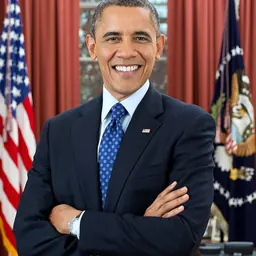
Kuechenberg was inducted into the American Football Association's Semi Pro Football Hall of Fame in 1986. In 2013, President Barack Obama honored the entire 1972 Perfect Season Dolphins at an event in the White House, but Kuechenberg declined to attend for political reasons. He told sports columnist Dave Hyde of Ft. Lauderdale's Sun-Sentinel "I want to be careful, because Mom said if you have nothing good to say about someone, then don't say anything. I don't have anything good to say about someone."
In 2014, he was inducted into the Chicagoland Sports Hall of Fame, and was given its George Connor Lifetime Achievement Award. The Professional Football Researchers Association named Kuechenberg to the PRFA Hall of Very Good Class of 2013. He was a finalist on a number of occasions for the Hall of Fame, but has not made it. He did not make the final round.
Health and death Kuechenberg played with various significant injuries. He played Super Bowl VIII with a fractured arm. He completed a game against the Pittsburgh Steelers, even though he had suffered a broken ankle. He played much of 1977 with two bone fractures in his back. His career ended after an eye injury in 1983. He was diagnosed posthumously, and among six Dolphins from the 1972 team diagnosed with CTE (Kuechenberg, Jim Kiick, Jake Scott, Bill Stanfill, Earl Morrall and Nick Buoniconti). More recently, another 15 Dolphins have been discovered to have had CTE. Kuechenberg likely had thousands of head hits during the years he played football. After his death and CTE diagnosis, researchers asked his daughter if the family knew how many concussions Kuechenberg suffered. She told them "'His head was his tool. ... Do that math over college and high school.'" She stated that her father declined rapidly in the years leading to his death, his memory beginning to fail, rarely leaving home, making poor financial decisions, drinking heavily, suffering from depression and contemplating suicide.
He died of a heart attack on January 12, 2019.
Don’t just read it —
keep it.
Full-length biographies made to live with: read them, listen on the way to work, watch them tonight.
- E-book
- Audio
- Video
Instant download · yours to keep · every purchase keeps this site free
Important facts
People in Bob Kuechenberg's life
Named in this biography and alive at the same time


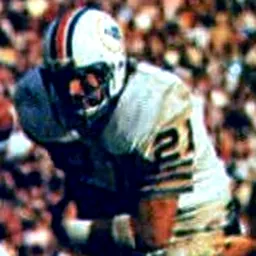

Related people
Same field, nearest in time


Contemporaries
People whose lives overlapped Bob Kuechenberg's




Frequently asked questions
Who was Bob Kuechenberg?
American football player (1947-2019)
When was Bob Kuechenberg born?
Bob Kuechenberg was born on 14 October 1947 in Gary.
When did Bob Kuechenberg die?
Bob Kuechenberg died on 12 January 2019 in Fort Lauderdale.
What was Bob Kuechenberg's occupation?
Bob Kuechenberg was an american football player.
What nationality was Bob Kuechenberg?
Bob Kuechenberg was American.
Sources & further reading
Cite this page
APA: Biography.guide. (2026). Bob Kuechenberg. https://biography.guide/bob-kuechenberg/
MLA: "Bob Kuechenberg." Biography.guide, https://biography.guide/bob-kuechenberg/.
Chicago: "Bob Kuechenberg." Biography.guide. https://biography.guide/bob-kuechenberg/.
Data last updated: 2026-09-20 · Spot an error? Report a correction.
Page generated 2026-09-27 05:27 UTC