
About Bob Crosby
Lived 1913 – 1993 (aged 79). Bob Crosby was an American actor, bandleader, conductor, singer, jazz musician and radio personality.
George Robert Crosby (August 23, 1913 – March 9, 1993) was an American jazz singer and bandleader, best known for his group the Bob-Cats, which formed around 1935. The Bob-Cats were a New Orleans Dixieland-style jazz octet. He was the younger brother of famed singer and actor Bing Crosby. On TV, Bob Crosby guest-starred in The Gisele MacKenzie Show. He was also a regular cast member of The Jack Benny Program, on both radio and television, taking over the role of bandleader after Phil Harris' departure. Crosby hosted his own afternoon TV variety show on CBS, The Bob Crosby Show (1953–1957). Crosby received two stars on the Hollywood Walk of Fame, for television and radio.
Early years Crosby was born in on August 23, 1913, Spokane, Washington, to bookkeeper Harry Lowe Crosby and Catherine "Kate" Harrigan, the daughter of a builder from County Mayo in Ireland.
The couple had seven children: Larry, Everett, Ted, Harry (popularly known as Bing Crosby), Catherine, Mary Rose, and George Robert, popularly known as Bob.
Crosby attended Gonzaga College, but he dropped out to seek a career in music. During World War II, he served in the U.S. Marine Corps, leading a band for much of his time in service. Crosby's own band also formed a "band-within-the-band" called the Bob-Cats, a Dixieland octet including soloists from the larger orchestra, many of whom were from New Orleans. The band included at various times Ray Bauduc, Yank Lawson, Billy Butterfield, Charlie Spivak, Muggsy Spanier, Irving Fazola, Nappy Lamare, Jack Sperling, Joe Sullivan, Jess Stacy, Bob Haggart, Walt Yoder, and Bob Zurke.
In the spring of 1940, during a performance in Chicago, teenager Doris Day was hired as the band's vocalist.
For its theme song, the band chose George Gershwin's song "Summertime." The band's hits included "South Rampart Street Parade," "March of the Bob Cats," "In a Little Gypsy Tea Room," "Whispers in the Dark," "Day In, Day Out," "Down Argentine Way," "You Must Have Been a Beautiful Baby," "Dolores," and "New San Antonio Rose." A bass-and-drums duet between Haggart and Bauduc, "Big Noise from Winnetka," became a hit in 1938–39.
There were reunions in the 1950s and 1960s.
Bob Haggart and Yank Lawson organized a band that combined dixieland and swing to try to carry on the legacy of Bob Crosby. From the late 1960s until the mid-1970s, the band was known as the World's Greatest Jazz Band, but when both became dissatisfied with the name they changed it to the Lawson-Haggart Jazz Band.
Radio During World War II, Bob Crosby spent 18 months in the Marines touring with bands in the Pacific. His radio variety series, The Bob Crosby Show, aired on NBC and CBS in different runs from July 18, 1943, to July 16, 1950. This was followed by Club Fifteen on CBS from 1947 through 1953 minus a brief interlude when he was replaced as host by singer Dick Haymes during parts of 1949 and 1950. During his stint on Club Fifteen, he was teamed with the ever-popular Andrews Sisters three nights per week, singing with them and engaging in comedy skits. He first met the trio in 1938 when his orchestra backed their Decca recording of "Begin the Beguine," their popular vocalization of Artie Shaw's big band hit. One can't help when hearing these old Club Fifteen broadcasts how eerily similar Bob and the Andrews Sisters sound to the trio's very frequent and hugely successful pairings with brother Bing Crosby on the Decca label. Bob and Patty even scored a hit duet on Decca Records with their duet recording of the novelty "The Pussy Cat Song (Nyow! Nyot Nyow!)," which peaked at No. 12 on Billboard. A half-hour CBS daytime series, The Bob Crosby Show, followed from 1953 to 1957. Bob introduced the Canadian singer Gisele MacKenzie to American audiences and subsequently guest-starred in 1957 on her NBC television series, The Gisele MacKenzie Show.
On September 14, 1952, he replaced Phil Harris as the bandleader on The Jack Benny Program, remaining until Benny retired the weekly radio show in May 1955 after 23 years. In joining the show, he became the leader of the same group of musicians who had played under Harris. According to Benny writer Milt Josefsberg, Crosby was hired for budget reasons. Because of strong competition from TV, the radio program budget had to be reduced, and so Bob replaced Phil. Prior to joining Benny on the radio, Crosby, who was based on the east coast, would often play with Benny during Benny's live New York appearances, and he was seen frequently throughout the 1950s on Benny's television series.
As a performer, Crosby had tremendous charisma and wit combined with a laid-back persona. He married socialite June Kuhn at his home in Spokane on September 22, 1938. They had five children: Christopher, George, Stephen, Cathleen and Junie. Crosby died in La Jolla, San Diego, California, on March 9, 1993, at 79, from complications of cancer.
Awards and honors Crosby received two stars on the Hollywood Walk of Fame on February 8, 1960, for television (at 6252 Hollywood Boulevard) and radio (at 6313 Hollywood Boulevard).
Partial filmography
Rhythm on the Roof (1934, short) – Himself Collegiate (1936) – Chorus Boy Paramount Headliner: Bob Crosby and His Orchestra (1938, short) – Orchestra Leader Let's Make Music (1941) – Himself Sis Hopkins (1941) – Jeff Farnsworth Rookies on Parade (1941) – Duke Wilson Abercrombie Had a Zombie (1941, short) – Himself Merry-Go-Roundup (1941, short) – Himself Holiday Inn (1942) – Orchestra Leader (uncredited) Reveille with Beverly (1943) – Himself Presenting Lily Mars (1943) – Himself Don't Hook Now (1943, short) – Himself Thousands Cheer (1943) – Himself See Here, Private Hargrove (1944) – Himself Pardon My Rhythm (1944) – Himself Kansas City Kitty (1944) – Jimmy The Singing Sheriff (1944) – Bob Richards My Gal Loves Music (1944) – Mel Murray Meet Miss Bobby Socks (1944) – Don Collins Pillow to Post (1945) – Clarence Wilson (scenes deleted) When You're Smiling (1950) – Himself Call Me Mister (1951) – Himself (uncredited) Stars in the Eye (1951) Two Tickets to Broadway (1951) – Orchestra Leader The Greatest Show on Earth (1952) – Spectator (uncredited) Down Among the Sheltering Palms (1952) – Himself (uncredited) Road to Bali (1952) – Himself (uncredited) Senior Prom (1958) – Bob Crosby The Five Pennies (1959) – Wil Paradise (final film role)
Don’t just read it —
keep it.
Full-length biographies made to live with: read them, listen on the way to work, watch them tonight.
- E-book
- Audio
- Video
Instant download · yours to keep · every purchase keeps this site free
Important facts
People in Bob Crosby's life
Named in this biography and alive at the same time
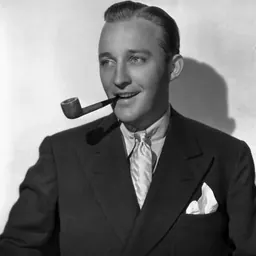

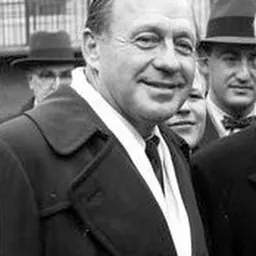
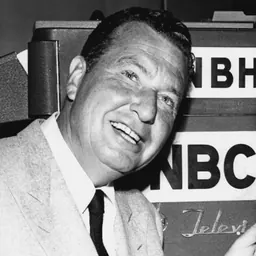




Related people
Same field, nearest in time
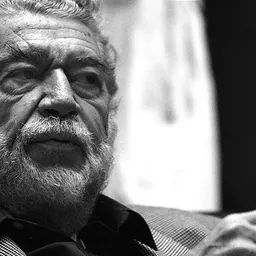

Contemporaries
People whose lives overlapped Bob Crosby's




Frequently asked questions
Who was Bob Crosby?
American dixieland bandleader and vocalist (1913–1993)
When was Bob Crosby born?
Bob Crosby was born on 23 August 1913 in Spokane.
When did Bob Crosby die?
Bob Crosby died on 9 March 1993 in La Jolla.
What was Bob Crosby's occupation?
Bob Crosby was an actor, bandleader, conductor, singer, jazz musician and radio personality.
What nationality was Bob Crosby?
Bob Crosby was American.
Sources & further reading
Cite this page
APA: Biography.guide. (2026). Bob Crosby. https://biography.guide/bob-crosby/
MLA: "Bob Crosby." Biography.guide, https://biography.guide/bob-crosby/.
Chicago: "Bob Crosby." Biography.guide. https://biography.guide/bob-crosby/.
Data last updated: 2026-09-20 · Spot an error? Report a correction.
Page generated 2026-09-27 05:17 UTC