
About Bob Considine
Lived 1906 – 1975 (aged 68). Bob Considine was an American journalist and writer.
Robert Bernard Considine (November 4, 1906 – September 25, 1975), was an American journalist, author, and commentator. He is best known as the co-author of Thirty Seconds Over Tokyo and The Babe Ruth Story.
Biography As a student, Considine attended Gonzaga College High School and George Washington University, both in his hometown of Washington, D.C., where he also worked for the government.
He launched his journalism career on his own initiative. In 1930, he purportedly complained to the editors of the now defunct Washington Herald when they misspelled his name in a report about an amateur tennis tournament in which he had participated. He was hired as the newspaper's tennis reporter. He later wrote drama reviews and Sunday feature articles. The newspaper was part of a syndicate of major-market daily newspapers owned by media magnate William Randolph Hearst. Considine could and would use this fact to his advantage.
With the advent of World War II, Considine became a war correspondent with the International News Service, also owned by Hearst. The wire service was a predecessor to United Press International. and, his column "On the Line" was a popular syndicated feature.
"Bob Considine is no great writer, but he is the Hearstling who regularly gets there first with the most words on almost any subject", wrote Time magazine in an unsigned profile.
Considine was prolific, with output that few could match. "Considine's speed, accuracy, and concentration as a writer and his seemingly inexhaustible energy were legendary in the newspaper profession. He was known to work at two typewriters at one time, writing a news story on one and a column or book on the other. His colleagues at the Washington Post recalled that he wrote a column on the 1942 World Series in nine minutes--on a train with his typewriter on a baggage car and the conductor shouting, 'All aboard, according to the Dictionary of American Biography.
Considine was not without his detractors. He was often taken to task for biased reporting, such as a 1946 article about then U.S. President Harry S. Truman. Simply working for Hearst was enough for others. "I was talking to Harry Bridges about a miserable anti-union article by a Hearst columnist named Bob Considine", remembered journalist Sidney Roger in a series of interviews. "He was a quintessential Hearstling. Very anti-union and very pro-war. I was describing what Considine wrote in his column. Harry said, 'I saw it, but you know, after all he works for Hearst and he's loyal to Hearst and Hearst's ideas.
A profile of the writer appearing in Time bore the headline "Ghost at Work", alluding to the numerous works to which he contributed in a behind-the-scenes role. "Ghostwriter Considine dashes off his fast-moving autobiographies while their heroes still rate Page One, takes one-third of the 'author's' royalties as his cut. His General Wainwright's Story was in print before Wainwright was out of the hospital. While Ted Lawson was still recovering from wounds suffered in Doolittle's Tokyo raid, Considine finished Thirty Seconds Over Tokyo." He made an estimated $100,000 annually.
Around 1960, a children's parody of the Howdy Doody show theme song went "It's Howdy Doody time, the show's not worth a dime, so turn on channel nine, and watch Bob Considine."
Considine had an array of influential admirers. He had correspondence from Truman, Lyndon B. Johnson, Rube Goldberg, Nelson A. Rockefeller, Cardinal Francis Spellman, and General William C. Westmoreland. President Dwight D. Eisenhower in a 1960 letter to William Randolph Hearst Jr., praised Considine's reporting on the 1960 U-2 incident in which the Soviets downed an American aircraft piloted by Francis Gary Powers and used for intelligence gathering. The controversy sank the American-Soviet summit which was about to convene in Paris. "Writing this note gives me also an opportunity to express my satisfaction over the balanced and reasonable way the Hearst papers handled the recent U-2 incident and the 'Summit' meeting. I thought that some of the pieces by Bob Considine were excellent, and of course from my viewpoint they were highly complimentary. I never forget the old saw -- 'He is a great man; he agrees with me.
Considine's "On The Line With Considine" commentaries were heard at different periods on the ABC Radio Network, and on NBC Monitor. WNBC-TV broadcast a television version of the program in 1951.
In his final column in 1975, Considine reportedly wrote: "I'll croak in the newspaper business. Is there any better way to go?" He died in the Manhattan borough of New York City that same year following a stroke. Bob Considine is interred in a crypt at Gate of Heaven Cemetery in Hawthorne, New York.
His papers are held by the Special Collections Research Center at Syracuse University (see "External links" below).
Awards 1957 Overseas Press Club 1959 Overseas Press Club
Selected works MacArthur the Magnificent, 1942 Thirty Seconds over Tokyo, 1943 The Babe Ruth Story, written with Babe Ruth, 1948 The Red Plot against America, with Robert E. Stripling. 1949 Innocents at Home, 1950 The Maryknoll Story, 1950 The Panama Canal, 1951 It's the Irish, 1961 The Men Who Robbed Brink's, 1961 Ripley, The Modern Marco Polo: The Life and Times of the Creator of Ripley's Believe It or Not!, 1961 General Douglas MacArthur, Greenwich, Conn.: Fawcett Gold Medal Books, 1964 It's All News to Me, 1967 Toots, 1969 The Remarkable Life of Armand Hammer, 1975
Don’t just read it —
keep it.
Full-length biographies made to live with: read them, listen on the way to work, watch them tonight.
- E-book
- Audio
- Video
Instant download · yours to keep · every purchase keeps this site free
Important facts
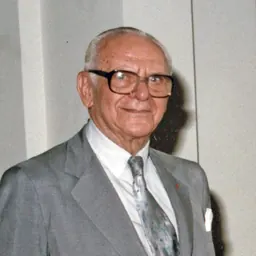
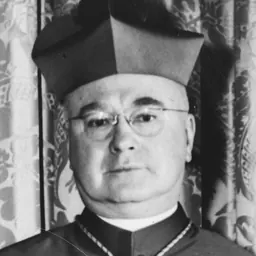
People in Bob Considine's life
Named in this biography and alive at the same time





Related people
Same field, nearest in time



Contemporaries
People whose lives overlapped Bob Considine's

Frequently asked questions
Who was Bob Considine?
American journalist (1906-1975)
When was Bob Considine born?
Bob Considine was born on 4 November 1906 in Washington, D.C..
When did Bob Considine die?
Bob Considine died on 25 September 1975 in Manhattan.
What was Bob Considine's occupation?
Bob Considine was a journalist and writer.
What nationality was Bob Considine?
Bob Considine was American.
Sources & further reading
Cite this page
APA: Biography.guide. (2026). Bob Considine. https://biography.guide/bob-considine/
MLA: "Bob Considine." Biography.guide, https://biography.guide/bob-considine/.
Chicago: "Bob Considine." Biography.guide. https://biography.guide/bob-considine/.
Data last updated: 2026-09-22 · Spot an error? Report a correction.
Page generated 2026-09-27 05:18 UTC