
Boardman Robinson
Canadian-born American illustrator and painter
About Boardman Robinson
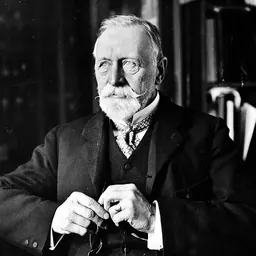
Lived 1876 – 1952 (aged 75). Boardman Robinson was a Canadian painter, illustrator and cartoonist.
Boardman "Mike" Michael Robinson (1876–1952) was a Canadian-born American painter, illustrator and cartoonist.
Biography
Early years
Boardman Robinson was born September 6, 1876, in Nova Scotia. He spent his childhood in England and Canada, before moving to Boston in the first half of the 1890s. Robinson worked his way through normal school, following a program to learn mechanical drafting. The couple moved to Paris where Robinson briefly worked as art editor for Vogue, before returning to the United States in 1904.
In 1915, Robinson traveled to east Europe on behalf of Metropolitan Magazine along with journalist John Reed. The pair saw first hand the effects of the European war in Russia, Serbia, Macedonia and Greece. In 1916 Reed's account of the journey was collected in a book called The War in Eastern Europe, to which Robinson contributed illustrations.
On his return from Europe, Robinson worked at the socialist monthly The Masses. His highly political cartoons as well as the general anti-war stance of The Masses was deemed to have violated the recently passed Espionage Act of 1917, and The Masses had to cease publication. Robinson, along with the other defendants were acquitted on October 5, 1918. Following The Masses, Robinson became a contributing editor to The Liberator and The New Masses, working with former Masses editor Max Eastman.
Robinson would later go on to teach art at the Art Students League in New York City (1919–30) and head the Colorado Springs Fine Arts Center (1936–47). Some of his students include Duard Marshall, James Brooks, Bill Tytla, Edmund Duffy, Jacob Burck, Russel Wright, Eric Bransby, Rifka Angel, Mary Anne Bransby, Gerhard Bakker, Bernard Arnest, and Esther Shemitz (who married Whittaker Chambers): both Burck and Shemitz contributed illustrations to The New Masses as did their mentor.)
Robinson is also known as a muralist. Some of his mural commissions include works at Rockefeller Center and the Department of Justice Building in Washington, D.C., and a nine-panel mural on the History of Trade for Kaufmann's flagship department store in Pittsburgh completed in 1929.
Robinson also illustrated several books, among them editions of Walt Whitman's Leaves of Grass (1921), Dostoyevsky's The Brothers Karamazov (1933), Edgar Lee Masters' Spoon River Anthology (1941), and Herman Melville's Moby Dick (1942).
Death and legacy
Robinson died on September 5, 1952, in Stamford, Connecticut.
Footnotes
Gallery
Don’t just read it —
keep it.
Full-length biographies made to live with: read them, listen on the way to work, watch them tonight.
- E-book
- Audio
- Video
Instant download · yours to keep · every purchase keeps this site free
Important facts
People in Boardman Robinson's life
Named in this biography and alive at the same time




Related people
Same field, nearest in time

Contemporaries
People whose lives overlapped Boardman Robinson's
Frequently asked questions
Who was Boardman Robinson?
Canadian-born American illustrator and painter (1876–1952)
When was Boardman Robinson born?
Boardman Robinson was born on 6 September 1876 in Nova Scotia.
When did Boardman Robinson die?
Boardman Robinson died on 5 September 1952 in Stamford.
What was Boardman Robinson's occupation?
Boardman Robinson was a painter, illustrator and cartoonist.
What nationality was Boardman Robinson?
Boardman Robinson was Canadian.
Sources & further reading
· Wikipedia: Boardman Robinson
Cite this page
APA: Biography.guide. (2026). Boardman Robinson. https://biography.guide/boardman-robinson/
MLA: "Boardman Robinson." Biography.guide, https://biography.guide/boardman-robinson/.
Chicago: "Boardman Robinson." Biography.guide. https://biography.guide/boardman-robinson/.
Data last updated: 2026-09-26 · Spot an error? Report a correction.
Page generated 2026-09-27 05:14 UTC