
About Biraja Sankar Guha
Lived 1894 – 1961 (aged 67). Biraja Sankar Guha was an Indian anthropologist.
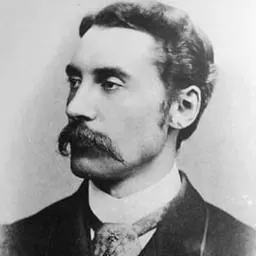
Biraja Sankar Guha (15 August 1894 – 20 October 1961) was an Indian physical anthropologist, who classified Indian people into races around the early part of the 20th century and he was also a pioneer to popularize his scientific ideas in the vernacular. He was the first Director of the Anthropological Survey of India (ASI) (1945–1954).
Career B. S. Guha did his graduation in philosophy from the Scottish Church College and earned his post-graduate degree (also in philosophy) from the University of Calcutta. He worked as a research scholar in anthropology in the Government of Bengal in 1917. In 1920, he received the A.M. degree in anthropology from Harvard University, with distinction, and became the Hemenway Fellow of the university. During 1922–1924 he worked as a research scholar at the Harvard Museum of Natural History (Boston), American Museum of Natural History (New York), and the Bureau of Ethnicity of the Smithsonian Institution in Washington D.C. In 1924, he was awarded a Ph.D. degree in anthropology from Harvard University, for his thesis on "The Racial basis of the Caste System in India" (which he defended before Roland Dixon and Earnest Hooton). In the process he became one of the earliest recipients of the doctorate in that discipline in the world and certainly, the first Indian citizen to do so.
In 1927, he joined the anthropological section of the Zoological Survey of India.
In 1934, Guha became a Fellow of the Royal Anthropological Institute of Great Britain and Ireland, and member of the Permanent Council of the International Congress of Anthropology. In 1936, he founded the Indian Anthropological Institute in Calcutta (now Kolkata). In 1938, he became the President of the Anthropology Section of the British Association for the Advancement of Science.
In 1944, he submitted a new proposal for a separate Anthropological Survey of India.
In 1955, Guha became the Director of Social Education Training Centre in Ranchi. During 1956–1959, he served as the Director of Bihar Tribal Research Institute, Ranchi.
Guha died in a railway accident at Ghatshila, Bihar.
Work Guha is best known for his work on classification of the Indian people into racial groups. Although the concept of race has been rejected by the evolutionary scientists, Guha's theories are of historical interest. In the later part of his life Guha, however strongly opined that purity of race is a myth and mixture of human populations is the reality. So, nations built up on the basis of so-called 'race' is also a myth. Human civilisation is a product of admixture and it is better to reserve the use of the term race in the exclusive biological domain
Apart from Indian tribes, he also did some research on North American Indians.
As anthropologist Kelli M. Kobor of the George Mason University observed in The Transfer of Anthropological Power in India: The Life and Work of Biraja Sankar Guha (1894–1961):
Guha had a holistic view of anthropology and accordingly he shaped the Anthropological Survey of India by giving importance to all the sub-fields of anthropology. B.S. Guha was the first anthropologist in India who led a thoroughgoing field survey by a multidisciplinary team on the social tensions among the refugees of the then East Pakistan for suggesting the government about how to understand their problem and improve their living conditions. He was interested in writing the history of anthropology in India in which he gave due importance to social and cultural anthropology. Guha also wrote on social anthropological and sociological topics like material culture, youth dormitories, place of aborigines in national life, culture contact, tribal welfare and administration and role of social sciences in nation building.
Publications Racial elements in the population (1944), published by Oxford University Press (a digitised version is available from University of Oklahoma) The racial affinities of the people of India in Census of India, 1931 (1935), Government of India Press, Simla A biometric study on the tribes of north-western Himalayan region (with S. K. Mazumdar) A report on the human relics recovered by the Naga Hills (Burma) Expedition for the abolition of human sacrifice during 1926-1927 (Anthropological bulletins, the Zoological Survey of India; bulletin) Moshup legape doying agom lunen; or, the Mythological origin of the Abor dormitory system Studies in social tensions among the refugees from Eastern Pakistan An archaeological tour in Gedrosia The anthropological basis of P.W. Schmidt's Austrisch theory
Don’t just read it —
keep it.
Full-length biographies made to live with: read them, listen on the way to work, watch them tonight.
- E-book
- Audio
- Video
Instant download · yours to keep · every purchase keeps this site free
Important facts
People in Biraja Sankar Guha's life
Named in this biography and alive at the same time


Related people
Same field, nearest in time

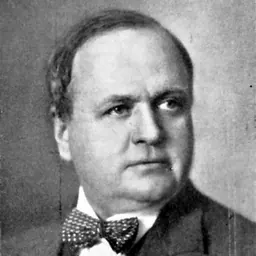

Contemporaries
People whose lives overlapped Biraja Sankar Guha's
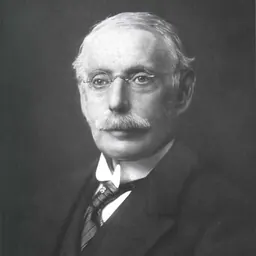
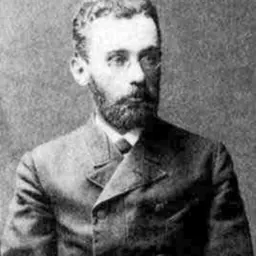
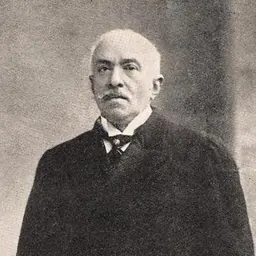

Frequently asked questions
Who was Biraja Sankar Guha?
Indian anthropologist (1894-1961)
When was Biraja Sankar Guha born?
Biraja Sankar Guha was born on 15 August 1894 in Shillong.
When did Biraja Sankar Guha die?
Biraja Sankar Guha died on 20 October 1961 in Ghatshila.
What was Biraja Sankar Guha's occupation?
Biraja Sankar Guha was an anthropologist.
What nationality was Biraja Sankar Guha?
Biraja Sankar Guha was Indian.
Sources & further reading
· Wikipedia: Biraja Sankar Guha
Cite this page
APA: Biography.guide. (2026). Biraja Sankar Guha. https://biography.guide/biraja-sankar-guha/
MLA: "Biraja Sankar Guha." Biography.guide, https://biography.guide/biraja-sankar-guha/.
Chicago: "Biraja Sankar Guha." Biography.guide. https://biography.guide/biraja-sankar-guha/.
Data last updated: 2026-09-22 · Spot an error? Report a correction.
Page generated 2026-09-27 05:18 UTC