
About Bill Siemering
Born 1934. Bill Siemering is a radio personality and journalist.
William H. Siemering (born October 26, 1934) is an American radio innovator and advocate. He was a member of the founding board of NPR and the author of its original "mission statement," the National Public Radio Purposes. As NPR's first director of programming Siemering helped shaped its flagship program All Things Considered into an influential and enduring fixture of American media. After a decades-long career in public radio, Siemering embarked on a second career of nurturing independent radio in the developing world.
Early life William H. Siemering working as an announcer at WHA in 1956 William Siemering grew up in rural Wisconsin. As a student in a two-room school outside of Madison, he listened to the "Wisconsin School of the Air." These twice-a-day radio programs produced by WHA brought educators from the University of Wisconsin into isolated country schools throughout the state. Siemering would later observe: "As early as first grade, radio both educated me and spurred my imagination."
Siemering's appreciation of radio increased during his high school years as he witnessed first-hand the importance of WHA's daily farm program while working summers baling hay and harvesting grain.
Public Radio Career WBFO
In 1963, William Siemering became the first professional general manager of WBFO, the student radio station at the State University of New York (SUNY) at Buffalo. He was hired by Richard Siggelkow, a former faculty member at UW, who was now the dean of students. Siggelkow protected the journalistic integrity of the station and gave the new manager total freedom to transform it. Like most college radio stations at the time, WBFO had been a student club limited to evening hours during the academic year.
The politicization of the campus community during the Vietnam War increased the focus on the news at WBFO. This came to a head in during the student strike of March 1970. Protestors occupied the student center, police stormed the campus and tear gas was in the air. Nobody was talking to each other, but Warren Bennis, a vice president at the university, used an open mike from the station to start a dialog. Live coverage continued well into the night, during which WBFO interviewed student radicals, campus administrators, city officials and the police. "The idea," Siemering reported, "was that there is not a single truth here."
The success of the strike coverage led Siemering to create This is Radio!, a WBFO magazine show that was later co-hosted by Terry Gross and served as a model for Fresh Air.
William Siemering's tenure at WBFO was also marked by an extraordinary outreach to Buffalo's African-American community. Shortly upon his arrival in 1963, Siemering canvassed the community and produced a radio series titled To be Negro, but the riots that followed the assassination of Martin Luther King in 1968 prompted a different approach. After meetings during which blacks aired their grievances regarding the Media, Siemering established a satellite station in the heart of the city. Volunteers from the community—none of whom with prior experience in radio—planned and produced 28 hours of programming for WBFO that ranged from a children's program to one on avant-garde jazz, as well as community discussions ranging from school busing to drug addiction. A number of the staff went on to successful careers in commercial radio and TV.
As NPR's first director of programming, Siemering was entrusted with developing the distinctive daily program that would help define the fledgling organization. Informed by his experience with This is Radio! at WBFO, he wanted a flexible magazine format that would mix news, art and culture in a fashion that would be engaging, creative and conversational.
Siemering also kept true to his pattern of hiring energetic and capable people despite their lack of radio experience. Three of these hires, Marcia Alvar, Dennis Hamilton and John Ydstie, went on to have successful careers in public radio.
Soundprint
William Siemering incorporated music, sound and compelling storytelling into radio programming since his days at WBFO and also played a key role in crafting NPR's distinctive sound. He further nurtured the medium's possibilities when he served as the first executive producer of (1987-1992) and driving force behind Soundprint. Originally conceived by documentarians Jay Allison and Larry Massat, Soundprint is a weekly series of independently produced radio documentaries produced at WJHU-FM in Baltimore and aired on NPR stations. It's the longest-running documentary series in public radio, and has won numerous national and international awards.
International Media Development South Africa
William Siemering's first international foray came at the behest of the U.S. State Department. In 1993, he was invited to meet with two groups. The first was interested in reforming the South African Broadcasting Corporation (SABC), which, until then, had been the mouthpiece of the Apartheid government. The second was interested in starting community radio stations as part of the liberation struggle.
Open Society Institute
That same year, Siemering received the prestigious MacArthur Foundation Fellowship. Money was tight during this period so this funding provided key support for him to do further work in developing community radio for emerging democracies. He returned to South Africa the following year, this time with the Open Society Foundation for South Africa, and in 1995 as a Knight International Journalism Fellow. radio was often overlooked by donors and development organizations. When it was considered, more often than not, it was regarded more as a loudspeaker for their public service announcements than as a tool for change.
Through DRP, Siemering has worked with independent radio stations in countries ranging from Mongolia to Sierra Leone. In the latter, DRP partnered with Search for Common Ground and others to help develop independent media in a country devastated by a 10-year civil war. In turn, the Independent Radio Network played a major role in an exceptionally transparent and peaceful national election in 2007. Recent efforts include projects on best practices for agriculture in response to climate change in Cameroon, Cape Verde, Rwanda and Zambia, and on youth and reproductive health in Malawi.
Wyncote Foundation William Siemering passed the leadership of Developing Radio Partners to the next generation at the end of 2017. He is currently Senior Fellow with the Wyncote Foundation.
Quotes Quotes by William Siemering Radio is the most personal medium we have, because the human voice is so expressive. It's a storytelling medium and we all need storytelling.
... I think whatever talent I have is mainly just hiring good people, trying to see their gifts, and managing as I would like to be managed, which means being left alone as much as possible and, you know, have a clear job description, know what I'm supposed to do, be left alone to do it and bring as much as I can to it."
Quotes from National Public Radio Purpose National Public Radio will serve the individual: it will promote personal growth; it will regard individual differences with respect and joy rather than derision and hate; it will celebrate the human experience as infinitely varied rather than vacuous and banal; it will encourage a sense of active constructive participation, rather than apathetic helplessness ...
...
The total service should be trustworthy, enhance intellectual development, expand knowledge, deepen aural esthetic enjoyment, increase the pleasure of living in a pluralistic society and result in a service to listeners which makes them more responsive, informed human beings and intelligent responsible citizens of their communities and the world.
...
It would not substitute superficial blandness for genuine diversity of regions, values, and cultural and ethnic minorities which comprise American society; it would speak with many voices and many dialects. The editorial attitude would be that of inquiry, curiosity, concern for the quality of life, critical, problem solving, and life loving. The listener should come to rely upon it as a source of information of consequence; that having listened has made a difference in his attitude toward his environment and himself.
...
Listeners should feel that the time spent with NPR was among their most rewarding in media contact. National Public Radio will not regard its audience as a 'market' or in terms of its disposable income, but as curious, complex individuals who are looking for some understanding, meaning and joy in the human experience.
Quotes about William Siemering
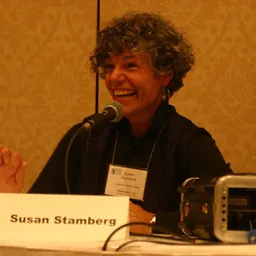
Eleven years after this radio debut, I heard - was told the real story by the fellow who, again, tapped me for the job, a man named Bill Siemering... that apparently there was quite a bit of opposition to me in the beginning from the managers, a number of managers of our station who said: A woman's voice is not authoritative. People will not take her seriously. Her voice does not carry well. It's too high - imagine this, being called too high.
... And Bill, in his wisdom, never told me that until so many years later, and it was a mark of his leadership, I felt. He knew it would throw me, and he had tremendous confidence in me, and he didn't want it to affect my performance. He felt if I were given a chance and just allowed to go, that people would change their minds toward it, and happily, they did.—Susan Stamberg, former co-host of All Things Considered
Siemering's polite thoughtful manner masked a burning passion for social justice ... he was determined to change the status quo, to insist that listening to the radio not be a passive pursuit. On campus, he helped students cover anti-Vietnam War protests in a challenging, almost confrontational way. He reached out to the city's black ghetto to give voice to the unheard. He attacked exactly those areas of conflict from which most managers fled – race, class, the division between rich and poor, powerful and weak.—Marc Fisher, author, Something in the Air, on Siemering's time at WBFO, SUNY, Buffalo
We are the products of seeds of thinking and action planted by Mr. Siemering. We are disciples who extend his ideas. We cherish knowing him because he gives our lives focus and brings meaning to our work. Tune around the radio dial and I guarantee you will hear Bill Siemering talking to you.—Dennis Hamilton, former Vice President of Programming at Minnesota Public Radio
There's a special place for my fellow award recipient Bill Siemering. Bill gave me my first home in public radio. He hired me as a very green reporter ... and I entered a scrappy newsroom at WHYY in Philadelphia – my career was forged in that crucible of reporting, editing, hosting, and producing. The dream job came with the astounding privilege of learning from Terry Gross, Danny Miller, Dave Davies, Tia O'Brien, Carol Anne Clark Kelly, and Nick Peters. But especially Bill ... a beacon of leadership, public service and kind, close friendship. He is why I am standing here, and why each of you, too, have a job in something called public radio.
I urge you to read Bill's founding document for NPR; it's on Current. It really does explain the values of public radio in a way no one has been able to since. Bill, like many of us, believes that public radio can make the world a better, more humane, place.—John Barth, PRX
Bill Siemering, the man who wrote NPR's original statement of purpose, 'wanted something that was not, and is not, available in very many places on the radio dial,' wrote NPR host Linda Wertheimer. 'He wanted quietness. He wanted calm conversation, analysis and explication.' Critics agreed that he achieved this. In 1979, Time referred to All Things Considered as 'surely the most literate, trenchant and entertaining news program on radio.—Susan J. Douglas, professor of Communication Studies at the University of Michigan
In cynical times, I like to go back and read @bsiemering's "National Public Radio Purposes" written in 1970. bit.ly/2anMMvj—Jeff Brady, National Desk Reporter, NPR @jeffbradynpr
To many of us in South Africa, radio represents the hope of new beginnings, of a new democracy in which all the voices are heard. Bill has helped nurture the seeds of this new generation.—Sue Valentine, former Executive Producer Radio News and Current Affairs for South African Broadcasting Corporation, former Director Media for Open Society Foundation for South Africa
Honors and awards Edward R. Murrow Award from the Corporation for Public Broadcasting (1986) MacArthur Foundation Fellowship (1993) Honorary Doctorate of Law, Arcadia University (1995) NPR Lifetime Achievement Award (2000) Honorary Doctorate of Humane Letters, State University of New York at Buffalo (2001) Third Coast Festival Lifetime Achievement Award (2002) Civic Ventures Purpose Prize Fellow (2008) Purpose Prize Fellow (2008) Inducted into the Buffalo Broadcasters Hall of Fame (2010) Annenberg Scholar at Principia College (2017)
Don’t just read it —
keep it.
Full-length biographies made to live with: read them, listen on the way to work, watch them tonight.
- E-book
- Audio
- Video
Instant download · yours to keep · every purchase keeps this site free
Important facts
People in Bill Siemering's life
Named in this biography and alive at the same time


Related people
Same field, nearest in time

Contemporaries
People whose lives overlapped Bill Siemering's






Frequently asked questions
Who is Bill Siemering?
American radio personality
When was Bill Siemering born?
Bill Siemering was born on 26 October 1934.
What is Bill Siemering's occupation?
Bill Siemering is a radio personality and journalist.
Sources & further reading
Cite this page
APA: Biography.guide. (2026). Bill Siemering. https://biography.guide/bill-siemering/
MLA: "Bill Siemering." Biography.guide, https://biography.guide/bill-siemering/.
Chicago: "Bill Siemering." Biography.guide. https://biography.guide/bill-siemering/.
Data last updated: 2026-09-20 · Spot an error? Report a correction.
Page generated 2026-09-27 05:28 UTC