
About Bill Monroe
Lived 1911 – 1996 (aged 84). Bill Monroe was an American singer, singer-songwriter, composer, mandolinist, guitarist and bandleader.
William Smith Monroe ( ; September 13, 1911 – September 9, 1996)
The genre takes its name from his band, the Blue Grass Boys, who named their group for the bluegrass of Monroe's home state of Kentucky. He described the genre as "Scottish bagpipes and ole-time fiddlin'. It's Methodist and Holiness and Baptist. It's blues and jazz, and it has a high lonesome sound."
Early life Monroe was born on his family's farm near Rosine, Kentucky, the youngest of eight children of James Buchanan "Buck" and Malissa (Vandiver) Monroe. His mother and her brother, James Pendleton "Pen" Vandiver, were both musically talented, and Monroe and his family grew up playing and singing at home.
Also significant in Monroe's musical life was Arnold Shultz, an influential fiddler and guitarist who introduced Monroe to the blues. In an interview with Ralph Rinzler, Monroe described the fiddling of Shultz as being infused with more blues than a white fiddler, although he would play common songs such as "Sally Goodin".
Career
In 1929, Monroe moved to Indiana to work at an oil refinery with his brothers Birch and Charlie.
After the Monroe Brothers disbanded in 1938, Bill Monroe formed The Kentuckians in Little Rock, Arkansas, but the group only lasted for three months.
While the fast tempos and instrumental virtuosity characteristic of bluegrass music are apparent even on these early tracks, Monroe was still experimenting with the sound of his group. He seldom sang lead vocals on his Victor recordings, often preferring to contribute high tenor harmonies as he had in the Monroe Brothers. A 1945 session for Columbia Records featured an accordion, soon dropped from the band. Most importantly, Monroe added banjo player David "Stringbean" Akeman to the Blue Grass Boys in 1942.
The 28 songs recorded by this version of the Blue Grass Boys for Columbia Records in 1946 and 1947 soon became classics of the genre, including "Toy Heart", "Blue Grass Breakdown", "Molly and Tenbrooks", "Wicked Path of Sin", "My Rose of Old Kentucky", "Little Cabin Home on the Hill", and Monroe's most famous song "Blue Moon of Kentucky", with what many consider the classic "high lonesome" version of the Blue Grass Boys, featuring the lead vocals and rhythm guitar of Jimmy Martin, the banjo of Rudy Lyle (replacing Don Reno), and fiddlers such as Merle "Red" Taylor, Charlie Cline, Bobby Hicks, and Vassar Clements.
This band recorded a number of bluegrass classics, including "My Little Georgia Rose", "On and On", "Memories of Mother and Dad", and "Uncle Pen", as well as instrumentals such as "Roanoke", "Big Mon", "Stoney Lonesome", "Get Up John", and the mandolin feature "Raw Hide". Carter Stanley joined the Blue Grass Boys as guitarist for a short time in 1951 during a period when The Stanley Brothers had temporarily disbanded.
On January 16, 1953, Monroe was critically injured in a two-car wreck. He was playing in the band The Black Mountain Boys in Palo Alto with Sandy Rothman, and in May 1964, he visited Neil Rosenberg at Bean Blossom, playing the banjo and making tapes of Monroe's performances.
The growing national popularity of Monroe's music during the 1960s was also apparent in the increasingly diverse background of musicians recruited into his band. Non-southerners who served as Blue Grass Boys during this period included banjo player Bill Keith and singer/guitarist Peter Rowan from Massachusetts,
Monroe's compositions during his later period were largely instrumentals, including "Jerusalem Ridge", "Old Dangerfield" (originally spelled Daingerfield after the town in East Texas), and "My Last Days on Earth"; he settled into a new role as a musical patriarch who continued to influence younger generations of musicians. Monroe recorded two albums of duets in the 1980s; the first featured collaborations with country stars such as Emmylou Harris, Waylon Jennings, and The Oak Ridge Boys, while the second paired him with other prominent bluegrass musicians.
Monroe also had the distinction of playing for four consecutive presidents: Carter, Reagan, Bush and Clinton.
Death Monroe's last performance occurred on March 15, 1996. He ended his touring and playing career in April, following a stroke. Monroe died on September 9, 1996, in Springfield, Tennessee, four days shy of his 85th birthday.
Legacy and influence
According to Ralph Rinzler, Monroe impacted music in the following five ways:
When others were going electric, Monroe created a space for an acoustic string band tradition to continue to grow and develop within country music. He developed a distinct vocal tradition - the "high lonesome" sound. He established the mandolin as a virtuoso string band instrument He composed a diverse repertoire of songs and instrumental tunes which have become standard fare among bluegrass, country, and some pop musicians. More than any other musician of his time, he skillfully infused country music with archaic tonal subtlety, including Anglo-Scots-Irish and Blues influences.
Monroe was made an honorary Kentucky Colonel in 1966. He was inducted into the Country Music Hall of Fame in 1970, That year's fellowships were the first bestowed by the NEA. In 1993, he received the Grammy Lifetime Achievement Award, and he was awarded the National Medal of Arts in 1995. His well-known song "Blue Moon of Kentucky" has been covered not only by bluegrass but also rock and country artists, most notably Elvis Presley, Paul McCartney, and Patsy Cline. In 2003, CMT had Monroe ranked No. 16 on CMT 40 Greatest Men of Country Music.
Artists that claimed to be influenced by or to be playing the bluegrass genre were often bullied by Monroe. He always considered himself the father and caretaker of bluegrass. He would often say of new bands that did not perform to his standards, "That ain't no part of nothin'." Even those who question the scope of bluegrass refer to Monroe as a "musical giant" and recognize that "there would be no bluegrass without Bill Monroe."
More than 150 musicians played in the Blue Grass Boys over the nearly 60 years of Monroe's performing career. Monroe tended to recruit promising young musicians who served an apprenticeship with him before becoming accomplished artists in their own right. Some of Monroe's band members who went on to greater prominence include singer/guitarists Clyde Moody, Lester Flatt, Jack Cooke, Mac Wiseman, Jimmy Martin, Carter Stanley, Del McCoury, Peter Rowan, Roland White, Roland Dunn and Doug Green; banjo players Earl Scruggs, Bob Black, Butch Robins, Don Reno, Stringbean, Sonny Osborne, and Bill Keith; and fiddlers Tommy Magness, Chubby Wise, Vassar Clements, Byron Berline, Kenny Baker, Bobby Hicks, Gordon Terry, Randall Franks and Glen Duncan. Monroe also regularly performed with flat-picking guitar virtuoso Doc Watson.
Modern bluegrass singer and mandolin player Ricky Skaggs was influenced by Monroe. Skaggs was only six years old, in 1960, when he first got to perform onstage with Monroe and his band at the high school in Martha, Kentucky. He stated, "I think Bill Monroe's importance to American music is as important as someone like Robert Johnson was to blues, or Louis Armstrong. He was so influential: I think he's probably the only musician that had a whole style of music named after his band."
In 1999, the portion of Indiana State Road 135 running from Morgantown through to Nashville, Indiana was dedicated to Monroe and is known as the Bill Monroe Memorial Highway.
Blue Grass Boys
David "Stringbean" Akeman Kenny Baker Byron Berline Vassar Clements Charlie Cline Dana Cupp Cleo Davis
Lester Flatt Randall Franks Amos Garren Richard Greene Bobby Hicks Bill Keith Rudy Lyle Jimmy Maynard
Jimmy Martin Bessie Lee Mauldin Del McCoury Clyde Moody Don Reno Butch Robins Peter Rowan
Earl Scruggs Carter Stanley Gordon Terry Buck Trent Roland White Chubby Wise Mac Wiseman
Discography
Studio albums
Don’t just read it —
keep it.
Full-length biographies made to live with: read them, listen on the way to work, watch them tonight.
- E-book
- Audio
- Video
Instant download · yours to keep · every purchase keeps this site free
Important facts
People in Bill Monroe's life
Named in this biography and alive at the same time


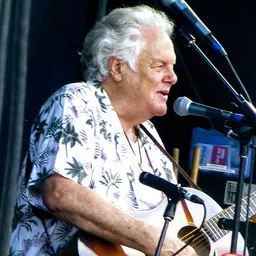
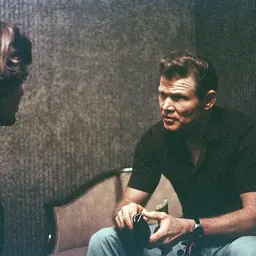


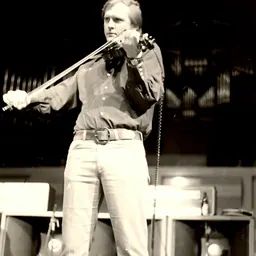
Related people
Same field, nearest in time
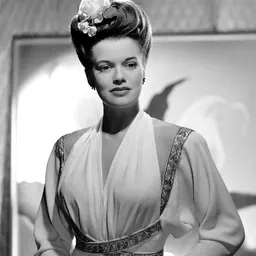



Contemporaries
People whose lives overlapped Bill Monroe's






Frequently asked questions
Who was Bill Monroe?
American bluegrass musician, songwriter (1911-1996)
When was Bill Monroe born?
Bill Monroe was born on 13 September 1911 in Rosine.
When did Bill Monroe die?
Bill Monroe died on 9 September 1996 in Springfield.
What was Bill Monroe's occupation?
Bill Monroe was a singer, singer-songwriter, composer, mandolinist, guitarist and bandleader.
What nationality was Bill Monroe?
Bill Monroe was American.
Sources & further reading
Cite this page
APA: Biography.guide. (2026). Bill Monroe. https://biography.guide/bill-monroe-singer/
MLA: "Bill Monroe." Biography.guide, https://biography.guide/bill-monroe-singer/.
Chicago: "Bill Monroe." Biography.guide. https://biography.guide/bill-monroe-singer/.
Data last updated: 2026-09-20 · Spot an error? Report a correction.
Page generated 2026-09-27 05:19 UTC