
Bill Inman
British medical researcher
About Bill Inman
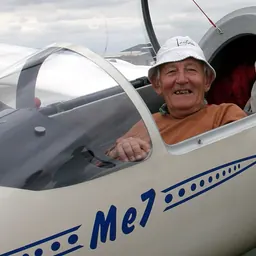
Lived 1929 – 2005 (aged 76). Bill Inman was a glider pilot.
William Howard Wallace Inman, MRCP, FRCP, FFPHM (1 August 1929 – 20 October 2005), also known as WHW Inman, was a British doctor and pioneer of methods and systems to detect risks of treatment with drugs. As well as holding positions in health institutions in the UK, he was active in international efforts to co-ordinate drug safety monitoring.
Life and career Inman was born at Banstead, Surrey in 1929, the son of a businessman. He attended Ampleforth College where he played rugby, performed in musicals, and broke their junior cross-country record. He was also involved in key research on sudden asthma deaths, halothane and jaundice, and phenylbutazone and blood dyscrasias. In total Inman published around 100 papers on drug monitoring and safety aspects of various drugs.
After 1975 he drew up proposals for what he termed 'Recorded Release' monitoring method to supplement the voluntary Yellow Card Scheme, which eventually evolved into the post-marketing system used by the Drug Safety Research Unit (DSRU). This arose from his conviction that 'post-marketing studies' being created by drug companies were promotional in nature. As he was unable to get official support for what became prescription event monitoring, in 1980 he resigned from the CSM secretariat to found the DSRU independently, and start a prescription event monitoring system using the "Green Form" questionnaires.
Despite financial pressures, Inman upheld a principle that studies at his Unit should not be directly sponsored by a pharmaceutical company, lest it restrict his ability to investigate issues which he felt were important.
Inman was a consultant to the WHO from 1966 to 1980, participating in a number of the formative meetings setting up international systems. The WHO Adverse Reaction Terminology was established by Barbro Westerholm, Bruce Royal and Inman. The pilot phase of the drug monitoring programme was evaluated favourably by the World Health Assembly and became a continuing WHO programme, based until 1978 in Geneva.
In the aftermath of scares over the safety of Eraldin and Practolol, Franz Gross of the University of Heidelberg convened a conference in 1977. The conference examined the problems of relying solely on spontaneous reporting systems, and the need for adverse reaction data which included information on the number of patients using a particular drug, which connected with Inman's plans for prescription event monitoring.
Inman contributed to an initiative on risk management and communication by Wolfson College, Oxford in 1984. At this symposium he outlined the problems of communicating risk perception, and demonstrated the huge differences in the views of medical staff of risk within their own fields. He illustrated the comparative annual risk of doing something (smoking) or being somebody (a president of the United States, or a matador). By contrast, he cited examples of drug withdrawals after a single drug-related death of one in two million. In 1984 he was appointed to the first chair in Pharmacoepidemiology in the United Kingdom, at the University of Southampton. Michael O'Donnell wrote, after reading Inman's autobiography, Feeling Better Doctor?: "I suspect you will agree that the author has earned the accolade of one of those beastly people who are always bringing up awkward subjects and making respectable people feel uncomfortable." To the end Inman expressed disappointment that no system, such as a database of pregnant women's drug histories, had been put in place to prevent another thalidomide tragedy. winning the award in 1960 for best new pilot, and only stopping in the early 1990s. When living in Hever, Kent he regularly went trout fishing, especially at Bewl Bridge.
Inman's two books: Don't Tell the Patient – Behind the Drug Safety Net, describing his 30 years in drug safety from 1964 to 1994, and his autobiography, Feeling Better Doctor?, give a full account of his life and career.
Don’t just read it —
keep it.
Full-length biographies made to live with: read them, listen on the way to work, watch them tonight.
- E-book
- Audio
- Video
Instant download · yours to keep · every purchase keeps this site free
Important facts
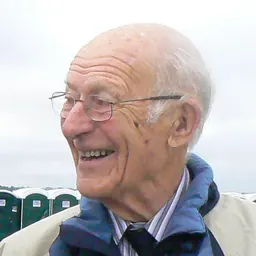
People in Bill Inman's life
Named in this biography and alive at the same time



Related people
Same field, nearest in time



Contemporaries
People whose lives overlapped Bill Inman's




Frequently asked questions
Who was Bill Inman?
British medical researcher
When was Bill Inman born?
Bill Inman was born on 1 August 1929.
When did Bill Inman die?
Bill Inman died on 20 October 2005.
What was Bill Inman's occupation?
Bill Inman was a glider pilot.
Sources & further reading
Cite this page
APA: Biography.guide. (2026). Bill Inman. https://biography.guide/bill-inman/
MLA: "Bill Inman." Biography.guide, https://biography.guide/bill-inman/.
Chicago: "Bill Inman." Biography.guide. https://biography.guide/bill-inman/.
Data last updated: 2026-09-20 · Spot an error? Report a correction.
Page generated 2026-09-27 04:58 UTC