
About Beulah Louise Henry
Lived 1887 – 1973 (aged 85). Beulah Louise Henry was an American inventor and businessperson, known for Thomas Edison.
Beulah Louise Henry (September 28, 1887 – February 1, 1973) was an American inventor and entrepreneur whose work significantly advanced consumer product design and everyday manufacturing processes. Born in Raleigh, North Carolina, and later based in New York City, Henry became one of the most prolific female inventors of the early twentieth century. At a time when women faced significant barriers in science, engineering, and business, she secured 49 patents and developed more than 100 inventions, earning her the nickname “Lady Edison.”¹
Henry’s career was defined by her ability to identify inefficiencies in daily life and transform them into practical, marketable solutions. Unlike many inventors who focused on industrial-scale innovations, Henry concentrated on improving everyday consumer experiences, particularly in the home and clothing industries. This focus allowed her to bridge the gap between invention and usability, making her work both accessible and commercially successful.²
One of the central pain points Henry sought to address was the inconvenience and inefficiency of household tools, particularly sewing technology. Traditional sewing machines at the time relied on bobbins, which frequently jammed, required constant rethreading, and disrupted workflow. In response, Henry developed the bobbin-free sewing machine, an innovation that simplified the stitching process and reduced mechanical interruptions. By eliminating a common source of frustration, she improved both productivity and user experience for home sewers and manufacturers alike.³
In addition to sewing technology, Henry also worked on a wide range of consumer products designed to simplify daily tasks. Her inventions included vacuum-sealed ice cream freezers, umbrella improvements, and various garment-related tools. Each invention reflected her consistent approach: identifying a specific, often overlooked inconvenience and redesigning the product to make it more efficient, reliable, and user-friendly. This problem-solving mindset positioned her as an early example of what would now be considered user-centered design thinking.⁴
The broader impact of Henry’s work extends beyond the individual products she created. Her innovations contributed to a shift in how consumer goods were designed and marketed, emphasizing functionality, convenience, and accessibility. Many of the principles underlying her inventions—such as reducing friction in everyday tasks and improving mechanical efficiency—remain central to modern product design. While some of her specific inventions, such as early sewing machine modifications, have since evolved with digital and automated technologies, the core problems she addressed continue to influence contemporary solutions. For example, modern sewing machines now feature automated threading and simplified mechanisms, reflecting the same goals Henry pursued decades earlier.²
Moreover, Henry’s legacy is particularly significant in the context of gender and innovation. As a woman working in a male-dominated field during the early 1900s, she not only achieved commercial success but also challenged societal expectations about women’s roles in technology and business. Her ability to patent, produce, and market her inventions independently demonstrated that women could be both creative innovators and successful entrepreneurs. This impact continues to resonate today, as efforts to increase female representation in STEM fields often highlight pioneers like Henry as foundational figures.¹
Although some of Henry’s original products are no longer in widespread use, her influence persists through the evolution of consumer technologies and design methodologies. Her work laid the groundwork for modern innovations that prioritize user experience and efficiency, ensuring that her contributions remain relevant in today’s technological landscape.
1. National Inventors Hall of Fame. (n.d.). Beulah Louise Henry. https://www.invent.org/inductees/beulah-louise-henry 2. U.S. Patent and Trademark Office. (n.d.). Women in innovation: Beulah Louise Henry. https://www.uspto.gov 3. Lemelson-MIT Program. (n.d.). Beulah Henry biography. https://lemelson.mit.edu 4. Wikipedia contributors. (2026). Beulah Louise Henry. https://en.wikipedia.org/wiki/Beulah_Louise_Henry
Early life and education
Beulah Louise Henry was born on September 28, 1887, in Raleigh, North Carolina, the daughter of Walter R. and Beulah Henry. She was the granddaughter of former North Carolina Governor W. W. Holden and a direct descendant of President Benjamin Harrison and Patrick Henry.
Henry was a creative and inquisitive child. At nine years old, she was drawing sketches of inventions. She enjoyed painting and music, but her favorite hobby was to point out things that she saw wrong and mention changes or innovations that could be made to improve them.
From 1909 to 1912, she attended Elizabeth College in Charlotte, North Carolina. In 1912, prior to graduating, she was awarded her first patent (No. 1,037,762), for a vacuum ice cream freezer that required minimal ice.
Career in New York City
After graduating, Henry moved with her mother to New York City to pursue her inventing career. From 1939 to 1955, she worked as an inventor for the Nicholas Machine Works. She also served as a consultant for many companies that manufactured her inventions, including the Mergenthaler Linotype Company and the International Doll Company.
She lived in New York hotels, belonged to a variety of scientific societies, and never married. This invention is still used today in an adapted form. It is primarily used in factories as it is faster than the typical sewing machine and breaks less often.
A Henry invention, patented in 1936, was a tool that enabled the writing of multiple copies of a document on a typewriter without the use of carbon paper.
Henry didn’t have any formal education in engineering, which made her more creative when it came to solutions. She claimed that the design would generally come to her fully formed in her head, but because she didn’t have any education in engineering, she had someone make the product for her. She made great use of prototyping with things she could find around her home such as soap, clips and buttons. If the engineers told her it couldn’t be done she would build it with on hand supplies to try and further convince them.
"I invent because I cannot help it – new things just thrust themselves on me" At the time of her registering her patents, only 2% of all those patents were registered by women, making her truly impressive in her particular field and era. She is still considered one of the most successful female inventors of all time. After death, Henry was inducted into the National Inventors Hall of Fame in 2006.
Don’t just read it —
keep it.
Full-length biographies made to live with: read them, listen on the way to work, watch them tonight.
- E-book
- Audio
- Video
Instant download · yours to keep · every purchase keeps this site free
Important facts
People in Beulah Louise Henry's life
Named in this biography and alive at the same time

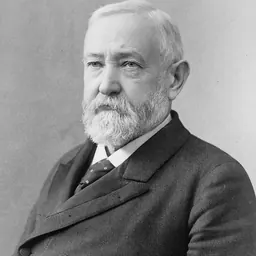
Related people
Same field, nearest in time
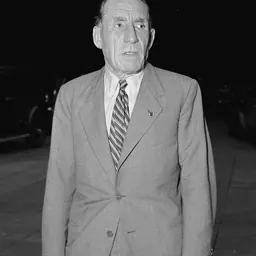
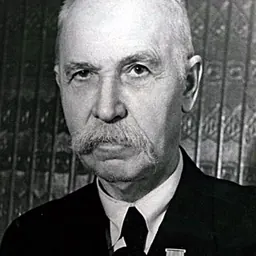

Contemporaries
People whose lives overlapped Beulah Louise Henry's



Frequently asked questions
Who was Beulah Louise Henry?
American business woman and inventor (1887-1973)
When was Beulah Louise Henry born?
Beulah Louise Henry was born on 28 September 1887 in Raleigh.
When did Beulah Louise Henry die?
Beulah Louise Henry died on 26 February 1973.
What was Beulah Louise Henry's occupation?
Beulah Louise Henry was an inventor and businessperson.
What was Beulah Louise Henry known for?
Beulah Louise Henry was known for Thomas Edison.
What nationality was Beulah Louise Henry?
Beulah Louise Henry was American.
Sources & further reading
· Wikipedia: Beulah Louise Henry
· DBpedia: Beulah Louise Henry
Cite this page
APA: Biography.guide. (2026). Beulah Louise Henry. https://biography.guide/beulah-louise-henry/
MLA: "Beulah Louise Henry." Biography.guide, https://biography.guide/beulah-louise-henry/.
Chicago: "Beulah Louise Henry." Biography.guide. https://biography.guide/beulah-louise-henry/.
Data last updated: 2026-09-25 · Spot an error? Report a correction.
Page generated 2026-09-27 05:11 UTC