
Bettina WitteVeen
American artist (1930-2017
About Bettina WitteVeen
Born 1958.
Bettina WitteVeen (born 1958) is a German-born conceptual artist, photographer and filmmaker. She fuses photography, film, archival images and sculpture to create large-scale installations that are mounted at historical war-related sites around the world.
Early life and education WitteVeen was born Bettina Sophie Beythan in Mannheim, Germany, on Jan. 12, 1958. She grew up with parents who lived through the bombings of Mannheim by Allied forces during World War II and relayed those traumatic experiences to her.
Their recollections of the tragedy of war shaped both her and her art. She left Europe after graduating from high school and traveled to what she considered her "dream destination": the United States with its music and its freedom movements. "I was totally impressed by Martin Luther King," she said. "I was fascinated by the North American Indians. New York struck me as the pinnacle of the world. But I just had this feeling, the spirit that emanated from America at the time, this feeling of liberality and freedom, being able to be yourself." She worked as a banker at a financial company before turning to art. She is a self-taught artist and photographer.
Basis for her art A practicing Hindu-Buddhist, WitteVeen uses her pacifist philosophy to create exhibitions that she describes as "a fine line between shock and compassion." She does extensive research around the globe, spending years photographing subjects and combing archives for historical photos.
"We are not hard-wired for war," said WitteVeen. "Warfare is a tragic aberration of the neurotic aspects of a society. ... Like the abolitionists of slavery who published painful images to show the inhumanity of slavery and to rally support, I show the reality and ravages of war."
She has traveled to former prison camps, battlefields, military installations, concentration camps, re-education camps, internment sites and memorials in Africa, the Americas, Europe and Asia. For her photography and installations, she chooses locations scarred by violence, destruction and war - the predominant theme in her works. She also records the cultures of people in remote villages in various corners of the world.
2006: "Brüder, Zur Sonne, Zur Freiheit ... and the beat goes on"
This piece consisted of 22 photos exemplifying the idealism of youth, shown at the Goethe-Institut in New York. It was inspired by Johann Wolfgang von Goethe's years as a young follower of the "Sturm und Drang" movement.
The project consisted of the film "Götterfunken," consisting of dance sequences recorded by WitteVeen and installed in a former theater. Nuclear physicist J. Robert Oppenheimer of the Manhattan Project was projected on a screen in the film "Feuertrunken the Erlking," which was installed in an empty indoor swimming pool in a former sports complex. She also set up the installation "Whiteout" inside the complex, with photos of biological and chemical warfare, and Big Brother-style software. Outside, WitteVeen surrounded the statue of Lenin with black asphalt and barbed wire.
Other works and exhibitions In 1999, in a group exhibit, she offered a series of studio photographs for a multidimensional exhibit titled "Body Art: Marks of Identity" at the American Museum of Natural History in New York. Hers was a wall of black and white portraits of young white men and women she photographed in New York and San Francisco in the mid-1990s who adopted the scarification practice of the Aboriginal people. In one photo, a man named Jon was singled out by one reviewer for his elongated pierced ears, eyebrow rings, extensive tattoos and a cylinder through his nose. The photos were among a series she titled "Hybrid Identities."
"Sacred Sister" was her second photography project, which she began in 1995 by photographing women in the jungles of Indonesia and Southeast Asia. It consisted of 100 images. The photographs were shown in an exhibition at Art Basel Miami Beach in December 2003. The exhibition space, designed by theater director Robert Wilson, was composed of layers of autumn leaves on the floor of a studio. In 2016, WitteVeen was among 22 artists whose works were shown in the "Christa Project: Manifesting Divine Bodies" at Cathedral Church of St. John the Divine in New York. The exhibition examined the historical concept of Christ and how the divine can be found in all people. She submitted an installation titled "5 Wounds." It consisted of photo sculptures of five women activists: Sophie Scholl, Viola Liuzzo, Anna Mae Aquash, Rosa Luxemburg and Petra Kelly.
In 2020, WitteVeen participated in the "Blue" exhibit at the Nassau County Museum of Art in Roslyn, NY. The exhibit focused on the color blue, and she presented the polyptych "Blue Buddha" and a photograph from Burma (officially named Myanmar). The exhibit included works by both veteran and contemporary artists, including Henri Matisse, Paul Klee, Helen Frankenthaler, Pablo Picasso, Joan Miro, Odilon Redon, Roy Lichtenstein, Yves Klein, Antonio Santin, David Hockney, Jeffrey Gibson and Hiroshige.
In 2022, her photograph "Vieques, Puerto Rico, US Navy Amphibious Training Range" was represented in "The Big Picture: Photography's Moment" at the Nassau County Museum of Art. Works in the exhibit spanned a century of photographic history, from the era of Ansel Adams to major contemporary artists. They included a diverse group of artists and subjects from around the globe, including Adams, Alfred Stieglitz, Berenice Abbott, Man Ray, Lewis Hine, Dorothea Lange, Walker Evans, Edward Weston, Ahmet Ertuğ, Candida Höfer, Bernd and Hilla Becher, Yongliang Yang, Sarah Charlesworth, Lalla Essaydi and Christian Boltanski.
Photography books and lecture "Hybrid Identities" was her first photography project. Her portrait of Jon was included in the book "Photography: A Cultural History" by Mary Warner Marien, published in 2002. WitteVeen's photograph "Krissy (1998)" from this series is in the collection of the Whitney Museum of American Art.
Art donation and philanthropic work In its 2005 annual report, the Rakow Research Library Collection at the Corning Museum of Glass in Corning, NY, listed WitteVeen as a donor. She contributed the triptych "Tara in Cambodia" to a charity art auction for Terres des Femmes, a women's rights organization in Berlin, in 2019.
While traveling in Cambodia, she came upon an orphanage in financial trouble. She and her husband Raoul helped the orphanage through the crisis and remained connected to it. Nassau County Museum of Art, 2021
Selected collections Whitney Museum of American Art
Don’t just read it —
keep it.
Full-length biographies made to live with: read them, listen on the way to work, watch them tonight.
- E-book
- Audio
- Video
Instant download · yours to keep · every purchase keeps this site free
Important facts
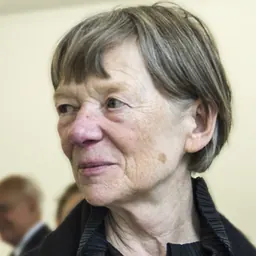
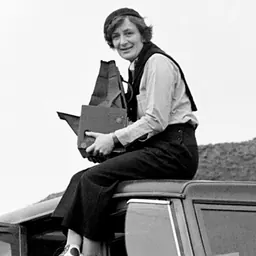
People in Bettina WitteVeen's life
Named in this biography and alive at the same time





Contemporaries
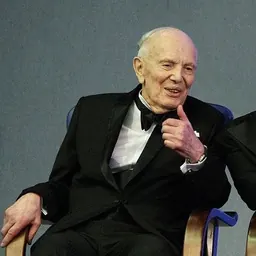
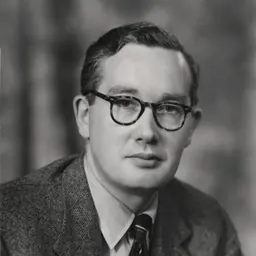
People whose lives overlapped Bettina WitteVeen's


Frequently asked questions
Who is Bettina WitteVeen?
American artist (1930-2017
When was Bettina WitteVeen born?
Bettina WitteVeen was born on 12 January 1958.
Sources & further reading
· Wikipedia: Bettina WitteVeen
Cite this page
APA: Biography.guide. (2026). Bettina WitteVeen. https://biography.guide/bettina-witteveen/
MLA: "Bettina WitteVeen." Biography.guide, https://biography.guide/bettina-witteveen/.
Chicago: "Bettina WitteVeen." Biography.guide. https://biography.guide/bettina-witteveen/.
Data last updated: 2026-09-20 · Spot an error? Report a correction.
Page generated 2026-09-27 05:15 UTC