
Bessie Emery Head
South African born Botswanan writer and teacher
About Bessie Emery Head
Lived 1937 – 1986 (aged 48). Bessie Emery Head was a South African and Botswanan novelist, journalist, writer, teacher, reporter and typist.
Biography
Bessie Amelia Emery was born in Pietermaritzburg, Union of South Africa, the child of a white woman and a black man at a time when interracial relationships were illegal in South Africa. Bessie's mother, Fiona Emery, from the wealthy South African Birch family, had been hospitalised for several years in mental hospitals following the death of her first child, a boy named Gerald Emery, who died after 8 weeks of birth. She was in the huge mental hospital in Pietermaritzburg when she gave birth to Bessie. Although she was not allowed to keep the child,
When Bessie was 12, after she had completed four years of primary school education, the authorities moved her to St. Monica's Home for Coloured Girls, an Anglican boarding-school in Durban. At first, Bessie tried to run away and go home. Later, she began to appreciate the wealth of books and knowledge that the school offered. At the end of her second year, she endured the first great trauma of her life. The authorities abruptly told her that she was the daughter of a white woman, not Nelly Heathcote, and that she would not be allowed to return to her former home for the Christmas holidays. The young teenager was devastated and withdrew into herself. During this time she developed close friendships with several of the white staff of St. Monica's, as well as several members of the "Indian" community, and her interest in non-Christian religions flourished, especially Hinduism.
On the other hand, she had only a passing contact with the "black" African majority in Natal, who were overwhelmingly Zulu.
In mid-1958, tired of her daily routines and dreaming of bigger things, Head resigned her job. She had a 21st birthday party with old friends, then took a train for Cape Town, where she intended to become a journalist.
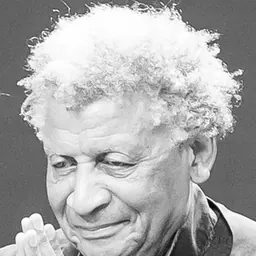
Although Cape Town was then of a similar size to Durban, it was vastly more diverse and sophisticated, with a much longer history. It was and is the country's political capital, being the home to its Parliament. In Pietermaritzburg and Durban, Bessie had been a member of a small minority group, English-speaking Coloureds (mixed-race). In Cape Town she was suddenly a member of the largest local racial group — Coloured — but one that spoke Afrikaans in its daily life. Although she never became comfortable in this language derived from Cape Town's early Dutch settlers, she was soon able to get by. What she found more difficult to accept were the divisions in this community by skin tone and economic status. She was too dark to join the elite, so she preferred to associate with the workers and underclass in District Six, the large Coloured community that lived on the west side of Table Mountain, not far from the centre. Between her work and her lodgings in District Six, the young provincial newcomer quickly adopted to the style and pace of the big city. She also became more acutely aware of South Africa's many internal conflicts. She met Sobukwe and found him an overwhelming personal presence. She also came into contact with jazz and jazz musicians, developing an instant crush on the young Abdullah Ibrahim, then known as Dollar Brand, who led the country's foremost jazz ensemble.
After a year of lying low, Head reappeared in Cape Town's intellectual and political circles, associating with the multiracial intellectuals of the Liberal Party as well as with the agitators of the PAC. She began to smoke and drink. In July 1961, she met Harold Head, a well-spoken young Coloured man from Pretoria who had many of the same intellectual interests as herself. Six weeks later they were married, and on 15 May 1962 their only child, Howard Rex Head, was born.
Both Harold and Bessie wrote articles at this time, most often for The New African, an upstart monthly published in Cape Town. Bessie also wrote a dramatic novella, The Cardinals, that went unpublished for 30 years. But mostly the Heads were poor and their marriage was deteriorating. Howard proved to be an unsmiling baby. In great frustration Bessie left Cape Town at the end of 1963 to live with her mother-in-law near Pretoria, taking Howard with her. When that relationship also broke down, Head had had enough. She applied for a teaching job in the neighbouring Bechuanaland Protectorate (now Botswana) and was accepted. Although she could not obtain a passport, a friend helped her to obtain a one-way exit permit. Toward the end of March 1964, she and her son boarded a train for the north. Head never saw South Africa again. having been peripherally involved with Pan-African politics. It would take 15 years for Head to obtain Botswana citizenship. Head settled in Serowe,
Her early death in Serowe in 1986 (aged 48) from hepatitis came just at the point where she was starting to achieve recognition as a writer and was no longer so desperately poor.
Writing
Many of Bessie Head's works are set in Serowe, including the novels When Rain Clouds Gather (1968), Maru (1971), and A Question of Power (1973). Her work is included in the 1992 anthology Daughters of Africa, edited by Margaret Busby.
Head's work focused on the everyday life of ordinary people and their role in larger African political struggles. Religious ideas often featured prominently, as in the work A Question of Power. Head was initially brought up as a Christian; however, she was later influenced by Hinduism (to which she was exposed through South Africa's Indian community).
Most of her writing took place while she was in exile in Botswana, having left South Africa in 1964. An exception is the novel The Cardinals (published posthumously in 1993), set in South Africa.
Influences
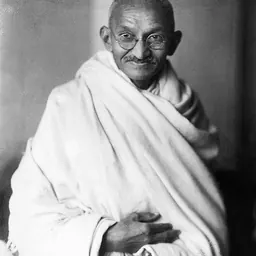
Much of Head's work was influenced by Mahatma Gandhi, and she said she had "never read anything that aroused my feelings like Gandhi’s political statements".
In 2003, she was posthumously awarded the South African Order of Ikhamanga in Gold for her "exceptional contribution to literature and the struggle for social change, freedom and peace." The Werda School in Durban, South Africa, which was known as the St. Monica's Diocesan School for Girls when Head attended it, has a memorial wall dedicated to her.
Legacy
In 2007, the Bessie Head Heritage Trust was established, along with the Bessie Head Literature Awards. On 12 July 2007 the main Msunduzi Municipal Library in Pietermaritzburg was renamed the Bessie Head Library in her honour.
The Bessie Head Papers are stored in the Khama III Memorial Museum in Serowe.
Don’t just read it —
keep it.
Full-length biographies made to live with: read them, listen on the way to work, watch them tonight.
- E-book
- Audio
- Video
Instant download · yours to keep · every purchase keeps this site free
Important facts
People in Bessie Emery Head's life
Named in this biography and alive at the same time




Related people
Same field, nearest in time



Contemporaries
People whose lives overlapped Bessie Emery Head's

Frequently asked questions
Who was Bessie Emery Head?
South African born Botswanan writer and teacher (1937–1986)
When was Bessie Emery Head born?
Bessie Emery Head was born on 6 July 1937 in Pietermaritzburg.
When did Bessie Emery Head die?
Bessie Emery Head died on 17 April 1986 in Serowe.
What was Bessie Emery Head's occupation?
Bessie Emery Head was a novelist, journalist, writer, teacher, reporter and typist.
What nationality was Bessie Emery Head?
Bessie Emery Head was South African and Botswanan.
Sources & further reading
· Wikipedia: Bessie Emery Head
Cite this page
APA: Biography.guide. (2026). Bessie Emery Head. https://biography.guide/bessie-emery-head/
MLA: "Bessie Emery Head." Biography.guide, https://biography.guide/bessie-emery-head/.
Chicago: "Bessie Emery Head." Biography.guide. https://biography.guide/bessie-emery-head/.
Data last updated: 2026-09-20 · Spot an error? Report a correction.
Page generated 2026-09-27 05:32 UTC