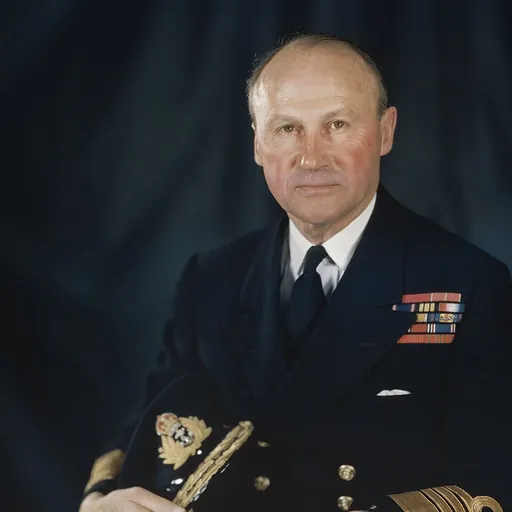
About Bertram Home Ramsay
Lived 1883 – 1945 (aged 61). Bertram Home Ramsay was a British military officer.
Admiral Sir Bertram Home Ramsay, KCB, KBE, MVO (20 January 1883 – 2 January 1945) was a Royal Navy officer. He commanded the destroyer during the First World War. In the Second World War, he was responsible for the Dunkirk evacuation in 1940 and planning and commanding the naval forces in the invasion of France in 1944.
Personal life Ramsay was born in Hampton Court Palace, into an old family (see Ramsay Baronets). He attended Colchester Royal Grammar School.
On 26 February 1929, Ramsay married Helen Margaret Menzies, daughter of Colonel Charles Thomson Menzies. They had two sons, David Francis Ramsay (1 October 1933 – 2 January 2021) who wrote two books and had two children, Michael Ramsay and James Ramsay. Major General Charles Alexander Ramsay CB OBE (12 October 1936 – 31 December 2017) was educated at the Royal Military Academy Sandhurst and rose to become Director General of the Territorial Army and was a member of the Queen's Body Guard for Scotland.
Early naval career Ramsay joined the Royal Navy in 1898. As a naval cadet, he was posted to in April 1899. Later serving on HMS Britannia, he became a midshipman within a year. By the middle of 1902 he was an acting sub-lieutenant, and he was confirmed in this rank on 15 September 1902. He was promoted to lieutenant on 15 December 1904.
The 1911 census reveals him serving as Flag Lieutenant to Rear Admiral Douglas Gamble on in the Mediterranean. The ship was captained at the time by Reginald Tyrwhitt.
First World War During the First World War, Ramsay was given his first command, , a small monitor, in August 1915. For two years his ship was part of the Dover Patrol off the Belgian coast. Promoted to commander on 30 June 1916, in October 1917 he took command of another Dover Patrol vessel, the destroyer . On 9 May 1918, his ship took part in the Second Ostend Raid, a follow-up to the Zeebrugge Raid, for which he was mentioned in despatches.
Second World War Ramsay retired from the navy in 1938, but was coaxed out of retirement by Winston Churchill one year later to help deal with the Axis threat. Promoted to vice-admiral, he was named Commander-in-Chief, Dover, on 24 August 1939. His duties included overseeing the defence against possible destroyer raids, the protection of cross-Channel military traffic and the denial of the passage through the Straits of Dover by submarines. For his success in bringing home 338,226 British and allied soldiers from the mole and beaches of Dunkirk, he was asked to personally report on the operation to King George VI and was made a Knight Commander of the Order of the Bath. He was appointed Naval Commander-in-Chief of the Allied Naval Expeditionary Force for the invasion. — coordinating and commanding a fleet of almost 7,000 vessels to delivering over 160,000 men onto the beaches of Normandy on D-Day alone, with over 875,000 disembarked by the end of June.
He defused a potential conflict between Prime Minister Winston Churchill and the British Sovereign, King George VI, when Churchill informed the King that he intended to observe the D-Day landings from aboard , a cruiser assigned to bombardment duties for the operation. The King, himself a seasoned sailor and a veteran of the Battle of Jutland in the First World War, likewise announced that he would accompany his Prime Minister. The two were at civil loggerheads until meeting with Admiral Ramsay, who flatly refused to take responsibility for the safety of either of them. Ramsay cited the danger to both the King and the Prime Minister, the risks of the planned operational duties of HMS Belfast, and the fact that both the King and Churchill would be needed at home in case the landings went badly and immediate decisions were required. This settled the matter and both Churchill and King George VI remained ashore on D-Day.
While the port of Antwerp was vital for the Allies after D-Day, Admirals Cunningham and Ramsay warned SHAEF and Montgomery that the port was of no use while the Germans held the approaches; saying it would be of much use as Timbuktu! But Montgomery postponed the Battle of the Scheldt, and the delay in opening the port was a grave blow to the Allied build-up before winter approached.
Death On 2 January 1945, Ramsay was killed along with four other people on board when his plane crashed on takeoff at Toussus-le-Noble Airport southwest of Paris. He was en route to a conference with Field Marshal Bernard Montgomery in Brussels. A memorial to all those who died in the crash was erected at Toussus-le-Noble in May 1995.
Awards Mentioned in Despatches – 1918, 1940 Knight Commander of the Bath (KCB) – 1940 Knight Commander of the Order of the British Empire (KBE) Member of the Royal Victorian Order (MVO) Grand Officier of the Légion d'honneur
Legacy
A statue of Ramsay was erected in November 2000 at Dover Castle, close to where he had planned the Dunkirk evacuation.
Admiral Ramsay's legacy has been remembered by the Royal Navy; they have used his name for the Apprenticeship Centre at in Fareham, the Ramsay Building which was opened by his son in March 2012.
Portrayals Nicholas Hannen (1958) Dunkirk John Robinson (1962) The Longest Day Noel Johnson (1979) Churchill and the Generals Richard Bremmer (2004) Dunkirk Kevin J. Wilson (2004) Ike: Countdown to D-Day George Anton (2017) Churchill David Bamber (2017) Darkest Hour Robert Portal (2026) Pressure
Don’t just read it —
keep it.
Full-length biographies made to live with: read them, listen on the way to work, watch them tonight.
- E-book
- Audio
- Video
Instant download · yours to keep · every purchase keeps this site free
Important facts
People in Bertram Home Ramsay's life
Named in this biography and alive at the same time
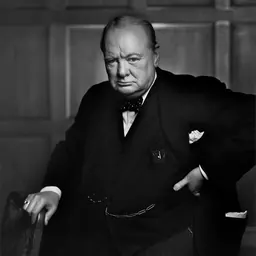
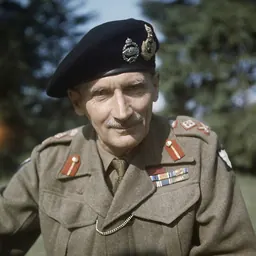
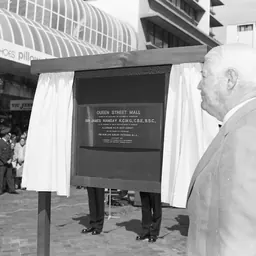

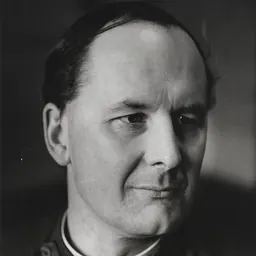



Related people
Same field, nearest in time


Contemporaries
People whose lives overlapped Bertram Home Ramsay's



Frequently asked questions
Who was Bertram Home Ramsay?
Royal Navy admiral (1883–1945)
When was Bertram Home Ramsay born?
Bertram Home Ramsay was born on 20 January 1883 in Hampton Court Palace.
When did Bertram Home Ramsay die?
Bertram Home Ramsay died on 2 January 1945 in Toussus-le-Noble.
What was Bertram Home Ramsay's occupation?
Bertram Home Ramsay was a military officer.
What nationality was Bertram Home Ramsay?
Bertram Home Ramsay was British.
Sources & further reading
· Wikipedia: Bertram Home Ramsay
Cite this page
APA: Biography.guide. (2026). Bertram Home Ramsay. https://biography.guide/bertram-home-ramsay/
MLA: "Bertram Home Ramsay." Biography.guide, https://biography.guide/bertram-home-ramsay/.
Chicago: "Bertram Home Ramsay." Biography.guide. https://biography.guide/bertram-home-ramsay/.
Data last updated: 2026-09-20 · Spot an error? Report a correction.
Page generated 2026-09-27 05:10 UTC