
Bertha Mason
British activist and suffragist
About Bertha Mason
Lived 1855 – 1939 (aged 83–84).
Bertha Mason (1855–1939) was an English suffragist and temperance campaigner born in Ashton-under-Lyne. Influenced by her father Hugh Mason, a Member of Parliament for the Liberal Party, she became a dedicated activist, serving as a committee member in many groups including the National Union of Women's Suffrage Societies and National Council of Women of Great Britain. Her book The Story of the Women Suffrage Movement was published in 1912. After serving in the British Committee of the French Red Cross in the First World War, she resumed her activism with the Women's Local Government Society and joined the National Council of Women of Great Britain. She died in London.
Early life Bertha Mason was born in Ashton-under-Lyne in 1855, the eldest daughter of Betsey (née Buckley) and Hugh Mason. Her father owned a mill and she was raised in relative comfort, although her mother died in 1861. Little is known of her education. Mason grew up in at atmosphere in which issues such as Liberalism, temperance and women's enfranchisement were openly discussed. As Liberal Member of Parliament for Ashton-under-Lyne, her father had proposed a resolution on women being able to vote in 1880 and he was associated with the Central Committee for Women's Suffrage, the Manchester Society for Women's Suffrage and the Manchester and Salford Temperance Union.
Mason moved to London in 1904, living at 9 Hyde Park Place. She took on committee roles in the Women's Local Government Society and the Central Society for Women's Suffrage. Alongside books by Helen Blackburn and Millicent Fawcett, The Story of the Women Suffrage Movement is regarded as an official account of the Suffragist movement, focusing on a slow, continuous progression towards victory which neglects to mention some of the conflictual issues. Universal women's suffrage was encoded in law in the UK in 1928.
During the First World War, Mason joined the British Committee of the French Red Cross working in kitchens in France. After the war, she resumed her activism, becoming chairperson of the Women's Local Government Society. She also served on the National Council of Women of Great Britain and the Women's Advisory Council of the League of Nations.
Death and legacy Mason had moved out of London to Hindhead, Surrey, but died on 8 July 1939 at the Hans Crescent Hotel in Knightsbridge, London. She was cremated at Golders Green crematorium and had expressed the wish for her ashes to be scattered near where her sister Edith lay in the cemetery at Worthenbury in Wales. She left in her will and made a legacy to the Ashton-under-Lyne District Infirmary and Children's Hospital, where two beds were kept in memory of her father and sister.
Don’t just read it —
keep it.
Full-length biographies made to live with: read them, listen on the way to work, watch them tonight.
- E-book
- Audio
- Video
Instant download · yours to keep · every purchase keeps this site free
Important facts
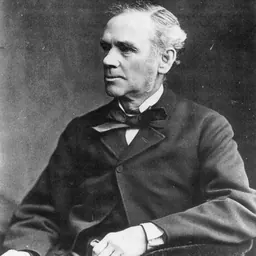
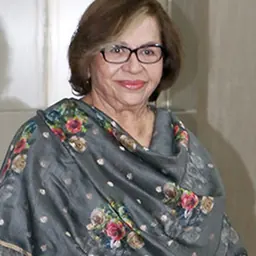
People in Bertha Mason's life
Named in this biography and alive at the same time

Contemporaries
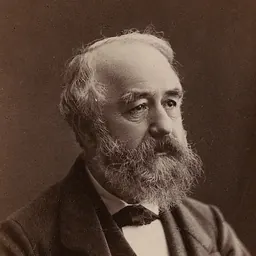
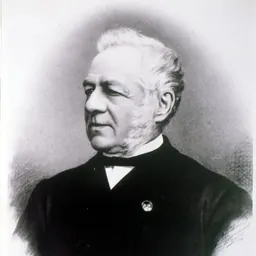
People whose lives overlapped Bertha Mason's



Frequently asked questions
Who was Bertha Mason?
British activist and suffragist
When was Bertha Mason born?
Bertha Mason was born on 17 May 1855 in Ashton-under-Lyne.
When did Bertha Mason die?
Bertha Mason died in 1939.
Sources & further reading
· DBpedia: Bertha Mason (suffragist)
Cite this page
APA: Biography.guide. (2026). Bertha Mason. https://biography.guide/bertha-mason/
MLA: "Bertha Mason." Biography.guide, https://biography.guide/bertha-mason/.
Chicago: "Bertha Mason." Biography.guide. https://biography.guide/bertha-mason/.
Data last updated: 2026-09-20 · Spot an error? Report a correction.
Page generated 2026-09-27 05:29 UTC