
About Bert Wolstein
Lived 1927 – 2004 (aged 77). Bert Wolstein was an American businessperson.
Bertram Leonard Wolstein (February 23, 1927 — May 17, 2004), known to his friends as Bart and publicly as Bert L. Wolstein, was an American real estate developer, sports team owner, and philanthropist based in Cleveland, Ohio. He founded Developers Diversified Realty Corporation (now SITE Centers), which at the time of his death was the 4th-largest developer of shopping centers in the United States. In 1979, he purchased the Cleveland Force Major Indoor Soccer League team, and attempted to purchase the Cleveland Browns in 1998. He retired from active business in 1997, and became one of the most generous donors in the United States in his final years.
Early life and education Wolstein was born to a Jewish family on February 23, 1927, in East Cleveland, Ohio, to Joseph and Sarah ( Lipson) Wolstein. He had an older sister, Malvene. and emigrated to the United States in 1903. Fluent in Yiddish, he was an actor in Yiddish theater for 15 years before taking a job as a fabric cutter for Printz Bierderman Co. and later Keller Kohn Co. His mother was also born in Minsk, and emigrated to the United States in 1904. She worked in clerical jobs for the General Accounting Office and for the Cuyahoga County Board of Elections.
The Wolsteins lived in a very small home with another family in East Cleveland. When Wolstein was 12 years old, they moved into a duplex in adjacent Cleveland Heights, Ohio. The family was poor, and the onset of the Great Depression worsened their financial condition. Wolstein went to work at a young age, and held down a series of jobs while attending local public school: Selling copies of the Cleveland Press newspaper, stocking shelves and working as a cashier at his aunt's store, working as a soda jerk at various local drugstores, selling hot dogs and soft drinks at League Park (a baseball stadium in Cleveland), He graduated from Cleveland Heights High School in 1945, paying for his education by working part-time coordinating subcontractors for a local building firm. The firm was owned by Harold I. Shur, his future father-in-law. In 1949,
Wolstein graduated cum laude and seventh in his class from Cleveland-Marshall in 1953, Wolstein oversaw the firm's legal business
In December 1992, Developers Diversified filed to become a publicly held real estate investment trust (REIT). The move was prompted by a nationwide credit contraction that had severely limited Developers Diversified's ability to engage in new projects. Diversified Equities merged with Developers Diversified in 1993.
Wolstein retired from DDRC in February 1997. Having spent most of his life as a freewheeling maverick who operated on hunches and personal relationships, he had become frustrated having to subordinate his decisions to those of a board of directors and stockholders (many of whom had no experience in real estate development). Wolstein retained about 2 million of the firm's 25 million shares, worth about $70 million ($ in dollars), and was given the title of Chairman Emeritus. At the time of his departure, DDRC was the 15th largest shopping center owner in the nation.
Heritage Development After leaving DDRC, Wolstein formed a new real estate development firm, Heritage Development Co. Having developed golf courses in Aurora, Ohio, and North Canton, Ohio—both designed by Jack Nicklaus—Wolstein intended to build more golf courses, often in a public-private partnership with local city or county governments. and intended to use Heritage Development to begin designing, constructing, and operating a wide range of restaurants, bars, dance clubs, and music venues there. Wolstein also expressed interest in building an industrial park in Twinsburg on property he owned there, as well as getting back into the residential housing market. The company also developed the Bertram Inn and Conference Center and The Marketplace at the Four Corners Shopping Center in Aurora; No decision on a convention center site was made in 2003. It would be another four years before the city agreed to sell the existing convention center to Cuyahoga County, which built a new convention center on the same site.
Sports team ownership Cleveland Force On October 3, 1979, Wolstein purchased a majority interest in the Cleveland Force Major Indoor Soccer League (MISL) team from owners Eric Henderson and Frank Celeste for $25,000 ($ in dollars). The team, and the league, were just a year old. Within a year, he had more than doubled fan attendance at games to 5,000 from 2,000. The team struggled to win fans, obtain business community backing, and win games. But by 1983, it was in the playoffs, during which it drew 19,106 fans to its final playoff game. The team won almost two-thirds of its games over the next five seasons, and twice battled for the Eastern Division title. The team lost the championship series, zero games to four. The Force was the only team in the MISL to turn a profit that year. The team also set a league-high average attendance record of 14,121 fans that season. Wolstein folded the team in 1988, after the league ran into severe financial difficulties and four other MISL teams folded due to bankruptcy.
In 2004, when Major League Soccer made a two-team expansion, Wolstein signed a letter of intent to buy one of the franchises and base it in Cleveland. He also pledged to contribute $20 million ($ in dollars) toward the cost of a $110 million ($ in dollars) stadium for the team.
According to press reports, Wolstein proposed to pay just 30 percent of the auction price in cash. The NFL would own the remaining 70 percent of the team. In a boost to his efforts, Wolstein recruited retired Browns fullback Jim Brown and area automobile dealer Alan Spitzer as partners in the investment group. Wolstein was bidding against three others: Al Lerner, billionaire owner of MBNA, the nation's second-largest issuer of credit cards; Charles Dolan, founder of HBO and the Cablevision cable television service, and his attorney brother, Larry Dolan; and New York City banker and real estate developer Howard Milstein. As the bidding price rose above $400 million ($ in dollars), Wolstein's bid was seen as increasingly unattractive. On September 8, 1998, the NFL sold the Cleveland Browns franchise rights to the Al Lerner group for $450 million ($ in dollars).
Philanthropy Wolstein was a frequent supporter of a number charities and nonprofit organizations throughout the greater Cleveland area for most of his life.
The Wolsteins made a $1.5 million ($ in dollars) donation in 2000 to renovate the three-story bell tower at Ohio State University. The renovated facility, renamed the Iris S. and Bert L. Wolstein Football Center, contained new locker rooms, a media center, and recruitment center.
The Wolsteins donated $100,000 ($ in dollars) to the Cleveland–Marshall College of Law in 2001, which helped to fund scholarships for needy law students and to assist the law school in paying architectural fees for a much-needed renovation.
In 2002, the Wolsteins donated $1 million ($ in dollars) to renovate Sycamore Hall at the Weatherhead School of Management at Case Western Reserve University. The structure was renamed Iris S. and Bert L. Wolstein Hall in their honor. The donation allowed the management school to divert resources to the establishment of a new undergraduate program which emphasized entrepreneurship over mathematical models of business management. The Wolsteins also donated $1.5 million ($ in dollars) to endow a professorship at Weatherhead. The combined gift was the largest gifts received by either the school or the parent university in recent years.
In January 2003, the Wolsteins donated $25 million ($ in dollars) to both University Hospitals of Cleveland and Case Western Reserve University to enable the construction of a joint medical research building. The , six-story building contained laboratory and office space for 900 biomedical researchers and a 28,000-cage mouse research facility. The structure was named the Iris S. and Bert L. Wolstein Research Building in their honor.
In January 2004, The Chronicle of Philanthropy listed the Wolsteins as one of the 60 most generous donors in the nation for 2003.
Personal life Since childhood, Wolstein had been nicknamed "Bart" by his family and friends, The couple had two children: Cheryl (born June 19, 1950) and Scott (June 24, 1952 – May 26, 2022 ).
Death
Wolstein suffered from a recurrence of cancer throughout his life. A cancerous tumor was removed from his back when he was in his late 20s. In 2000, he underwent operations to remove a cancerous prostate, a cancerous cyst on his neck, and a cancerous thyroid. The cancer recurred a short time later, and had metastasized. He died of a heart attack on May 17, 2004, at Hillcrest Hospital in Mayfield Heights, Ohio. At the time of his death, DDRC owned 400 shopping centers in 44 states, and was the fourth-largest shopping center developer in the nation.
In January 2005, Cleveland State University renamed its Convocation Center the Bert L. and Iris S. Wolstein Convocation Center in recognition of the 2004 donation to the law school.
Don’t just read it —
keep it.
Full-length biographies made to live with: read them, listen on the way to work, watch them tonight.
- E-book
- Audio
- Video
Instant download · yours to keep · every purchase keeps this site free
Important facts
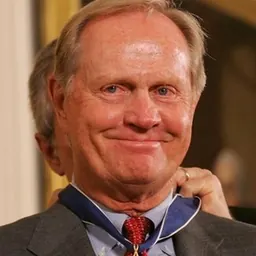
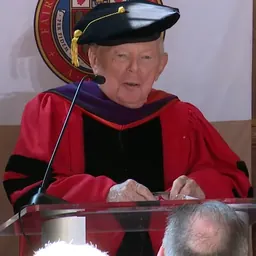
People in Bert Wolstein's life
Named in this biography and alive at the same time






Related people
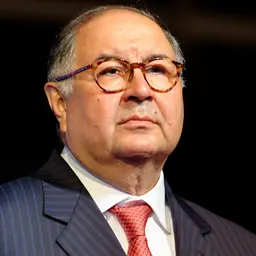
Same field, nearest in time




Contemporaries
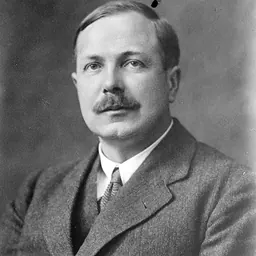
People whose lives overlapped Bert Wolstein's

Frequently asked questions
Who was Bert Wolstein?
businessman from the United States
When was Bert Wolstein born?
Bert Wolstein was born on 23 February 1927 in East Cleveland.
When did Bert Wolstein die?
Bert Wolstein died on 17 May 2004 in Mayfield Heights.
What was Bert Wolstein's occupation?
Bert Wolstein was a businessperson.
What nationality was Bert Wolstein?
Bert Wolstein was American.
Sources & further reading
Cite this page
APA: Biography.guide. (2026). Bert Wolstein. https://biography.guide/bert-wolstein/
MLA: "Bert Wolstein." Biography.guide, https://biography.guide/bert-wolstein/.
Chicago: "Bert Wolstein." Biography.guide. https://biography.guide/bert-wolstein/.
Data last updated: 2026-09-22 · Spot an error? Report a correction.
Page generated 2026-09-27 05:31 UTC