
About Bernhard Severin Ingemann
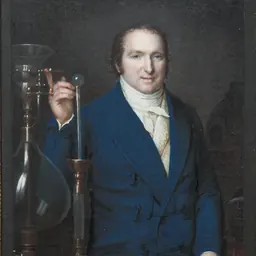
Lived 1789 – 1862 (aged 72). Bernhard Severin Ingemann was a Danish writer, poet, autobiographer and hymnwriter.
Bernhard Severin Ingemann (28 May 1789 – 24 February 1862) was a Danish novelist and poet.
Biography Ingemann was born in Torkilstrup, on the island of Falster, Denmark. The son of a vicar, he was left fatherless in his youth.
He attended Slagelse Latin school with the chemist William Christopher Zeise and the poet Christian Hviid Bredahl. While a student at the University of Copenhagen he published his first collection of poems (1811; vol. ii., 1812), which show great influence of German romanticism. Critics describe their sickly sentimentality as reflecting the unhealthy condition of the poet's body and mind at this time. These works were followed by a long allegorical poem, De sorte Riddere (The Black Knights, 1814), which closed his first period.
Then followed six plays, of which the best is considered to be Reinald Underbarnet (The Miraculous Child Reinald, 1816), and the most popular, Blanca, (1815). In 1817 he published his first prose work, De Underjordiske, et bornholmsk Eventyr (The Subterranean Ones, a Story of Bornholm), which was followed in 1820 by Eventyr og Fortællinger (Narratives and Miraculous Tales), many of them imitations of Hoffmann. During 1818–19 he traveled on the Continent.
In 1822 he was appointed instructor of the Danish Language and Literature at the Academy of Sorø. During his next period, inspired by Scott's Waverley novels, Ingemann produced his series of historical romances, by virtue of which he disputes with H. C. Andersen the title of the children's writer of Denmark. Their subjects are all taken from Danish history. The first, and perhaps the best, is Valdemar Sejr (Valdemar the Victorious, 1826), which was followed by Erik Menveds Barndom (Erik Menved's Childhood, 1828); Kong Erik og de Fredløse (King Erik and the Outlaws, 1833); and Prins Otto af Danmark og Hans Samtid (Prince Otto of Denmark and his Time, 1835).
While his historical romances show a lack of accuracy, their strong nationality gives them a special interest to the student of Danish culture. In reality they mean the introduction of the historical novel in Danish literature. A later artistic novel Landsbybørnene from 1852 ("The Village Children") is now almost forgotten.
Known as the fourth great Danish hymn writer (after Kingo, Brorson and Grundtvig), Ingemann is considered less rooted in Biblical dogma and more borne up by a general spiritual and religious interest. A simple naivete runs through them. Especially popular were his Morgen og Aftensange (Morning and Evening Songs), a collection of religious poems of great beauty and spirituality written during 1837–39. They were set to music by the composer Weyse. Many of them have been classics in Danish schools (for instance I Østen stiger Solen op – "In the East the Sun rises" and Fred hviler over Land og By – "Peace is resting over Land and Town"). Also his Christmas hymns are popular. He also wrote poems of historic and mythological content in the heroic saga Holger Danske ("Ogier the Dane", 1837).
He was a personal friend of Grundtvig who was in some degrees his mentor and with whom he shared a deep interest of Danish medieval history. Often they have been regarded almost mental twins in spite of clear differences. Also Blicher and H. C. Andersen must be mentioned among his friends.
Ingemann was in his elder years much respected and after the death of Oehlenschläger he was regarded the unofficial poet-king of Denmark. Critics cite Ingemann's grace and delicacy, rather than strength, of style, both in prose and poetry. He died in Sorø.
Ingemann was married to Lucie Marie Mandix (1792–1868), a painter, whose works still hang in Danish churches.
Written works Songs I sne står urt og busk i skjul (1831) I alle de riger og lande (1837) I østen stiger solen op (1837) Lysets engel går med glans (1837) Nu titte til hinanden (1837) (1838) Julen har bragt velsignet bud (1839) Den store mester kommer (1841) Stork! stork! Langeben! (1842) Dejlig er jorden (1850) Glade jul, dejlige jul (1850) Julen har englelyd (1569) Nu vågne alle Guds fugle små (1837)
Short stories Eventyr og Fortællinger (1820) Glasskabet (1847)
Epic poems Valdemar den Store og hans Mænd (1824) Dronning Margrete (1836) Holger Danske (1837)
Novels Valdemar Seier (1826) Erik Menveds Barndom (1828) Kong Erik og de Fredløse (1833) Prinds Otto af Danmark (1834)
Don’t just read it —
keep it.
Full-length biographies made to live with: read them, listen on the way to work, watch them tonight.
- E-book
- Audio
- Video
Instant download · yours to keep · every purchase keeps this site free
Important facts
Family & relationships
People in Bernhard Severin Ingemann's life
Named in this biography and alive at the same time
Related people
Same field, nearest in time




Contemporaries
People whose lives overlapped Bernhard Severin Ingemann's


Frequently asked questions
Who was Bernhard Severin Ingemann?
Danish novelist and poet, lyricist (1789–1862)
When was Bernhard Severin Ingemann born?
Bernhard Severin Ingemann was born on 28 May 1789 in Torkilstrup.
When did Bernhard Severin Ingemann die?
Bernhard Severin Ingemann died on 24 February 1862 in Sorø.
What was Bernhard Severin Ingemann's occupation?
Bernhard Severin Ingemann was a writer, poet, autobiographer and hymnwriter.
What nationality was Bernhard Severin Ingemann?
Bernhard Severin Ingemann was Danish.
Sources & further reading
· Wikipedia: Bernhard Severin Ingemann
· DBpedia: Bernhard Severin Ingemann
Cite this page
APA: Biography.guide. (2026). Bernhard Severin Ingemann. https://biography.guide/bernhard-severin-ingemann/
MLA: "Bernhard Severin Ingemann." Biography.guide, https://biography.guide/bernhard-severin-ingemann/.
Chicago: "Bernhard Severin Ingemann." Biography.guide. https://biography.guide/bernhard-severin-ingemann/.
Data last updated: 2026-09-26 · Spot an error? Report a correction.
Page generated 2026-09-27 05:16 UTC