
Bernhard Lichtenberg
German Roman Catholic priest, theologian, martyr and blessed
About Bernhard Lichtenberg
Lived 1875 – 1943 (aged 67). Bernhard Lichtenberg was a catholic priest, resistance fighter, theologian, cathedral provost and parson.
Bernhard Lichtenberg (; 3 December 1875 – 5 November 1943) was a German Catholic priest known for his outspoken opposition to the Nazi regime’s persecution of Jews and other marginalized groups during the Holocaust. He became a notable symbol of religious liberty for his public condemnation of the Nazi government’s policies, including from the pulpit of St. Hedwig’s Cathedral in Berlin.
In 1996, Lichtenberg was beatified by the Catholic Church for his steadfast faith and moral courage. He was also recognized as Righteous Among the Nations by Yad Vashem in 2004 for his efforts to aid Jews during the Holocaust, making him one of the few individuals honored for moral resistance across both religious and cultural communities.
Early life and education Lichtenberg was born in Ohlau (now Oława), Prussian Silesia, near Breslau (now Wrocław), the second of five children. He studied theology in Innsbruck, Austria-Hungary. He also studied in Breslau and was ordained in 1899.
Ministry Appointments Lichtenberg began his ministry in Berlin in 1900, as the pastor of Charlottenburg. He served as a military chaplain during World War I. During the period of 1913–1930, he was a minister at the cathedral Herz-Jesu-Gemeinde (Sacred Heart) in Charlottenburg, Berlin. In 1932, the Bishop of Berlin appointed him as a canon of the Cathedral chapter of St. Hedwig. Until his arrest in October 1941, Lichtenberg would pray publicly for the persecuted Jews at the daily Vespers service. Bishop Konrad von Preysing later entrusted him with the task of helping the Jewish community of the city.
The euthanasia in the health institutions of Nazi Germany was purportedly stopped soon after the church protests against euthanasia headed by the bishops Clemens August Graf von Galen and Theophil Wurm. "Nazi leaders faced the prospect of either having to imprison prominent, highly admired clergymen and other protesters – a course with consequences in terms of adverse public reaction they greatly feared – or else end the programme".
Arrest and imprisonment
Lichtenberg was arrested on 23 October 1941 and sentenced to two years in prison for violation of the Pulpit Law and the Treachery Act of 1934 . He asked to accompany Jews to the East in order to provide comfort there. Because he was considered incorrigible, he was picked up in 1943 by the Gestapo to be taken to the Dachau concentration camp. He fell ill and died of pneumonia in hospital in Hof, Bavaria.
Veneration
On 23 June 1996, Pope John Paul II beatified Bernhard Lichtenberg and Karl Leisner as martyrs. The beatification ceremony took place during a Mass celebrated in the Olympic Stadium in Berlin. The date of his death, 5 November, was designated as the liturgical feast of Bernard Lichtenberg. The postulator of Lichtenberg's canonisation case is Gotthard Klein.
Lichtenberg's tomb is situated in the crypt of St. Hedwig's Cathedral in Berlin. After the war, the building with the office of the archbishop of Berlin was named "Bernhard Lichtenberg House". In the memorial area of the former Esterwegen Concentration Camp, a memorial plaque was installed to honor Lichtenberg for his activities for the prisoners of the camp.
In the historic center of the town of Hof, the area in front of St. Mary's church has been named Bernhard-Lichtenberg-Platz since 2013 and on the initiative of pastor Hans-Jürgen Wiedow, a new parish center named after Bernhard Lichtenberg was constructed in 2016/17 under the St. Konrad's church in the town.
On 7 July 2004, Yad Vashem recognized Bernhard Lichtenberg as a Righteous Among the Nations.
On the occasion of the 150th birthday of Blessed Bernhard Lichtenberg on 3 December 2025, a special postage stamp was issued. The stamp features a quote from the Beatified: "A person's actions are the consequences of their principles."
Don’t just read it —
keep it.
Full-length biographies made to live with: read them, listen on the way to work, watch them tonight.
- E-book
- Audio
- Video
Instant download · yours to keep · every purchase keeps this site free
Important facts
People in Bernhard Lichtenberg's life
Named in this biography and alive at the same time

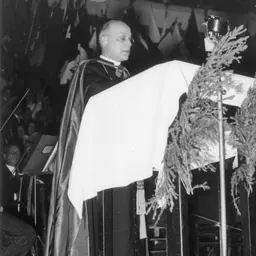

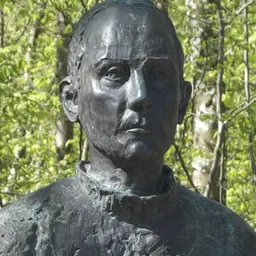

Related people
Same field, nearest in time

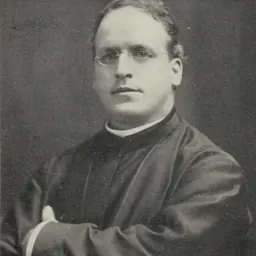
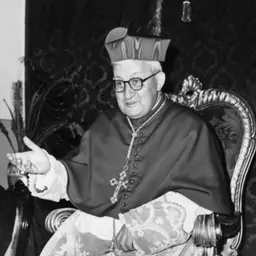
Contemporaries
People whose lives overlapped Bernhard Lichtenberg's


Frequently asked questions
Who was Bernhard Lichtenberg?
German Roman Catholic priest, theologian, martyr and blessed (1875–1943)
When was Bernhard Lichtenberg born?
Bernhard Lichtenberg was born on 3 December 1875 in Oława.
When did Bernhard Lichtenberg die?
Bernhard Lichtenberg died on 5 November 1943 in Hof.
What was Bernhard Lichtenberg's occupation?
Bernhard Lichtenberg was a catholic priest, resistance fighter, theologian, cathedral provost and parson.
What nationality was Bernhard Lichtenberg?
Bernhard Lichtenberg's recorded nationality: German Reich.
Sources & further reading
· Wikipedia: Bernhard Lichtenberg
· DBpedia: Bernhard Lichtenberg
Cite this page
APA: Biography.guide. (2026). Bernhard Lichtenberg. https://biography.guide/bernhard-lichtenberg/
MLA: "Bernhard Lichtenberg." Biography.guide, https://biography.guide/bernhard-lichtenberg/.
Chicago: "Bernhard Lichtenberg." Biography.guide. https://biography.guide/bernhard-lichtenberg/.
Data last updated: 2026-09-25 · Spot an error? Report a correction.
Page generated 2026-09-27 05:10 UTC