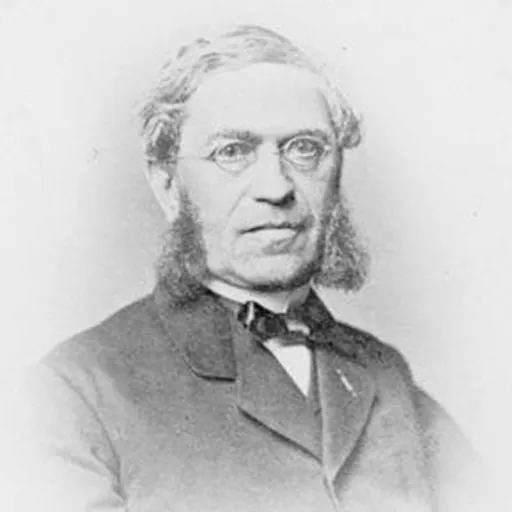
About Bernhard Hirschel
Lived 1815 – 1874 (aged 59). Bernhard Hirschel was a German medical historian, homeopath, physician and politician.
Bernhard Hirschel (15 January 1815 – 15 January 1874) was a German medical doctor, writer and liberal activist who lived and worked in Dresden. He became a pioneer of Homeopathy.
Life
Provenance and boyhood Bernhard Baruch Hirschel was born in Dresden. His father, Abraham Hirschel (1787–1830), was a clothes retailer. His mother, Bella (1794-1845), also worked in the clothing trade. From the age of four Berhard attended the Cheder (Jewish junior school) where he was able to learn Hebrew. He would later recall this period as "not particularly nice" ("nicht besonders schön"), complaining about the untutored fellow students, bad teachers and inadequate lessons. From 1823 he was tutored by Marcus David Landau, a private tutor who was also a cantor in the Dresden synagogue. Hirschel believed that this was his first experience of a valid spiritual education. With fellow pupils who included Jacob Nachod - later notable as a Leipzig merchant and philanthropist - he received an academic grounding in Geography, History and Mathematics. At Easter 1825 he switched to Dresden's prestigious School of the Cross, having previously, at his mother's instigation, taken private tuition in Latin and Greek. His time at the school left him with good memories. Teachers and others at the institution treated him with fairness, but attending a Christian school exposed him to hostility from members of the Jewish community. He was an industrious pupil and passed the school leaving exam (Abitur) in 1832, which opened the way to university level education. a theme in which he would involve himself for the rest of his life. In 1843 the first volume of his ambitious work on medical history, "Steps in the Development of the History of Medicine" ("Geschichte der Medicin in den Grundzügen ihrer Entwickelung") appeared followed in 1846 by his long planned first volume of "The History of Medical Schools and the Nineteenth Century Systems in Monographs" (Die "Geschichte der medicinischen Schulen und Systeme des neunzehnten Jahrhunderts in Monographien"). In addition, from about 1843/44, after five or so years after he started work as a physician, his interest in Homeopathy began to develop. Along with his other responsibilities, between 1846 and 1849 he held the post of deputy coroner for the central part of Dresden. In the years since his return from Leipzig, Hirschel had by this stage become highly respected as a physician. The work also sets out the conditions under which the press was operating in pre-1848 Saxony and complains, in particular, about the repression of magazines. When it appeared the volume was published anonymously because the author feared punishment for publishing criticism of the political situation in Saxony Furthermore, it was published not within Saxony, where press censorship was in force, but in Mannheim. It was only in 1849, three years later, that Hirschel acknowledged his authorship, writing in another book, "Saxony's recent past: A contribution to the assessment of the present" ("Sachsens jüngste Vergangenheit: Ein Beitrag zur Beurtheilung der Gegenwart"). He also now took the opportunity to characterise the March uprisings as the "glorious rising of the German people", thereby aligning himself unambiguously with the liberal revolutionaries. His position was also clear from his political activism during the period of the uprising. He seems to have been ill at this time, and repeatedly stated his intention to withdraw from all political activities. By 1874 the book had appeared in 17 editions, and it was translated from German into several languages including Spanish, French and Danish. In this way Hirschel became internationally respected as an expert on Homeopathy. In 1867 at Vienna he was elected vice chairman of the International Homeopathy Congress. During the next few years he published extensively on the subject, often becoming embroiled in controversy because of the passionate nature of his advocacy. The effectiveness of the homeopathic approach was not universally accepted by the medical establishment, but despite this during the second half of the nineteenth century it was rapidly gaining supporters across the world. That is partly because, despite great progress in diagnosis and treatment, doctors were all too often powerless to provide effective treatments using mainstream methods. Bernhard Herschel proved a case in point: on his fifty-ninth birthday neither "conventional treatments" nor Homeopathy were able to prevent his death from Peritonitis.
Beyond professional life Alongside his professional and literary work, throughout his entire life Hirschel contributed actively in the Jewish community. After his withdrawal from politics in the wake of the March uprisings he became a teacher at the Dresden synagogue, supported various zionist associations and for several years was an elder of the community. He also organised financial support for the widows of deceased colleagues. In obituaries of the time he was frequently commended for his tireless commitment to his patients: he clearly inspired affection.
Don’t just read it —
keep it.
Full-length biographies made to live with: read them, listen on the way to work, watch them tonight.
- E-book
- Audio
- Video
Instant download · yours to keep · every purchase keeps this site free
Important facts
People in Bernhard Hirschel's life
Named in this biography and alive at the same time

Related people
Same field, nearest in time
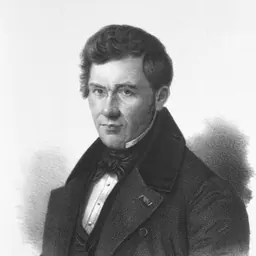
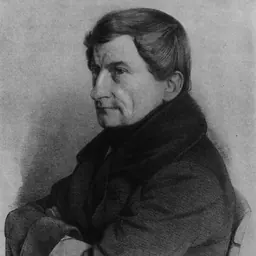
Contemporaries
People whose lives overlapped Bernhard Hirschel's




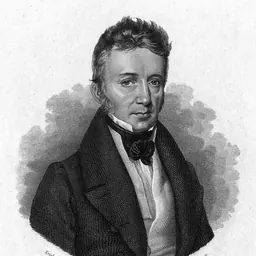
Frequently asked questions
Who was Bernhard Hirschel?
German medical historian (1815-1874)
When was Bernhard Hirschel born?
Bernhard Hirschel was born on 15 January 1815 in Dresden.
When did Bernhard Hirschel die?
Bernhard Hirschel died on 15 January 1874 in Dresden.
What was Bernhard Hirschel's occupation?
Bernhard Hirschel was a medical historian, homeopath, physician and politician.
What nationality was Bernhard Hirschel?
Bernhard Hirschel was German.
Sources & further reading
· Wikipedia: Bernhard Hirschel
Cite this page
APA: Biography.guide. (2026). Bernhard Hirschel. https://biography.guide/bernhard-hirschel/
MLA: "Bernhard Hirschel." Biography.guide, https://biography.guide/bernhard-hirschel/.
Chicago: "Bernhard Hirschel." Biography.guide. https://biography.guide/bernhard-hirschel/.
Data last updated: 2026-09-23 · Spot an error? Report a correction.
Portrait: Wikimedia Commons · author & licence
Page generated 2026-09-27 05:05 UTC