
About Bernd Scholz
Lived 1911 – 1969 (aged 58). Bernd Scholz was a German composer and film score composer.
Bernd Scholz (February 28, 1911 – September 22, 1969) was a German composer. His also assumed the pen name Klaus Textor for his popular compositions.
Scholz was born in Neustadt in Oberschlesien (now Prudnik). Even as a child he wished to become a composer, writing his first composition at age 12. After graduation, he went to Berlin where he studied German and music at the Akademie für Schul- und Kirchenmusik. His radio plays for the Berlin radio lead to film assignments including scores for the feature-length Nanga Parbat films of German expeditions in the Himalayas. He fought in the second world war and was held as a Soviet prisoner until 1950.
He returned to West Germany in 1950, married, had three children, and settled in Schliersee. He found employment in radio and television, working with the directors Lietzau, Beauvais, Düggelin, Schlechte, Westphal, and ten Haaf. He participated in the 1954 contemporary music festival in Donauschingen where his works were conducted by Hans Rosbaud (the same year when American composer John Cage's appearance became a legendary fiasco). He wrote his Japan Concerto for classical guitarist Siegfried Behrend and a large concerto for bandleader Willi Stech. He produced works for a festival of easy music, and his works were recorded and broadcast by all the major German broadcasters.
He is buried at the Schliersee cemetery.
Works Konzerte Japanisches Konzert. Concerto for guitar and large orchestra. Premiered in Tokyo Piano Concerto Concertante for Winds. Premiered 1954 Donaueschingen Festival Intrade Japanische Regenmelodie Kleine Melodie von anno dazumal Kleine Serenade Land-Liebe Lebensraum Lederhosen-Polka Liebeswalzer Lied Ohne Worte Luftsprünge März-Gebet Mandolinetta Medaillon Mein Haar, Das Ist Mein Sturmhut Melodie Menuett Merry Day Mi ist ein schön's braun's Maidelein Minara Mir ist ein feins braunes Maidelein Monopoli Moritat von Anton Und Dorothee Nymphenburger Miniatur Olivia Ouvertüre zu Einem Possenspiel Ouvertüre zu Einer Harlekinade Papagallo Paradiso Rummelplatz Salzburger Spieluhr Schillerndes Spiel Schlesischer Kirmes-Dreher Serenade Serenata Melanconica Serenata Piccolina Siesta in Ibiza Sommerlaune Sommerwind Sonate Nr.2 Sonatine Sonatine D-Dur Sonatine Für Flöte Und Klavier Sonatine Für Unterhaltungsorchester Suite Für Flöte Und Klavier Suite Galante Traum-Serenade Türkische Barcarole Verträumte Bucht Wenn du an die Liebe glaubst Westindia-Serenade Xylophonetik
Works under the pen name Klaus Textor Aus Grossmutters Salon-Album Angry-Swing Blue Dark-Blues Candlelight-Blues Der Jongleur-Fox Der Traum des Zirkusreiters Fiesta-Mambo Gay Play Glasmosaik Gluecksklee Happiness-Fox Hund und Katze Ich Finde die Liebe sentimental In der Bucht Von Riva In der Toscana Irrlichter Kleine Strassenmelodie Kleiner Konzertwalzer Lied im Schilf Lolita-Fox Mi ist ein rot Goldringelein Mimosen-Tango Mistral Morgens in der Fruehe Novella Amorosa Nudelbrett-Polka Party-Bummel Ping-Pong Pulli-Rock Roulette Rundherum-Polka Schmollwinkel-Polka Seifenblasen Spaziergang am See Staccato-Intermezzo Suedland-Express Sweety Tearoom-Story Tristy Trompeten-Ballade Valsette Parsienne Velocipede-Boogie Wolkenjagd
Music for cinema, documentaries, and television Nanga Parbat 1936, Film footage of the German Himalaya-Expedition 1934 Kampf um den Himalaya 1938. Film footage of the German Nanga Parbat-Expedition 1937 An den Wassern Kaschmirs, 1938. Documentary Fahrt ins Leben 1940. Film of prewar sea cadets and life at sea. Directed by Bernd Hofmann Henkel, ein deutsches Werk in seiner Arbeit. Directed by Walter Ruttmann, 1938 Die wundersame Schustersfrau, Television play after García Lorca. Directed by Werner Schlechte Kolportage 1957. Comedy by Georg Kaiser. Television play directed by Hans Lietzau Viktoria. 1957 film after a novel by Knut Hamsun. Directed by Frank Lothar Die Kleinbürger. after Maxim Gorki 1996 Television remake by Werner Schlechte. Das Glück sucht seine Kinder. 1955. Television play after the novella „Der silberne Krug“ (Jug of Silver) by Truman Capote. Directed by Heinz Schimmelpfennig Schatzgräbergeschichten. 1969 by Werner Bergengruen Der Spazierstock. 1955 Television play by Michael Sayers. directed by Karl Peter Biltz
Don’t just read it —
keep it.
Full-length biographies made to live with: read them, listen on the way to work, watch them tonight.
- E-book
- Audio
- Video
Instant download · yours to keep · every purchase keeps this site free
Important facts
People in Bernd Scholz's life
Named in this biography and alive at the same time





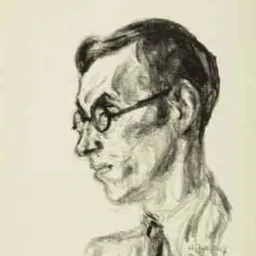
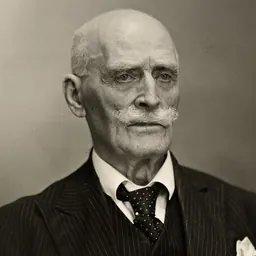
Related people
Same field, nearest in time


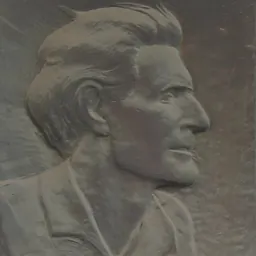

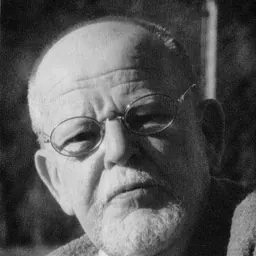

Contemporaries
People whose lives overlapped Bernd Scholz's






Frequently asked questions
Who was Bernd Scholz?
German composer (1911-1969)
When was Bernd Scholz born?
Bernd Scholz was born on 28 February 1911 in Prudnik.
When did Bernd Scholz die?
Bernd Scholz died on 22 September 1969 in Schliersee.
What was Bernd Scholz's occupation?
Bernd Scholz was a composer and film score composer.
What nationality was Bernd Scholz?
Bernd Scholz was German.
Sources & further reading
Cite this page
APA: Biography.guide. (2026). Bernd Scholz. https://biography.guide/bernd-scholz/
MLA: "Bernd Scholz." Biography.guide, https://biography.guide/bernd-scholz/.
Chicago: "Bernd Scholz." Biography.guide. https://biography.guide/bernd-scholz/.
Data last updated: 2026-09-20 · Spot an error? Report a correction.
Page generated 2026-09-27 05:25 UTC