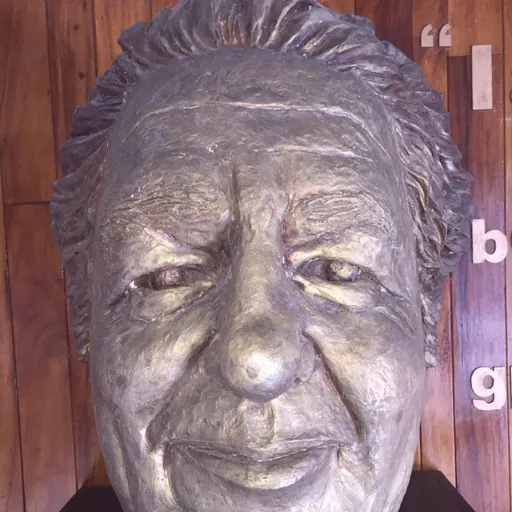
About Bernardo Quintana Arrioja
Lived 1920 – 1984 (aged 63). Bernardo Quintana Arrioja was a Mexican civil engineer and engineer.
Bernardo Quintana Arrioja (29 October 1919, in Mexico City – 12 August 1984) was a Mexican civil engineer who contributed to his country's infrastructure during the second part of the twentieth century. Bernardo Quintana studied civil engineering at the National Autonomous University of Mexico (UNAM) and made important contributions to engineering by developing, adopting and spreading innovative technologies in the construction of large civil projects. He contributed a generation infrastructure projects in a number of areas of Mexico.
In 1947, he founded Ingenieros Civiles Asociados (ICA) ("Associated Civil Engineers"), an engineering firm for high technology projects that grew to be a "massive construction multinational", building much of the infrastructure of modern Mexico. These projects included the Mexico City Metro, the 100-km tunnel to drain the sewage from Mexico City, Basilica of Our Lady of Guadalupe, stadiums such as Estadio Azteca, Palacio de los Deportes, Foro Sol, and other sport stadiums such as Hipódromo de las Américas, C.U Stadium and the Olympic Pool. Some of the Airports ICA constructed are the Mexico City International Airport, the Acapulco International Airport in Acapulco and the Cancún International Airport. Malls he constructed are: Perisur, Plaza Satélite, Bosques de las Lomas. Other contributions include highways such as: Mexico City-Acapulco, Mexico City-Veracruz, Cuernavaca – Acapulco and the modernization of the highway from Mexico City to Querétaro. In Mexico City constructed Periferico road among others. Hospitals: Centro Medico La Raza, Hospital de Pemex and Centro Medico Nacional ABC also known as Hospital Ingles. Energy-related projects include the Thermoelectric Head offices in Laguna Verde. He remained as head of ICA until his death in 1984 and is interred at the Rotunda of Illustrious Persons.
In 1938, at age 18, he began his studies at the National School of Engineers in UNAM and completed in 1942. The following year he published his professional thesis. In 1943 Bernardo Quintana decided to launch another career, now studying architecture to complete the engineering. He supported various academic, cultural and sports activities in this university, as the Symphony Orchestra of the Palace the Mineria, the Pumas football club and built schools of Engineering, Architecture, Commerce, Veterinary Medicine, Dentistry and philosophy, as well as laboratories Chemical Engineering and Sciences Tower.
ICA is divided by four main business units: civil construction, industrial construction, infrastructure operations and housing. Civil construction realizes basic infrastructure projects and large-scale development of urban infrastructure. Industrial construction provides engineering, construction and industrial plants maintenance.
Infrastructure operation and maintains road systems, water distribution, wastewater treatment, airports, underground parking, housing, marketing real estate developments of the highest quality, both commercial and residential parks centers and office buildings in different cities. Up to now, ICA has participated in more than 180 highway projects, 61 dams, 38 hospitals, 24 power plants, 19 stadiums and sports centers, and 10 housing projects completed along with other 24 projects under implementation, obtaining a total of 40,000 homes. ICA has partnered with leading companies in the world to initiate and develop new projects.
ICA foundation supports the following organizations: Engineering Institute of the UNAM Mexican Center for Philanthropy (CEMEFI) AMABPAC Advisory Council on Earthquakes (CoCoS) College of Civil Engineers of Mexico (Colegio de Ingenieros Civiles de México)
Major projects under Quintana
Mexico City Metro The Mexico City Metro is a large network of trains that travel through the city at a medium/high speed and transports nearly 3.9 million passengers daily. The idea of a subway system started with the students of the UNAM (Universidad Nacional Autónoma de México) in 1958. The initial project concerned the construction of a monorail that would transport students that lived far away from the university easily and for a low price. Bernardo Quintana realized a project to build a subway in Mexico City. First his draft was submitted to various authorities, he wouldn't get any support. The government wouldn't help because it was a very expensive project. A project proposal was submitted in 1958 to Ernesto P. Uruchurtu, Regent of Mexico City from 1952 to 1966, who rejected it because of its cost. In addition, on 28 July 1957, an earthquake of 7 degrees on the Richter scale damaged several buildings of downtown, which caused the mistrust of the authorities to build big projects like this. Quintana resubmitted its project in the presidency of Gustavo Díaz Ordaz, President of Mexico from 1964 to 1970. Then, with economic help from the French government. In 1967 the Mexican government announced the acceptance about new project of transportation.
That was the start of construction of the subway in Mexico City by ICA and made the first trip occurred 4 September 1969 between the stations that are Insurgentes and Metro Zaragosa. Now the subway has 11 lines and 164 stations and is the cheapest subway in the world. It has been also recognized for its cleanliness and is the first subway to start working with colors and icons for each station.
Estadio Azteca The Estadio Azteca is the third largest stadium in the world and has been used to host the football world cup twice. It is one of the world's most important stadiums. It is worldwide recognized to have a lot of technology in its construction and to have a huge capacity. Is draining system is one of the most advanced and it helps to avoid floods inside the stadium. The parking lot is very big and is very near from the stadium as well. It is by now the place where Mexico's team plays against other countries and it is also the place where the Aguilas form the America play.
After his death in 1984, he received a number of honors in his memory.
Quintana has received various honors, and he is honored by one named after him. Presea "Ing. Bernardo Quintana Arrioja" 2010, which has as object the reward and to recognize publicly the pupils which for his student path and personal merits stood out for the following qualities: leadership, patriotism, service, value and academic excellence.
Bernardo Quintana, died on 12 August 1984 his remains were moved to the Rotonda de los Hombres Ilustres. In 2005, the government of Vicente Fox issued a decree to allow the inclusion of Bernardo Quinta Arrioja into Rotonda of the Illustrious Persons. The cemetery contains those persons who have made important contributions to Mexico. Prominent figures such as David Alfaro Siqueiros, Alfonso Reyes, Francisco Gonzalez Bocanegra, among other. Bernardo Quintana is the only businessman who has been given this honor.
Bernardo Quintana will be honored in the first museum of Mexico that will recognize the most important Businessmen in Mexico. Other businessmen that will be exposed in this museum are: Carlos Slim Helú (Group Carso), Eugenio Garza Sada (FEMSA), Bernardo Quintana Arrioja (ICA), Carlos Gonzalez Nova (Mexican Commercial). It will be composed of photography, movies, interactive presentations of the diverse companies that they developed. This museum will be one of its kind here in Mexico and in Latin America. Its purpose is to promote the business culture among youths.
Don’t just read it —
keep it.
Full-length biographies made to live with: read them, listen on the way to work, watch them tonight.
- E-book
- Audio
- Video
Instant download · yours to keep · every purchase keeps this site free
Important facts
People in Bernardo Quintana Arrioja's life
Named in this biography and alive at the same time






Related people
Same field, nearest in time

Contemporaries
People whose lives overlapped Bernardo Quintana Arrioja's




Frequently asked questions
Who was Bernardo Quintana Arrioja?
Mexican civil engineer (1920–1984)
When was Bernardo Quintana Arrioja born?
Bernardo Quintana Arrioja was born on 22 October 1920 in Mexico City.
When did Bernardo Quintana Arrioja die?
Bernardo Quintana Arrioja died on 12 August 1984 in Mexico City.
What was Bernardo Quintana Arrioja's occupation?
Bernardo Quintana Arrioja was a civil engineer and engineer.
What nationality was Bernardo Quintana Arrioja?
Bernardo Quintana Arrioja was Mexican.
Sources & further reading
· Wikipedia: Bernardo Quintana Arrioja
· DBpedia: Bernardo Quintana Arrioja
Cite this page
APA: Biography.guide. (2026). Bernardo Quintana Arrioja. https://biography.guide/bernardo-quintana-arrioja/
MLA: "Bernardo Quintana Arrioja." Biography.guide, https://biography.guide/bernardo-quintana-arrioja/.
Chicago: "Bernardo Quintana Arrioja." Biography.guide. https://biography.guide/bernardo-quintana-arrioja/.
Data last updated: 2026-09-22 · Spot an error? Report a correction.
Portrait: Wikimedia Commons · author & licence
Page generated 2026-09-27 05:04 UTC