
About Bernard W. Rogers
Lived 1921 – 2008 (aged 87). Bernard W. Rogers was an American military personnel.
Bernard William Rogers (16 July 1921 – 27 October 2008) was a United States Army general who served as the 28th Chief of Staff of the United States Army, and later as NATO's Supreme Allied Commander, Europe and Commander in Chief, United States European Command.
Besides the Distinguished Service Cross, Rogers' decorations included the Defense Distinguished Service Medal, the Silver Star, four awards of the Legion of Merit and three awards of the Distinguished Flying Cross.
Early life and education Rogers was born in Fairview, Kansas on 16 July 1921. He spent a year at Kansas State University, where he was a member of Phi Delta Theta fraternity, before receiving an appointment to the United States Military Academy in 1940, where he was First Captain of the Corps of Cadets. He graduated in June 1943 as Cadet First Captain (first in his class), and was commissioned a second lieutenant of Infantry. He was assigned to the 275th Infantry Regiment, 24th Infantry Division in Europe from 1960 to 1961. His next assignment in the division was as chief of staff and he also served as chief of the Troop Operation Branch, Operations Division, United States Army, Europe from 1961 to 1962. Rogers' next duty was as military assistant and executive officer to the Chairman of the Joint Chiefs of Staff, General Maxwell Taylor, from 1962 to 1966. As assistant commander of the 1st Infantry Division, Rogers was awarded the Distinguished Service Cross—the Army's highest award for valor after the Medal of Honor—for leading a successful counterattack against a Vietcong raid on a South Vietnamese special forces camp. He rallied troops on the ground and personally scouted enemy positions from a low-flying helicopter under heavy fire. Rogers was one of only a few individuals to receive the Distinguished Service Cross in Vietnam for actions taken while serving as a general.
After returning from Vietnam, Rogers served two years as Commandant of the Corps of Cadets at West Point from 1967 to 1969, being promoted to permanent colonel in June 1968.
Division and senior commands Rogers became one of a select few senior officers chosen for division command, and was assigned commanding officer of the 5th Infantry Division (Mechanized), and Fort Carson, Colorado, from 1969 to 1970. At that time, the 5th "was considered to be one of the most disorganized and unprepared units in the Army. Racial conflict and drug abuse were serious problems. The division also experienced a high turnover rate as soldiers rotating back from their tours of duty in Vietnam served out the remainder of their enlistments."
At a time of falling morale, Rogers made sweeping changes in the daily routine of soldiers by abolishing kitchen duty (KP), reveille, roll call and Friday night "GI parties", in which soldiers scrubbed the barracks for Saturday inspections. On 17 February 1970, Rogers issued Fort Carson Regulation NO. 600–16, "Enlisted Men's Council," which established a two-way channel of communication for enlisted men to relay their grievances and suggestions for improvements. The twenty-member "Fort Carson Enlisted Men's Council" elected as its chair 20-year old combat veteran Specialist 4 Scott M. Gray; at its first meeting the council pointed out eighteen issues and suggested ways of solving them. Rogers concurred with the council and ordered the implementation of all recommended improvement initiatives. After four months, 192 issues were discussed by the council; 107 improvements were recommended; 69 were implemented by Rogers. Rogers became known as one of the brightest thinkers in the army after he shared his innovative ways of dealing with disciplinary, racial, drugs and other problems at the annual Army Commanders Conference on 30 November 1970.
Rogers was promoted to temporary major general in February 1970, permanent brigadier general in August 1971, temporary lieutenant general in November 1972 and permanent major general in June 1973. The latter came while serving as Deputy Chief of Staff for Personnel of the Army, from 1972 to 1974. He was promoted to temporary general in November 1974, and was chosen to command the United States Army Forces Command at Fort McPherson from 1974 to 1976.
Army Chief of Staff Following this assignment Rogers was selected to be Chief of Staff of the United States Army, a post he held from 1 October 1976 until 21 June 1979, the last World War II veteran to do so. Some highlights of his tenure include supervising the army's move to a 24-division, all-component force; establishing priorities for near-term readiness, midterm modernization, and long-term sustainability; establishing a program to enhance the quality of life of army personnel; and suggesting a limited draft to fill the Individual Ready Reserve.
Rogers continued the reforms he began as a division commander as Chief of Staff, improving training programs and developing plans for a modern "quick-strike" force. He also took steps to make the army more friendly toward women and minorities, calling on commanders to "eliminate any discriminatory handling of soldiers." He also authorized the formation of Delta Force, the first United States military counter-terrorist unit.
Rogers was responsible for starting the army's renaissance after falling into a state of low morale and readiness following the Vietnam War. His innovations and reforms were continued under his successor, General Edward C. Meyer.
Supreme Allied Commander
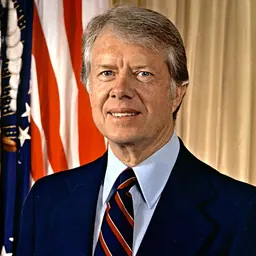
Rogers was appointed by President Jimmy Carter as Supreme Allied Commander Europe (SACEUR), North Atlantic Treaty Organization in June 1979 and, concomitantly, as Commander in Chief of United States European Command. He assumed his duties as SACEUR on 1 July 1979. The then-current NATO battlefield strategy for the conventional defense of Central Europe was summarized in a 1987 thesis.
SACEUR Rogers was troubled by NATO's numerically smaller military forces in comparison to the Warsaw Pact. Unless there were unexpected changes, Rogers believed he would need to resort to nuclear weapons to try to halt the Soviet/WP advance. To improve NATO's conventional defences, Rogers proposed a novel idea he labelled "Follow-on Forces Attack," which would counter a Warsaw Pact invasion by making deep conventional attacks the enemy's second and third echelon forces to prevent them from reaching NATO's defensive positions.
Later life and death After his retirement in 1987, Rogers was a director of the Council on Foreign Relations and the Atlantic Council of the United States. He served on the boards of the USO and the Association of the United States Army and was a consultant and director to several companies, including Coca-Cola and General Dynamics.
Rogers died in 2008 at Inova Fairfax Hospital, Virginia, after suffering a heart attack. He was survived by his wife of 63 years, Ann E. Rogers of McLean; three children, retired United States Army Colonel Michael W. Rogers of Manassas, Virginia, Diane Opperman of Arlington and Susan Kroetch of Alexandria; a sister; a brother; six grandchildren; and three great-grandchildren.
Personal life Rogers married Ann Ellen Jones in 1944. and sat on the Association of the United States Army's Council of Trustees. He was also a supporter of the Comprehensive Test Ban Treaty. He was an Honorary Fellow of University College, Oxford, a member of the Council on Foreign Relations, of Phi Delta Theta fraternity, and a Patron Councilor of the Atlantic Council of the United States.
Other honors and awards he has received include: Golden Plate Award of the American Academy of Achievement, 1980 Distinguished Service Citation, Honorary Alumni Citees, University of Kansas Alumni Association, 1984 Distinguished Graduate Award, USMA Association of Graduates, 1995
Awards Individual awards
Unit awards
Korean Presidential Unit Citation, Vietnam Gallantry Cross Unit Citation, Vietnam Civil Actions Unit Citation
Other awards
Don’t just read it —
keep it.
Full-length biographies made to live with: read them, listen on the way to work, watch them tonight.
- E-book
- Audio
- Video
Instant download · yours to keep · every purchase keeps this site free
Important facts
People in Bernard W. Rogers's life
Named in this biography and alive at the same time





Related people
Same field, nearest in time


Contemporaries
People whose lives overlapped Bernard W. Rogers's


Frequently asked questions
Who was Bernard W. Rogers?
former Chief of Staff of the United States Army (1921–2008)
When was Bernard W. Rogers born?
Bernard W. Rogers was born on 16 July 1921 in Fairview.
When did Bernard W. Rogers die?
Bernard W. Rogers died on 27 October 2008 in Falls Church.
What was Bernard W. Rogers's occupation?
Bernard W. Rogers was a military personnel.
What nationality was Bernard W. Rogers?
Bernard W. Rogers was American.
Sources & further reading
· Wikipedia: Bernard W. Rogers
Cite this page
APA: Biography.guide. (2026). Bernard W. Rogers. https://biography.guide/bernard-w-rogers/
MLA: "Bernard W. Rogers." Biography.guide, https://biography.guide/bernard-w-rogers/.
Chicago: "Bernard W. Rogers." Biography.guide. https://biography.guide/bernard-w-rogers/.
Data last updated: 2026-09-20 · Spot an error? Report a correction.
Page generated 2026-09-27 05:21 UTC