
About Bernard Paget
Lived 1887 – 1961 (aged 73). Bernard Paget was a British military officer and lord Lieutenant.
General Sir Bernard Charles Tolver Paget, (15 September 1887 – 16 February 1961) was a British Army officer who served with distinction in the First World War, and then later during the Second World War, when he commanded the 21st Army Group from June to December 1943 and was Commander-in-Chief (C-in-C) Middle East Command from January 1944 to October 1946. He was the senior serving general in the British Army and, in Richard Mead's words, "he was possibly the most talented and well-qualified senior British general never to have held a top active service field command, but his contribution to the development of the Army during the War was nevertheless immense."
Early life and First World War Paget was born in Oxford, the son of the Right Reverend Francis Paget, second son of Sir James Paget, 1st Baronet, and was educated at Shrewsbury School from 1901 to 1906 and at the Royal Military College, Sandhurst from 1906–1907. Paget was commissioned as a second lieutenant into the Oxfordshire Light Infantry on 13 November 1907, which became the Oxfordshire and Buckinghamshire Light Infantry (or shortened to OBLI or Ox and Bucks) in 1908. Paget was posted on 15 December 1907 to the 2nd Battalion, Oxfordshire Light Infantry (52nd) at Tidworth, Wiltshire. On 5 February 1908 he transferred to the 1st Battalion, Oxfordshire Light Infantry (43rd) at Lucknow, India. He was promoted to lieutenant on 19 November 1910.
On the outbreak of the First World War in August 1914 he was appointed adjutant of the new 5th (Service) Battalion of the Ox and Bucks stationed at Aldershot, composed mainly of volunteers for Kitchener's Army. After several months of training, Paget went with the battalion to the Western Front in May 1915. He was promoted to captain on 10 June 1915. The battalion was serving as part of the 42nd Brigade, itself part of the 14th (Light) Division. On 25 September 1915, Paget and his battalion took part in the Battle of Loos; he was one of only two officers in the battalion to survive the battle, out of a strength of seventeen, while out of 767 other ranks 180 returned. The other surviving officer was the battalion's commanding officer (CO), Lieutenant Colonel V. T. Bailey, who had been Paget's company commander at Sandhurst some years earlier. On 30 September 1915 he took over temporary command of the battalion while Bailey went on leave. He left the battalion to become the 42nd Brigade's brigade major on 20 November 1915. Paget was awarded the Military Cross (MC) in November 1915, and appointed a Companion of the Distinguished Service Order (DSO) in January 1918. The citation for his MC reads:
He was mentioned in despatches four times, and wounded five times during the war, including in the left arm of which he never regained full use. Following being wounded on 26 March 1918 Paget was evacuated to the UK, where he became an instructor at the Staff College in Cambridge until the end of the war. Of the war Paget simply wrote, "The terrible slaughter of the Kaiser's War must never be allowed to happen again."
Between the wars The war ended in November 1918 and, during the interwar period, he remained in the British Army. Having been made brevet major in 1917, he was promoted to major in 1924 and brevet lieutenant colonel the following year. In 1920 he attended the Staff College, Camberley, and later returned there as an instructor from 1926 to 1928, where he taught a significant number of young officers who later achieved high rank. In 1929 he attended the Imperial Defence College in London, a clear sign that his star was on the rise. After serving at the War Office in London as a GSO1, from July 1934 until January 1937, Paget went to India to command the 4th Quetta Infantry Brigade from 1936 to 1937. He succeeded Major General Sir Ronald Adam as commandant of the Staff College, Camberley, between 1938 and 1939. he commanded British forces in the withdrawal at Åndalsnes in Norway His new post controlled the part of the United Kingdom which was then widely considered to be the most likely target for any German invasion which, by the time of Paget's assumption of command, was still considered possible in the summer. South-Eastern Command had been split off from Eastern Command by Brooke; it covered the counties of Kent, Surrey and Sussex and controlled IV Corps, XII Corps and the Canadian Corps. XII Corps was commanded by Lieutenant-General Bernard Montgomery, who had been a fellow instructor at the Staff College in the 1920s. The two men managed to maintain a good working relationship, with Paget recognising Montgomery's expertise in tactics and the training of troops for battle.
In the final months of 1941 Paget was considered as a successor to Air Chief Marshal Sir Robert Brooke-Popham as Commander-in-Chief (C-in-C) of Far East Command although, fortunately for Paget in the light of later events, this never materialised. Around this time Churchill was growing tired of his Chief of the Imperial General Staff (CIGS), General Sir John Dill, and sought to replace him. At one point, Churchill considered Paget for the role, but it went to Brooke in the end, with Paget instead succeeding Brooke as C-in-C of Home Forces. Paget took up his position on Christmas Day while the Malayan campaign was being fought by British and Commonwealth forces against the Japanese and, had it not been for a twist of fate, Paget would have found himself there. He was promoted to the acting rank of general on the same date; this was made permanent in July 1943.
The entry of Japan into the war against the British posed numerous problems, but this was more than counterbalanced by the simultaneous entry into the war of the United States, with its enormous resources. It was now apparent that, for the British at least, the tide of the war was already beginning to turn by January 1942, with the arrival of American troops being only months away while German attention was distracted by their ongoing fight against the Soviet Union on the Eastern Front, which very much reduced the possibility of a German invasion of the British Isles. Despite this, it was obvious that, eventually, what soon became known as a Second Front would have to be opened, and that it would have to be mounted from Britain and would involve a huge military contribution. Thus, the mindset of the British and other Allied forces in the United Kingdom would have to change from a defensive posture to a more offensive-minded attitude.
Paget commanded the 21st Army Group in the United Kingdom from June to December 1943 prior to General Montgomery taking over. In 1946 he was advanced to Knight Grand Cross of the Order of the Bath.
Paget, C-in-C Home Forces, inspecting a 3-inch mortar crew, 9 January 1943. Brigadier Maurice Chilton is second to the left of Paget.
His final act of World War II took place between May and July 1945 during the Levant Crisis: Paget under orders from Prime Minister Winston Churchill invaded Syria from Transjordan to curb French actions there, which he achieved at no cost. His forces escorted French troops to their barracks and the violence ceased.
After the war Paget was Colonel of the Oxfordshire and Buckinghamshire Light Infantry from October 1946 to September 1955 In May 1954, he presented new Queen's Colours to the regiment at Osnabrück. On 8 May 1955, he handed over the old Queen's Colours to the Dean of Christ Church Cathedral for safekeeping in a ceremony at Christ Church Cathedral, Oxford. He took his last salute from his regiment as Colonel Commandant at the parade to commemorate the bicentenary of the 52nd on 14 October 1955 at Osnabrück, West Germany. He was Colonel of the Intelligence Corps and Colonel of the Reconnaissance Regiment. He was Principal of Ashridge College of Citizenship from 1946 to 1949. He was a Governor of Radley College, Eastbourne College, St Edwards and Welbeck College. Paget was President of the Army Benevolent Fund. He was Governor of the Royal Hospital Chelsea from 1949 to 1956. He retired to Petersfield, Hampshire in 1957. He was appointed a Deputy Lieutenant of Hampshire in 1960. Paget was installed as a Knight Grand Cross of the Order of the Bath at a service in Westminster Abbey on 27 October 1960 and his Banner was hung in the Henry VII Chapel. He died soon afterwards of a heart attack on 16 February 1961, at the age of 73.
Family He married Winifred Nora Paget on 7 February 1918, with whom he had two sons. His younger son, Lieutenant Tony Paget, died on 5 March 1945 from wounds received while serving with the 1st Battalion, Oxfordshire and Buckinghamshire Light Infantry (the 43rd) during the Battle of the Reichswald. He was appointed a Companion of the Distinguished Service Order for his gallantry during the battle.
His elder son Sir Julian Paget, 4th Baronet served in the Army during the Second World War and until he retired in 1969, and then became a military historian.
Sir Bernard Paget Avenue, built on the former Templer Barracks army site in Ashford, Kent, is named after him.
Don’t just read it —
keep it.
Full-length biographies made to live with: read them, listen on the way to work, watch them tonight.
- E-book
- Audio
- Video
Instant download · yours to keep · every purchase keeps this site free
Important facts
People in Bernard Paget's life
Named in this biography and alive at the same time

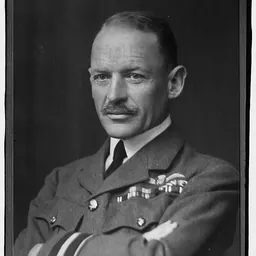


Related people
Same field, nearest in time
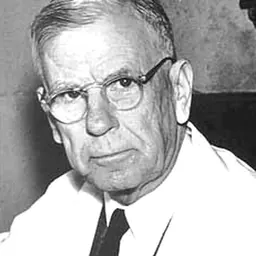

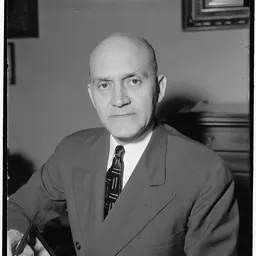
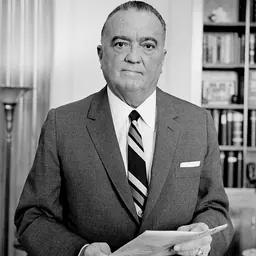


Contemporaries
People whose lives overlapped Bernard Paget's

Frequently asked questions
Who was Bernard Paget?
British Army general
When was Bernard Paget born?
Bernard Paget was born on 15 September 1887 in Oxford.
When did Bernard Paget die?
Bernard Paget died on 16 February 1961 in Petersfield.
What was Bernard Paget's occupation?
Bernard Paget was a military officer and lord Lieutenant.
What nationality was Bernard Paget?
Bernard Paget was British.
Sources & further reading
Cite this page
APA: Biography.guide. (2026). Bernard Paget. https://biography.guide/bernard-paget/
MLA: "Bernard Paget." Biography.guide, https://biography.guide/bernard-paget/.
Chicago: "Bernard Paget." Biography.guide. https://biography.guide/bernard-paget/.
Data last updated: 2026-09-25 · Spot an error? Report a correction.
Page generated 2026-09-27 05:12 UTC