
About Benoît-Constant Coquelin
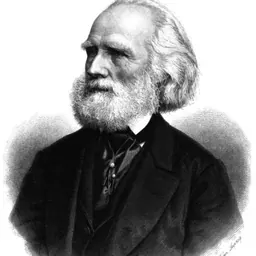
Lived 1842 – 1909 (aged 67). Benoît-Constant Coquelin was a French stage actor, film actor, actor and writer.
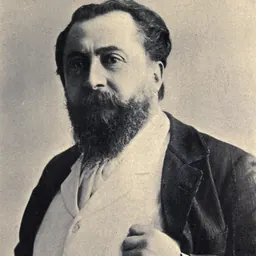
Benoît-Constant Coquelin (; 23 January 184127 January 1909), known as Coquelin aîné ("Coquelin the Elder"), was a French actor, described as "one of the greatest theatrical figures of the age."
Biography Coquelin was born in Boulogne-sur-Mer, Pas-de-Calais. He was originally intended to follow his father's trade of baker It was an honour for Coquelin to be a part of the Comédie-Française at such a young age. This company had already been in existence for around 150 years.
He was made sociétaire in 1864. There were 21 shares and they were divided among the lead actors, known as sociétaires. The sociétaires co-manage, choose plays, and share profits. When there was an opening caused by retirement, resignation, or death, it was filled by a member of the pensionnaires. And just four years after joining the Comédie-Française, Coquelin became one of the elite sociétaires. During the next twenty-two years he created the leading roles in forty-four new plays at the Comédie Française, including Théodore de Banville's Gringoire (1867), Paul Ferrier's Tabarin (1871), Émile Augier's Paul Forestier (1871), L'Étrangère (1876) by the younger Dumas, Charles Lomon's Jean Dacier (1877), Édouard Pailleron's Le Monde où l'on s'ennuie (1881), Erckmann's and Chatrian's Les Rantzau (1884). In 1895 he joined the Renaissance theatre in Paris, and played there until he became director of the Théâtre de la Porte Saint-Martin in 1897. Here he won successes in Edmond Rostand's Cyrano de Bergerac (1897), which he repeated in the summer of 1898 at the Lyceum Theatre, London, Émile Bergerat's Plus que reine (1899), Catulle Mendès's Scarron (1905), and Alfred Capus and Lucien Descaves' L'Attentat (1906). He made his only film, the duel scene from Cyrano de Bergerac with sound recording on phonograph cylinder (see also Sound film/Early steps). The film is thought to be the first ever made with both color and sound. On their return to France he continued with his old colleague to appear in L'Aiglon, at the Théâtre Sarah Bernhardt. He was rehearsing for the creation of the title role in Rostand's Chantecler, which he was to produce, when he died suddenly in Paris in 1909. (original title Edmond) which is adapted from Alexis Michalik's 2016 play Edmond, based around the creation of Cyrano de Bergerac, Coquelin is played by Olivier Gourmet.
Gallery
Don’t just read it —
keep it.
Full-length biographies made to live with: read them, listen on the way to work, watch them tonight.
- E-book
- Audio
- Video
Instant download · yours to keep · every purchase keeps this site free
Important facts
People in Benoît-Constant Coquelin's life
Named in this biography and alive at the same time



Related people
Same field, nearest in time

Contemporaries
People whose lives overlapped Benoît-Constant Coquelin's


Frequently asked questions
Who was Benoît-Constant Coquelin?
French actor (1841-1909)
When was Benoît-Constant Coquelin born?
Benoît-Constant Coquelin was born on 25 January 1842 in Boulogne-sur-Mer.
When did Benoît-Constant Coquelin die?
Benoît-Constant Coquelin died on 27 January 1909 in Couilly-Pont-aux-Dames.
What was Benoît-Constant Coquelin's occupation?
Benoît-Constant Coquelin was a stage actor, film actor, actor and writer.
What nationality was Benoît-Constant Coquelin?
Benoît-Constant Coquelin was French.
Sources & further reading
· Wikipedia: Benoît-Constant Coquelin
· DBpedia: Benoît-Constant Coquelin
Cite this page
APA: Biography.guide. (2026). Benoît-Constant Coquelin. https://biography.guide/benoit-constant-coquelin/
MLA: "Benoît-Constant Coquelin." Biography.guide, https://biography.guide/benoit-constant-coquelin/.
Chicago: "Benoît-Constant Coquelin." Biography.guide. https://biography.guide/benoit-constant-coquelin/.
Data last updated: 2026-09-25 · Spot an error? Report a correction.
Page generated 2026-09-27 05:13 UTC