
About Bennie Briscoe
Lived 1943 – 2010 (aged 67). Bennie Briscoe was an American boxer.
Bennie Briscoe (February 8, 1943 – December 28, 2010) was an American professional boxer. A fan favorite for his punching power, he was known as the "quintessential Philadelphia boxer," and one of the greatest fighters of his era who due to various reasons did not become a world champion.
"Bad" Bennie fought from 1962 to 1982, and retired with a career record of 66 wins (53 by KO) 24 losses and 5 draws. Briscoe was a top-rated middleweight contender during the 1970s, unsuccessfully challenging twice for the undisputed world middleweight title and once for the WBC version. Notable world champions and contenders Briscoe fought included Marvin Hagler, Carlos Monzon, Rodrigo Valdez, Luis Rodríguez, Vicente Rondon, Tony Mundine, Vito Antuofermo, Eddie Mustafa Muhammad, Emile Griffith, and Cyclone Hart.
Cus D'Amato regarded Briscoe much higher than most of his highly decorated opponents in many respects, particularly for his determination, intimidating posture, constant forward movement, aggressiveness, iron jaw, and ability to absorb punches no matter how solid he was hit, creating an impression of irresistible force to great many of his opponents. Briscoe's relentless walk-forward style earned him a nickname "Black Robot" while fighting abroad (for that reason, French cartoonist Dero portrayed Briscoe as a robot with hammers instead of arms, forcing even such aggressive fighters as Hagler and Monzon to back-up consistently. He was also sometimes referred to as "the fighting trashman," because he balanced his training early in his career with a day job as a sanitation worker in South Philadelphia.
Early life Briscoe was born in Augusta, Georgia, to a poor family, one of fourteen children. Usually bold Briscoe said that the reason his hair is cut very short is that "When you're one of fourteen children they can't waste too much money on haircuts," and when he used to go to the barbershop, his father would say "Take it all off." Motivated by his family's poverty, at the age of 16, he moved from Augusta, where he was a star athlete in football and track and field, to Philadelphia, Pennsylvania to live with an aunt and uncle and attended Simon Gratz High School. There, he eventually began training alongside Joe Frazier, hence is his familiar bobbing-and-weaving style.
Briscoe supported his family, and his mother in particular, sending home a bit of each payday. He worked a series of municipal jobs, including as a sewer inlet cleaner and rat control officer. He eventually took a job with the sanitation department, working on a trash route in South Philadelphia as he continued to train as a boxer. A union worker, he was a member of AFSCME District Council 33. He won the Middle Atlantic AAU title three times, the last in 1962 at Convention Hall in Philadelphia. Though he did not make it to win the United States National Boxing Championships in Pocatello, April 7, 1961, and in Cincinnati, March 31, 1962, losing to H.C. Massey and to Wade Smith respectively. He turned pro shortly thereafter, being coached by Quinzel McCall.
Despite going pro, Briscoe knew that the life of a boxer could be financially unstable and risky—and wanted to retain his union pension plan—so he continued his work on the trash route his entire career.
Professional career Bennie was known for his toughness, strong punch and body punching. He fought future middleweight champion Monzon to a draw in Buenos Aires on May 6, 1967, but dropped a 15-round decision to the champion in a 1972 title match.
Briscoe was one of the most feared middleweights of his era. In 2003, he was named in The Ring s list of 100 greatest punchers of all time. His final record was 66-24-5 with 53 knockouts and one no contest.
Briscoe fought with the Star of David on his boxing trunks in tribute to his managers, first Jimmy Iselin, whose father Phil owned the New York Jets, and Arnold M. Weiss.
Death Bennie Briscoe died on December 28, 2010, due to a short illness affecting his declining health. His funeral services were held on January 10, 2011, at Deliverance Evangelistic Church. He was survived by his mother, his wife and his five children.
Professional boxing record
Result Opp.Record Opponent Type Round Date Location
Don’t just read it —
keep it.
Full-length biographies made to live with: read them, listen on the way to work, watch them tonight.
- E-book
- Audio
- Video
Instant download · yours to keep · every purchase keeps this site free
Important facts
People in Bennie Briscoe's life
Named in this biography and alive at the same time
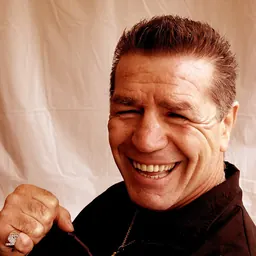

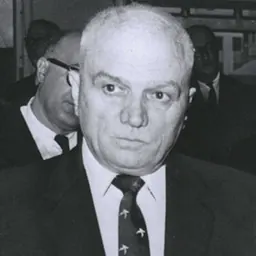
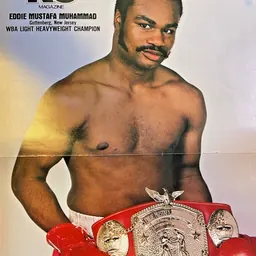




Related people
Same field, nearest in time

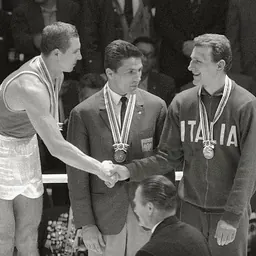



Contemporaries
People whose lives overlapped Bennie Briscoe's



Frequently asked questions
Who was Bennie Briscoe?
American boxer
When was Bennie Briscoe born?
Bennie Briscoe was born on 2 August 1943 in Augusta.
When did Bennie Briscoe die?
Bennie Briscoe died on 28 December 2010 in Philadelphia.
What was Bennie Briscoe's occupation?
Bennie Briscoe was a boxer.
What nationality was Bennie Briscoe?
Bennie Briscoe was American.
Sources & further reading
Cite this page
APA: Biography.guide. (2026). Bennie Briscoe. https://biography.guide/bennie-briscoe/
MLA: "Bennie Briscoe." Biography.guide, https://biography.guide/bennie-briscoe/.
Chicago: "Bennie Briscoe." Biography.guide. https://biography.guide/bennie-briscoe/.
Data last updated: 2026-09-25 · Spot an error? Report a correction.
Page generated 2026-09-27 05:11 UTC