
Benjamin Waugh
English social reformer
About Benjamin Waugh
Lived 1839 – 1908 (aged 69). Benjamin Waugh was a British social reformer.
Benjamin Waugh (20 February 183911 March 1908) was a Victorian era social reformer and campaigner who founded and directed the UK charity, the National Society for the Prevention of Cruelty to Children (NSPCC) in the late 19th century. He was also a journalist, public speaker and organiser who helped secure Britain’s first legislation on children’s rights.
Early life Waugh was born in Settle, West Riding of Yorkshire. Aged eight, he was affected by the death of his mother and soon afterwards his father sent him to a private school in Warwickshire run by his maternal uncle, a Congregational minister. When 14, he was apprenticed to Samuel Boothroyd, a draper and member of the Congregational Church in Southport, Lancashire. By the age of 20, Waugh had become secretary of the local branch of the United Kingdom Alliance, a leading temperance organisation. His religious conviction led to him giving up the drapery business while remaining friendly with his former employer whose daughter Sarah later became his wife. Between 1862 and 1865, he studied at the Congregationalist Airedale Theological College in Bradford and on graduation, married Sarah Boothroyd with whom he moved to Newbury, near Reading, as minister to the local Congregational church. Both politically liberal and a non-fundamentalist, he became a Fellow of the Geological Society in 1865. A year later, he accepted the pastorate of the Independent Chapel at Maze Hill in Greenwich.
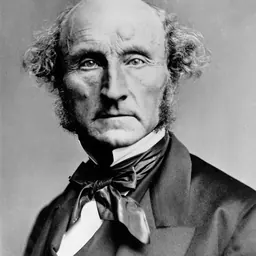
Early career As a Congregational minister in poverty-stricken East Greenwich, Waugh devoted himself to improving the conditions of the inhabitants, including establishing a creche for working mothers and a Society for Temporary Relief in Poverty and Sickness. In 1870, John Stuart Mill and four trade unions nominated him as a candidate in the election to represent Greenwich on the new London School Board; when elected he argued for non-sectarian elementary education. Befriending fellow Board member Thomas Huxley, he learnt from Huxley the importance of factual investigation during his subsequent campaigns on behalf of neglected children. The first of these concerned the incarceration of child offenders in adult prisons, and Waugh became widely known for his book, The Gaol Cradle, Who Rocks it? that pleaded against child imprisonment and for the creation of juvenile courts. The year following its publication he collapsed from over-work but despite thereafter declining re-election to a third three-year term on the School Board, continued to do too much.
The Sunday Magazine After another breakdown in 1877, he resigned his ministry in Greenwich on medical advice and accepted an offer by the publisher Isbister to edit the widely-circulated monthly periodical, The Sunday Magazine. It attracted contributions from numerous well-known writers, including novelist Hesba Stretton who helped found what later was to become the National Society for the Prevention of Cruelty to Children. Waugh also contributed poems and articles to the magazine. His monthly stories 'Sunday Evenings with My Children' were later published in book form.
National Society for the Prevention of Cruelty to Children In 1884, at the suggestion of Hesba Stretton he brought together a number of leading philanthropists to found the London Society for the Prevention of Cruelty to Children (modelled on a similar initiative in Liverpool), launched at London's Mansion House on 8 July. The London body's first chairman was veteran social reformer, Lord Shaftesbury. The Society evolved to become the NSPCC some five years later (14 May 1889), with Waugh as its honorary director and Queen Victoria as patron. Under Waugh's leadership and guidance, 200 local NSPCC branches were created across the UK to campaign for children to be protected from harm, neglect and abuse. Local groups raised funds for the NSPCC, funding a body of inspectors to investigate and prevent cruelty to children. Many of the fund-raisers were middle-class women who, according to social historian George Behlmer, were ‘left no room for doubt on the subject of female duty'. Its women supporters had to postpone fighting for their own rights until ‘the citizenship and rights of children are established’.
Lord Herschell's subsequent independent review of the NSPCC management dismissed the slanders, found that the NSPCC had not been financially mismanaged and made some sensible recommendations about tightening up the administration that he concluded was fundamentally sound. And although Herschell found that Benjamin Waugh sometimes used too vehement and impetuous language, "It was rare for the zeal and enthusiasm to promote a great cause... [to be] combined with a philosophic calm".
Gallery
Don’t just read it —
keep it.
Full-length biographies made to live with: read them, listen on the way to work, watch them tonight.
- E-book
- Audio
- Video
Instant download · yours to keep · every purchase keeps this site free
Important facts
People in Benjamin Waugh's life
Named in this biography and alive at the same time



Related people
Same field, nearest in time


Contemporaries
People whose lives overlapped Benjamin Waugh's



Frequently asked questions
Who was Benjamin Waugh?
English social reformer (1839–1908)
When was Benjamin Waugh born?
Benjamin Waugh was born on 20 February 1839 in Settle.
When did Benjamin Waugh die?
Benjamin Waugh died on 11 March 1908 in Westcliff-on-Sea.
What was Benjamin Waugh's occupation?
Benjamin Waugh was a social reformer.
What nationality was Benjamin Waugh?
Benjamin Waugh was British.
Sources & further reading
Cite this page
APA: Biography.guide. (2026). Benjamin Waugh. https://biography.guide/benjamin-waugh/
MLA: "Benjamin Waugh." Biography.guide, https://biography.guide/benjamin-waugh/.
Chicago: "Benjamin Waugh." Biography.guide. https://biography.guide/benjamin-waugh/.
Data last updated: 2026-09-20 · Spot an error? Report a correction.
Page generated 2026-09-27 05:27 UTC