
Benjamin Silliman Sr.
Early American chemist and science educator
About Benjamin Silliman Sr.
Lived 1779 – 1864 (aged 85). Benjamin Silliman Sr. was an American chemist, mineralogist, university teacher, botanist, physician and geologist.
Benjamin Silliman (August 8, 1779 – November 24, 1864) was an American chemist and science educator. He was one of the first American professors of science, the first science professor at Yale, and the first person to use the process of fractional distillation in America. He was a founder of the American Journal of Science, the oldest continuously published scientific journal in the United States.
Early life
Silliman was born in a tavern in North Stratford, now Trumbull, Connecticut, to Mary (Fish) Silliman (widow of John Noyes) and General Gold Selleck Silliman. He was born in August 1779, several months after British forces took his father prisoner and his mother had fled their home in Fairfield, Connecticut, to escape 2,000 British troops who burned Fairfield center to the ground.
Silliman was educated at Yale, receiving a B.A. degree in 1796 and a M.A. in 1799. He studied law with Simeon Baldwin from 1798 to 1799 and became a tutor at Yale from 1799 to 1802. He was admitted to the bar in 1802. That same year he was hired by Yale President Timothy Dwight IV as a professor of chemistry and natural history. Silliman, who had never studied chemistry, prepared for the job by studying chemistry with Professor James Woodhouse at the University of Pennsylvania in Philadelphia. In 1804, he delivered his first lectures in chemistry, which were also the first science lectures ever given at Yale. In 1805, he traveled to University of Edinburgh for further study.thumb
Career
Returning to New Haven, he studied its geology. His chemical analysis of a meteorite that fell in 1807 near Weston, Connecticut, was the first published scientific account of an American meteorite. He lectured publicly at New Haven in 1808 and came to discover many of the constituent elements of many minerals. Some time around 1818, Ephraim Lane took some samples of rocks he found at an area called Saganawamps, now a part of the Old Mine Park Archeological Site in Trumbull, to Silliman for identification. Silliman reported in his new American Journal of Science, a publication covering all the natural sciences but with an emphasis on geology, that he had identified tungsten, tellurium, topaz and fluorite in the rocks. He played a major role in the discoveries of the first articulated fossil fishes found in the United States, which he discovered in Newark Supergroup deposits near Connecticut, and were later described as the genera Redfieldius and Semionotus. In 1837, the first prismatic barite ore of tungsten in the United States was discovered at the mine. The mineral sillimanite was named after Silliman in 1850. Upon the founding of the medical school, he also taught there as one of the founding faculty members.
In 1833 he discussed the relationship of Flood geology to the Genesis account and also wrote about this topic in 1840.
Silliman was an early supporter of coeducation in the Ivy League. Although Yale would not admit women as students until over 100 years later, he allowed young women into his lecture classes. His efforts convinced Frederick Barnard, later president of Columbia College, that women ought to be admitted as students. "The elder Silliman, during the entire period of his distinguished career as a Professor of Chemistry, Geology and Mineralogy in Yale College, was accustomed every year to admit to his lecture-courses classes of young women from the schools of New Haven. In that institution the undersigned had an opportunity to observe, as a student, the effect of the practice, similar to that which he afterward created for himself in Alabama, as a teacher. The results in both instances, so far as they went, were good; and they went far enough to make it evident that if the presence of young women in college, instead of being occasional, should be constant, they would be better."
American historian David McCullough mentions in his book about early 19th century Americans in Paris that in 1825 Silliman, while on a tour of Europe conferring with other scientists, encountered his former Yale science student Samuel Morse in the Louvre museum (at that time Morse was still primarily a painter). As professor emeritus, he delivered lectures at Yale on geology until 1855; Silliman had been the first person to use the process of fractional distillation, and, in 1854 his son Benjamin Silliman Jr became the first person to fractionate petroleum by distillation. In 1864 Silliman noted oil seeps in the Ojai, California, area. In 1866, this led to the start of oil exploration and development in the Ojai Basin.
Silliman pioneered the mass production of carbonated water and helped popularize it in the United States. In 1806, he purchased a Nooth apparatus and opened a soda fountain in New Haven. He marketed his mineral waters for their medicinal properties.
Like his son-in-law James Dana, Silliman was a Christian. In an address delivered before the Association of American Geologists he spoke in favor of old Earth creationism, stating:
In the same line of thought, he posed arguments against atheism and materialism.
1807 meteor
At 6:30 in the morning of December 14, 1807, a blazing fireball about two-thirds the apparent size of the Moon in the sky, was seen traveling southwards by early risers in Vermont and Massachusetts. Three loud explosions were heard over Weston, Connecticut. Stone fragments fell in at least 6 places. The largest and only unbroken stone, which weighed 36.5 pounds (16.5 kilograms), was found some days after Silliman and Kingsley had spent several fruitless hours hunting for it. The owner, a Trumbull farmer named Elijah Seeley, was urged to present it to Yale by local people who had met the professors during their investigation, but he insisted on putting it up for sale. It was purchased by Colonel George Gibbs for his large and famous collection of minerals; when the collection became the property of Yale in 1825, Silliman finally acquired this stone; the only specimen of the Weston meteorite that remains in the Yale Peabody Museum collection today.
Personal life
His first marriage was on September 17, 1809, to Harriet Trumbull, (Trumbull and her sister Maria Trumbull spent the winter of 1800 and spring of 1801 in New York City where they came out to New York society.) They had music, dancing, and drawing lessons. Their letters to their parents provided insight into their lives of lessons, parties, plays, and more. The letters were published in the book A season in New York, 1801. The book provides insight into the inner thoughts of 19th-century girls as they experienced life in a big city. He favored colonization of free African Americans in Liberia, serving as a board member of the Connecticut Colonization Society between 1828 and 1835. He was elected a member of the American Antiquarian Society in 1813, and an Associate Fellow of the American Academy of Arts and Sciences in 1815. Silliman founded and edited the American Journal of Science, and was appointed one of the corporate members of the National Academy of Sciences by the United States Congress. He was also a member of the American Association for the Advancement of Science.
Silliman College, one of Yale's residential colleges, is named for him, as is the mineral Sillimanite. In Sequoia National Park, Mount Silliman is named for him, as is Silliman Pass, a creek and two lakes below the summit of Mount Silliman.
Don’t just read it —
keep it.
Full-length biographies made to live with: read them, listen on the way to work, watch them tonight.
- E-book
- Audio
- Video
Instant download · yours to keep · every purchase keeps this site free
Important facts
People in Benjamin Silliman Sr.'s life
Named in this biography and alive at the same time




Related people
Same field, nearest in time
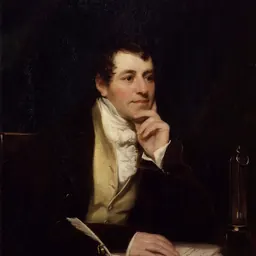

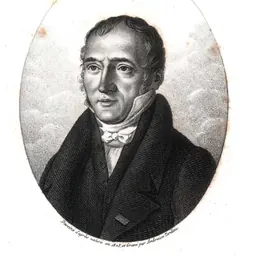

Contemporaries
People whose lives overlapped Benjamin Silliman Sr.'s


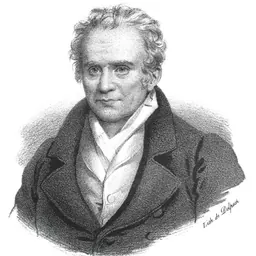
Frequently asked questions
Who was Benjamin Silliman Sr.?
early American chemist and science educator (1779–1864)
When was Benjamin Silliman Sr. born?
Benjamin Silliman Sr. was born on 8 August 1779 in Stratford.
When did Benjamin Silliman Sr. die?
Benjamin Silliman Sr. died on 24 November 1864 in New Haven.
What was Benjamin Silliman Sr.'s occupation?
Benjamin Silliman Sr. was a chemist, mineralogist, university teacher, botanist, physician and geologist.
What nationality was Benjamin Silliman Sr.?
Benjamin Silliman Sr. was American.
Sources & further reading
· Wikipedia: Benjamin Silliman Sr.
Cite this page
APA: Biography.guide. (2026). Benjamin Silliman Sr.. https://biography.guide/benjamin-silliman-sr/
MLA: "Benjamin Silliman Sr.." Biography.guide, https://biography.guide/benjamin-silliman-sr/.
Chicago: "Benjamin Silliman Sr.." Biography.guide. https://biography.guide/benjamin-silliman-sr/.
Data last updated: 2026-09-20 · Spot an error? Report a correction.
Page generated 2026-09-27 05:19 UTC