
About Benjamin Mandel
Lived 1887 – 1973 (aged 85–86). Benjamin Mandel was an American teacher, known for Communist Party of the USA and HUAC.
Benjamin Mandel (October 2, 1891 – August 8, 1973) "Bert Miller" was an American school teacher and communist activist who later became an ex-communist director of research for the House Un-American Activities Committee (HUAC) and the Senate Internal Security Subcommittee (SIS).
Background
Benjamin Mandel was born in on October 2, 1891, in New York City.
In 1925 he resigned his position as a teacher to work full-time for the Party. Whittaker Chambers remembered that "Bert Miller" signed his Party card in 1925.
In 1925–26, Bert Miller studied under Professor Scott Nearing in his Research Study Group for a forthcoming book called The Law of Social Revolution (1926). Classmates included Whittaker Chambers, Dale Zysman (vice president of the Teachers' Union), Bertram Wolfe, Ben Davidson (later co-founder of the Liberal Party of New York) and his wife Eve Dorf, Sam Krieger, Alfred J. Brooks, Myra Page, and Rachel Ragozin.
In 1926, Bert Miller ignited the 1926 Passaic textile strike, as related by Benjamin Gitlow in his 1939 memoir: The man who started the ball rolling was Bert Miller, industrial organizer of District Two of the Party, which then included most of industrial New Jersey and Connecticut as well as New York City. Comrade Miller called to my attention the fact that the Botany Mills of Passaic had announced a wage cut of ten percent, beginning with October, 1925. I immediately instructed Miller to get in touch with our New Jersey comrades and explore the matter further, agreeing with him that on its face the situation seemed favorable enough for initiating agitation for a strike in retaliation for the wage cut. Miller was a veteran of the Party since its underground days and carried out his assignment expeditiously. His report convinced me that there was ample ground for developing a successful strike. Albert Weisbord, main leader of the Passaic strike, recalled later and critically of both Miller ("the innocent") and the Communist Party: In New York I contacted Bert Miller, a teacher made suddenly "industrial" organizer of the Party, who, as a newcomer in the office, tried to live up to a job he knew very little about... I was just now, in 1924, that ignorant, unsuspicious me had to enter into that nest of intrigue, without the lightest inkling of the kind of leadership under which I was enlisting... I soon found the approximately 400 strikers in meeting in a small hall near the mill... We built up a picket line, drew up our demands and created a semblance of organization. They no longer felt lost or abandoned... They wanted to see membership applications and membership dues books... Back in New York I reported all this to Miller. This innocent agreed that I should get application and membership cards printed. He was not aware that on this matter he would be bitterly assailed by the Foster-Cannon leadership for dual unionism and would open up a major struggle with the Party... The worthlessness of the C.P. leaders did not in the least make me undervalue the great worth of the tens of thousands of devoted foreign-born workers and militant American-born youth who were the members and followers of that party... At the moment for me the important link in the chain was the innocent Bert Miller, acting on this own while the "bigs" were tied up with other matters, especially the N.Y. District Organizer Weinstone who was very busy intriguing with Cannon on how to form a new faction to end factions! Weinstone’s sloth and Miller’s ignorance were to help me much. In 1926, Bert Miller also became business manager of the Daily Worker communist newspaper. and appeared throughout 1926 and 1927 – the publication of "business manager" dropped from the masthead in 1928. Whittaker Chambers recalled: In those days, Bert Miller was a harassed soul. As business manager of the Daily Worker, the future research director of the House Committee on Un-American Activities had to meet a weekly payroll and find money to pay the paper, print, and other bills. Money was very hard to find, and his life was a weekly crisis. Thus, my chief recollection of Bert Miller from the past is less than a face than as a weary plaint: money. Bert suffered other grievances, too. In his business office, he presided over a number of young women Communists, one of whom was a remarkably pretty Hungarian girl. He often protested that his girls were terrified towalk through the Daily Worker office (as they sometimes had to) because, while they wriggled their way past he crowded chairs, each of the editors in turn reached back and pinched them.
Communist Party (Opposition) (CPO)
As of the first issue (November 1, 1929), Bert Miller appeared on the editorial board of Revolutionary Age, organ of the Communist Party (Majority) formed by Jay Lovestone, i.e., he joined Lovestone's Communist Party (Majority Group). Other editors included: Benjamin Gitlow, editor; Bertram Wolfe, associate editor; and editorial board members J.O. Bixby, Ellen Dawson, Will Herberg, William Miller, R. Pires, Jack Rubinstein, Frank Vrataric, Ed Welsh, W.J. White, Herbert Zam, and Charles S. Zimmerman.
Miller was also one of the original teachers at the New Workers School of the Lovestoneites, as advertised in the November 15 issue and detailed in a December 15 article.
In April 1930, Miller spoke in Philadelphia to some 300 workers regarding "The Crisis in the Communist Party of the USA."
During 1930, Miller joined the Conference for Progressive Labor Action.
In June 1931, the Communist League of Struggle (Adhering to the International Left Opposition), attached Miller as a Lovestone leader: Do you think that it is an accident that out of your ranks, trained by Lovestone, have sprung OPEN RENEGADES from Communism, Bert Miller and Company? Can you not see that Bert Miller but does what Lovestone is planning to do -- later, that Miller is but the vanguard of Lovestone himself? ... In spite of intrigue on the part of the official Communist Party, the Lovestone group and its allies, Bert Miller and Ludwig Lore -- about 250 attended the Albert Weisbord-Louis F. Budenz debate at the Labor Temple, Saturday, May 2. The topic was "Shall the Workers Support the Conference for Progressive Labor Action in Preference to the Communists?"... After the posters, leaflets and advertisements announcing the debate were released, pressure to kill the debate opened. According to reports, William Z. Foster who was scheduled to debate Muste a week later, threatened to withdraw if Muste debated Weisbord first. Under the Party's pressure, Muste decided not to debate Weisbord and assigned Budenz in his stead. This was the time for Miller, the "communist" watch-dog and advisor to the C.P.L.A. to step in with his "expert" advice. Lore also advised Budenz not to go through with the arrangements. By August 1931, the Lovestoneites were commenting angrily in Revolutionary Age: "As soon as this group of comrades entered the CPLA and began to function, a differentiation began to take place: Bert Miller, Levich, and Lawrence began to move rapidly to the extreme right, while the rest of the comrades under the leadership of Comrade Benjamin, took up a sharp struggle against social reformism and against Miller and his friends as well." Miller's push for this group caused Benjamin Gitlow to split with the Lovestoneites, who insisted that "Stalin's policies were a hundred percent correct." In 1931, Miller's name appeared as a national officer of the Joint Committee on Unemployment, headed by John Dewey. On December 2, 1931, "Benjamin Mandel" as "organizer for the Brotherhood of Brooklyn Edison Employees" as well as observer for the Conference for Progressive Labor Action, joined a group of nine led by Rev. Eliot White, formerly of the Grace Episcopal Church, to distribute union literature, when they found themselves attacked by hundreds of people. In its December 1931 issue, Labor Age described Mandel as "labor organizer and writer... active in the White Plains Road Laborers Strike last summer... now helping the Brooklyn Edison Employes organization campaign."
In 1932, Mandel had called for a bar to admittance of communists during a meeting to discuss the ongoing Harlan County coal strike that had started in 1931 (see Harlan County War): "No communists are admitted here", was the greeting at the door, which met the delegate of the C.L.S., who tried to attend the "broad united front of labor", called by the I.W.W. General Defense Committee for the Harlan Kentucky miners on January 6. Of course it had to be the unspeakable Bert Miller, who handed out this information. All sorts of liberals, anarchists, and what not were gathered together, but the Communists were not even allowed to enter the hall!" On March 6, 1932, Mandel joined a committee that supported the $375 million Costigan-La Follettee-Lewis relief bill, itself part of a $3 billion federal bill to provide housing credit, end sales taxes, and increases surtaxes and estate taxes.
Benjamin Mandel
On July 17, 1932, a new joint committee on unemployment in New York state formed under Bishop Francis J. McConnell of the Methodist Baptist Church in Manhattan. Committee members included: Sidney E. Goldstein, Stephen S. Wise, Mary Fox, Alfred Bernheim, Darwin J. Meserole, Howard Y. Williams, A.J. Muste, J.B. Matthews, William Spofford, Winifred Chappell, Abraham Lefkowitz, Sidney Hillman, Paul Blanshard, Jack Altman, Helen Alfred, Walter White, and LeRoy E. Bowman.
Dies Committee and Rapp Coudert By the later 1930s, Bert Miller the former communist had become a dedicated anti-communist. His ideological change was partly inspired by an opposition to Stalinism and also partly by a distaste for factionalism and internecine squabbles in the American communist movement.
By 1939 he had resurfaced fully as "Benjamin Mandel" to help J.B. Matthews as a researcher for the Dies Committee until 1945. He also worked with the New York legislature during the Rapp-Courdert inquiry into the presence of Communist teachers in New York schools. The same year, Matthews connected "Benjamin Mandel" with "Bert Miller" during the testimony of Leonard Emil Mins before the Dies Committee.
On August 7, 1941, Mandel himself testified before Dies Committee regarding the China Aid Council, a subsidiary of the American League for Peace and Democracy. He named Dr. Owen Lattimore, Frederick V. Field, and others.
SISS
In 1951, Mandel left HUAC During his SIS years, he took an active role in connect the influence of the Communist Party and communist-influenced labor unions (e.g., CIO) in the Teachers' Union and among teachers (e.g., see "Mandel" in 1952 hearings
In 1953, Eleanor Roosevelt criticized Mandel in her column: I was sent a column the other day by a gentleman which he had clipped from a paper and felt was very convincing. The column was written by Benjamin Mandel, a former research director of the House Un-American Activities Committee and at present a member of the Senate Internal Security Subcommittee. Mr. Mandel was writing as a guest columnist for Mr. C. Brown. Mr. Mandel in his column took all liberals and intellectuals to task for sitting in judgment on Congressional committees investigating Communist activities. Most of the column pointed out the "faults of liberals" and of course, being human beings, I don't suppose they are perfect but it seemed to me this column was very slanted in its reasoning. Unquestionably, critical self-examination should be of value to liberals and intellectuals, but I have no doubt it would be of value to those who conduct Congressional investigations also. In 1956, TASS deputy bureau chief Harry Freeman testified before SISS. Mandel read a passage from Whittaker Chambers' 1952 memoir Witness about Freeman at the Daily Worker. In retort, Freeman reminded SISS that Mandel was there, too, as business manager. On October 25, 1967, lawyers for the National Conference for New Politics (NCNP) and the Mississippi Freedom Democratic Party (MFDP) filed an order to take immediate sworn statements about documents from Senator James O. Eastland and subcommittee staffers, J.G. Sourwine and Mandel to enjoin any further distribution or use of the files. In 1959, I.F. Stone named Mandel as "another powerful Lovestoneite," while researcher Robert W. Iversen noted Mandel in his book The Communists & the Schools, and Theodore Draper consulted him for his book American Communism and Soviet Russia.
On November 1, 1967, Mandel announced his retirement.
Personal and death
Mandel married Margaret Rees. "Gandhi Betrays," Labor Age (May 1931) "Book Review: Kautsky at the Crossroads" Labor Age (July 1932) I Was a Soviet Worker (1936) I Was a Soviet Worker (1937)
As Benjamin Mandel: "The Battle of White Plains," Labor Age (August 1931)
"And These Are Our Rulers," Labor Age (September 1931) "America Welcomes Grandi," Labor Age (December 1931) "After Roosevelt - What?" Colliers (~1932-1934) "Evaluation of the World Trade Union Federation" (1946?) "A Handbook for Americans: The Communist Party: What It Is, How It Works" (1955)
Don’t just read it —
keep it.
Full-length biographies made to live with: read them, listen on the way to work, watch them tonight.
- E-book
- Audio
- Video
Instant download · yours to keep · every purchase keeps this site free
Important facts
People in Benjamin Mandel's life
Named in this biography and alive at the same time


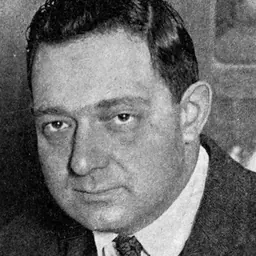
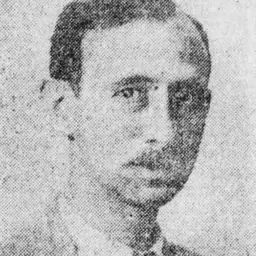



Related people
Same field, nearest in time

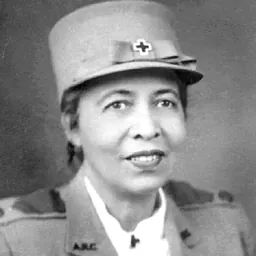

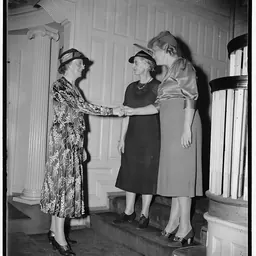
Contemporaries
People whose lives overlapped Benjamin Mandel's


Frequently asked questions
Who was Benjamin Mandel?
American ex-teacher ex-communist government official
When was Benjamin Mandel born?
Benjamin Mandel was born in 1887.
When did Benjamin Mandel die?
Benjamin Mandel died on 8 August 1973 in Washington, D.C..
What was Benjamin Mandel's occupation?
Benjamin Mandel was a teacher.
What was Benjamin Mandel known for?
Benjamin Mandel was known for Communist Party of the USA and HUAC.
What nationality was Benjamin Mandel?
Benjamin Mandel was American.
Sources & further reading
Cite this page
APA: Biography.guide. (2026). Benjamin Mandel. https://biography.guide/benjamin-mandel/
MLA: "Benjamin Mandel." Biography.guide, https://biography.guide/benjamin-mandel/.
Chicago: "Benjamin Mandel." Biography.guide. https://biography.guide/benjamin-mandel/.
Data last updated: 2026-09-20 · Spot an error? Report a correction.
Page generated 2026-09-27 05:21 UTC