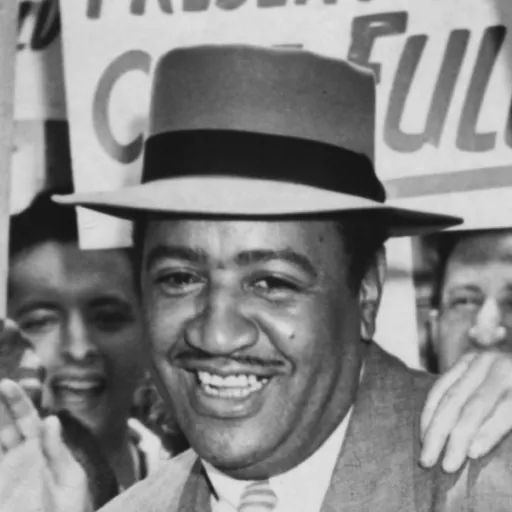
Benjamin J. Davis Jr.
American lawyer and politician, New York city councilman
About Benjamin J. Davis Jr.
Lived 1903 – 1964 (aged 60). Benjamin J. Davis Jr. was an American lawyer and politician.
Benjamin Jefferson Davis Jr. (September 8, 1903 – August 22, 1964) was an American communist lawyer and politician who served on the New York City Council from 1944 until his expulsion in 1949. That year, he was among a number of communist leaders prosecuted for violating the Smith Act. He was convicted and sentenced to five years in prison.
The son of a prominent African American Republican in Georgia, Davis was radicalized and gained notoriety defending labor organizer Angelo Herndon in 1933. Davis joined the Communist Party USA and relocated to Harlem following the case, where he worked as a journalist. He was elected to the New York City Council in 1943, becoming the first black communist elected to public office in the United States.
Early years Benjamin J. Davis Sr. (seated, far right) on the Sub-Committee of Management and Counsel of the Grand United Order of Odd Fellows, 1908 Benjamin J. Davis Jr.–known to his friends as "Ben"–was born on September 8, 1903, in Dawson, Georgia to Benjamin Davis Sr. and Jimmie W. Porter. The family moved to Atlanta in 1909, where Davis's father, "Big Ben" Davis, established a weekly black newspaper, the Atlanta Independent. It was successful enough to provide a comfortable middle-class upbringing for his family. The elder Davis emerged as a prominent black political leader and served as a member of the Republican National Committee for the state of Georgia.
The younger Davis attended the high school program of Morehouse College in Atlanta. He left the South to study at Amherst College, where he was a star football player, and earned his B.A. in 1925. He continued his education at Harvard Law School, from which he graduated in 1929. He worked briefly as a journalist before starting a law practice in Atlanta in 1932.
Political career
Davis became radicalized through his role as defense attorney in the 1933 trial of Angelo Herndon, a 19-year-old black Communist who had been charged with violating a Georgia law against "attempting to incite insurrection", because he tried to organize a farm workers' union. Davis and John H. Geer were hired by the International Labor Defense (ILD) to represent Herndon. . They consulted with the International Juridical Association on their brief to the court. During the trial, Davis faced angry, racist opposition from the judge and public. He was impressed with the rhetoric and bravery of Herndon and his colleagues. After giving concluding arguments, he joined the Communist Party himself.
Herndon was convicted and sentenced to 18–20 years in jail. He was freed after April 26, 1937, when, by a 5-to-4 margin, the United States Supreme Court ruled Georgia's Insurrection Law to be unconstitutional.
Davis moved to Harlem, New York in 1935, joining the Great Migration of blacks out of the South to northern cities. He worked as editor of the Communist Party's newspaper targeted to African-Americans, The Negro Liberator. He later became president of the CPUSA's official English-language daily, the Daily Worker. He was in the same party cell as Marvel Cooke, Richard Wright, and Ollie Harrington.
In 1943, Davis became the first black communist elected to public office in the United States when he was elected to the city council under the then-used system of proportional representation, filling a seat being vacated by Adam Clayton Powell Jr. to run for Congress. Davis's support extended far beyond the Communist Party; he earned 56% of first-choice votes in Harlem and was endorsed by numerous black celebrities. He was reelected in 1945, this time to a four-year term, with over 75% of first-choice votes in Harlem. He was the second Communist elected to the council, the first being Peter Cacchione in 1941.
Davis lost his 1949 bid for re-election due to a number of factors. First, two years earlier, New York had ceased to use proportional representation and Harlem was broken up into three districts, diluting the black vote. Second, Davis's opponent in the new 21st district was journalist Earl Brown, a fusion candidate for the Democratic, Republican, and Liberal parties. Finally, in July 1948, Davis was charged with conspiring to overthrow the federal government under the Smith Acta World War II-era charge that rested on Davis's association with the Communist Party. They did so on the advice of the City Corporation Counsel, which argued that Davis forfeited his office after his October conviction. While one of his colleagues (Eugene P. Connolly) resigned in solidarity, a majority of the rest passed a resolution celebrating his ouster. He appealed his conviction for two years all the way to the Supreme Court of the United States, without success. On March 1, 1955, after serving three years and four months in the federal penitentiary in Terre Haute, Indiana, Davis was freed. However, he was immediately transferred to the Allegheny County Jail in Pittsburgh, Pennsylvania, to serve an additional 60-day term for contempt of court. He had appeared there in 1953 as a defense witness for another group of five Communists charged under the Smith Act, but was asked and refused to answer questions about unrelated individuals involved in the Communist Party's National Commission of Negro Work. In 1957, the Supreme Court revisited the Smith Act and reversed itself in Yates v. United States, which held that the First Amendment protected radical and reactionary speech, unless it posed a "clear and present danger."
In subsequent years, Davis engaged in a speaking tour of college campuses and remained politically active, promoting an agenda of civil rights and economic populism. Davis' 1962 speaking circuit drew crowds at schools such as Harvard, Columbia, Amherst, Oberlin and the University of Minnesota. But the City College of New Yorkin the New York council district he represented in the 1940sbarred Davis from speaking on its campus in this period. After a student protest, Davis was allowed to speak outside, on the street. serving until 1960. He continued to publicly defend the actions of the Soviet Union, including the Soviet invasion of Hungary in 1956.
Personal life and death Davis married Nina Stamler, an activist with the Civil Rights Congress, on April 15, 1955. Her father was a socialist dentist of Lithuanian descent. Together they had one daughter, Emily.
To celebrate its publication, a cultural tribute to Davis was held on June 8, 1969, with Herndon, Claude Lightfoot, Herbert Aptheker, and others speaking. Expressing gratitude for Davis and the ILD, Herndon compared his struggle to that faced by the activists of the 1960s, stating: "You've got to fight, black and white together. This is the greatest monument you can erect to Ben Davis. You've got to tell them what Ben Davis did."
Works "The Road to Liberation for the Negro People." (1937) "The Path of Negro Liberation." (1947) "In Defense of Negro Rights." (1950) "The Negro People in the Struggle for Peace and Freedom." (1951) "The Negro People on the March." (1956) "Must Negro Americans Wait?" (1963) "Upsurge in the South." "Why I Am A Communist." "Ben Davis on the McCarran Act." "Communist Councilman from Harlem"
Amherst Olio gallery
Daily Worker gallery
Don’t just read it —
keep it.
Full-length biographies made to live with: read them, listen on the way to work, watch them tonight.
- E-book
- Audio
- Video
Instant download · yours to keep · every purchase keeps this site free
Important facts
People in Benjamin J. Davis Jr.'s life
Named in this biography and alive at the same time





Related people
Same field, nearest in time

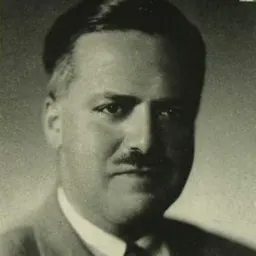
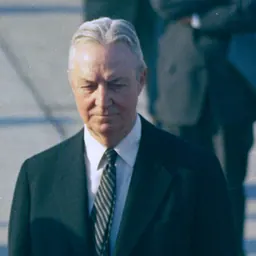
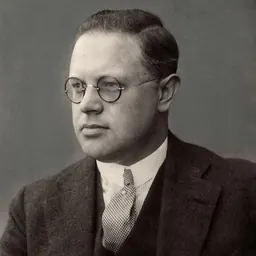
Contemporaries
People whose lives overlapped Benjamin J. Davis Jr.'s
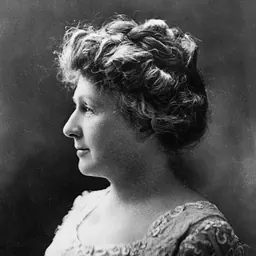
Frequently asked questions
Who was Benjamin J. Davis Jr.?
American lawyer and politician, New York city councilman (1903–1964)
When was Benjamin J. Davis Jr. born?
Benjamin J. Davis Jr. was born on 8 September 1903 in Dawson.
When did Benjamin J. Davis Jr. die?
Benjamin J. Davis Jr. died on 22 August 1964.
What was Benjamin J. Davis Jr.'s occupation?
Benjamin J. Davis Jr. was a lawyer and politician.
What nationality was Benjamin J. Davis Jr.?
Benjamin J. Davis Jr. was American.
Sources & further reading
· Wikipedia: Benjamin J. Davis Jr.
· DBpedia: Benjamin J. Davis Jr.
Cite this page
APA: Biography.guide. (2026). Benjamin J. Davis Jr.. https://biography.guide/benjamin-j-davis-jr/
MLA: "Benjamin J. Davis Jr.." Biography.guide, https://biography.guide/benjamin-j-davis-jr/.
Chicago: "Benjamin J. Davis Jr.." Biography.guide. https://biography.guide/benjamin-j-davis-jr/.
Data last updated: 2026-09-21 · Spot an error? Report a correction.
Portrait: Wikimedia Commons · author & licence
Page generated 2026-09-27 04:59 UTC