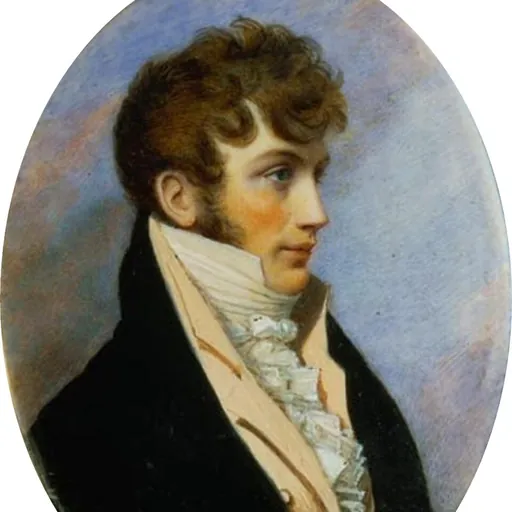
About Benjamin Bathurst
Lived 1784 – 1809 (aged 25). Benjamin Bathurst was a British diplomat and envoy (title).
Benjamin Bathurst (born 18 March 1784 – disappeared 25 November 1809) was a British diplomat who disappeared in Prussia during the Napoleonic Wars. He was the third son of Henry Bathurst, Bishop of Norwich. His sister was the poet Caroline de Crespigny.
Bathurst's disappearance in 1809 sparked much debate and speculation about his ultimate fate. His story is frequently used in science fiction stories, based on a widespread belief (fostered by secondary sources) that his disappearance was particularly sudden, perhaps supernatural, in nature. Modern research suggests the circumstances of Bathurst's disappearance were wildly embellished, and that he was almost certainly murdered.
Career Benjamin Bathurst entered the diplomatic service at an early age and was promoted to the post of Secretary of the British Legation at Livorno in what was then the Grand Duchy of Tuscany (now Italy). In 1805 he married Phillida Call, daughter of Sir John Call, a Cornish landowner and baronet. Frau Kestern, a woman employed at the German Coffee House, testified years later that immediately after Bathurst had visited the establishment, August had come in, asked her where the visitor had gone, then hastened after him and (she supposed) taken some opportunity to murder him.
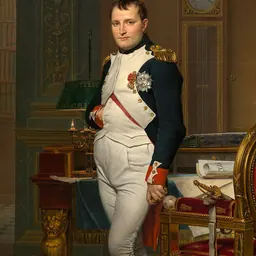
A reward of 500 thalers was offered for any news of Bathurst's whereabouts, and money was paid to members of the local police to expedite matters. This, however, caused the waters to be muddied as many false reports and offers of information were made by people seeking a share of the reward. In March, Phillida had the entire area of Perleberg searched at vast expense, which included the use of trained dogs, but her efforts were to no avail. She then travelled to Berlin and then Paris (under special safe conduct since Britain and France were then at war) to see Napoleon Bonaparte himself, hoping to obtain from him some account of her husband's fate. However, when she was received by Napoleon, he declared his ignorance of the affair and offered his assistance.
Contemporary press reports By January 1810, the English and French press had become aware of Bathurst's disappearance and had begun to discuss it. The Times published a piece that month which subsequently appeared in other English newspapers:
The French government was agitated by the accusation that they had kidnapped or murdered Bathurst and replied in their official journal, Le Moniteur Universel:
1852 discovery On 15 April 1852, during the demolition of a house near Perleberg, located three hundred paces from the White Swan, a skeleton was discovered under the threshold of the stable. The back of the skull showed a fracture as though from the blow of a heavy instrument. All of the upper teeth were perfect, but one of the lower molars showed signs of having been removed by a dentist. The owner of the house, a stonemason named Kiesewetter, had purchased the house in 1834 from Christian Mertens, who had been a serving man at the White Swan during the period when Bathurst disappeared. Bathurst's sister travelled to Perleberg but could not conclusively say whether or not the skull belonged to her brother.
Recent investigation A detailed investigation conducted by writer Mike Dash, first published in the Fortean Times in 1990, concluded that the allegedly mysterious details of Bathurst's disappearance had been greatly exaggerated over the years and that he was almost certainly murdered. Jack L. Chalker's Changewinds Trilogy, and early in the 7 November chapter of Anthony Boucher's 1942 "detective novel" Rocket to the Morgue. In Kim Newman's short story "The Gypsies in the Wood", it is mentioned that the Diogenes Club investigated his disappearance. In The Lurker at the Threshold (1945), a short horror novel by August Derleth and H. P. Lovecraft, the disappearance of Bathurst and others, is mentioned in passing, along with Fortean phenomena, near the end. In Harlan Ellison's 1992 short story "The Man Who Rowed Christopher Columbus Ashore", the protagonist Levendis casually destroys all remaining evidence explaining the disappearances of Bathurst, Amelia Earhart, Jimmy Hoffa, and Ambrose Bierce, and places their bones anonymously in a "display of early American artifacts." The story was selected for inclusion in the 1993 edition of The Best American Short Stories.
Don’t just read it —
keep it.
Full-length biographies made to live with: read them, listen on the way to work, watch them tonight.
- E-book
- Audio
- Video
Instant download · yours to keep · every purchase keeps this site free
Important facts
Family & relationships
People in Benjamin Bathurst's life
Named in this biography and alive at the same time

Related people
Same field, nearest in time



Contemporaries
People whose lives overlapped Benjamin Bathurst's



Frequently asked questions
Who was Benjamin Bathurst?
British diplomat (1784 – c.1809)
When was Benjamin Bathurst born?
Benjamin Bathurst was born on 18 March 1784 in London.
When did Benjamin Bathurst die?
Benjamin Bathurst died on 25 November 1809 in Perleberg.
What was Benjamin Bathurst's occupation?
Benjamin Bathurst was a diplomat and envoy (title).
What nationality was Benjamin Bathurst?
Benjamin Bathurst was British.
Sources & further reading
· Wikipedia: Benjamin Bathurst
· DBpedia: Benjamin Bathurst (diplomat)
Cite this page
APA: Biography.guide. (2026). Benjamin Bathurst. https://biography.guide/benjamin-bathurst/
MLA: "Benjamin Bathurst." Biography.guide, https://biography.guide/benjamin-bathurst/.
Chicago: "Benjamin Bathurst." Biography.guide. https://biography.guide/benjamin-bathurst/.
Data last updated: 2026-09-23 · Spot an error? Report a correction.
Portrait: Wikimedia Commons · author & licence
Page generated 2026-09-27 05:04 UTC