
About Bellikoth Raghunath Shenoy
Lived 1905 – 1978 (aged 72). Bellikoth Raghunath Shenoy was an Indian economist.
Bellikoth Ragunath Shenoy (1905–1978) was an Indian classical liberal economist. He was a highly influential advocate of classical liberalism in India and was President of the Indian Economic Association and a member of the Mont Pelerin Society.
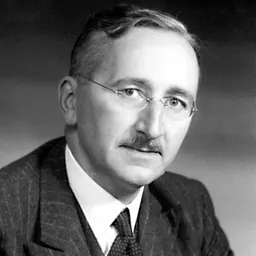
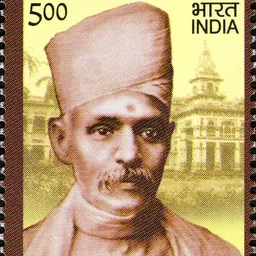
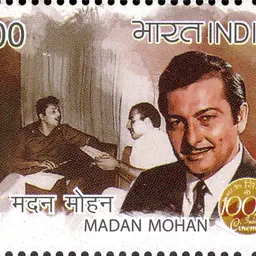
Biography Shenoy was born near Mangalore, Madras Presidency in British India. His forefathers were from Bellikoth village, near present day Ajanur in Kasargod district. He studied economics at Benares Hindu University and later at the London School of Economics where he was highly influenced by Friedrich Hayek. In particular, he heard Hayek deliver the lectures in January 1931 that became "Prices and Production," and that began the process of his adherence to the Austrian approach to economic theory and policy. In 1931 Shenoy became the first Indian economist to have a paper published in a leading scholarly journal. As a student, Shenoy participated in the Indian independence movement and was jailed at Nagpur where he was influenced by Madan Mohan Malaviya.
Shenoy taught at Wadia College (Pune), the University of Ceylon, Gujarat University and the London School of Economics. He also worked at the Ceylon Commission on Currency, the Ceylon Department of Commerce, the Reserve Bank of India, the International Monetary Fund and the World Bank. After leaving academia, Shenoy founded the Economic Research Centre in Delhi which advocated the ideas of classical liberalism.
Economics Shenoy's work on the "Sterling balances of Reserve Bank of India", written in 1946 was the first effort by any economist to accurately calculate the World War II expenses and actual value of foreign exchange reserve with Reserve Bank of India. He claimed 1724 Crore rupees with the Reserve Bank included foreign assets of commercial banks also. Shenoy suggested devaluation of Rupee for it to attain proper parity with Pound Sterling.
In 1955, Shenoy was appointed to the Panel of Economists who were to appraise Nehru's ambitious Second Five-Year Plan, the one that aimed at "heavy industrialisation." and may not be able to consume all the goods thus produced.
Shenoy opined that governmental interventions in markets of all sort, though termed seasonal would end up forcing repeated interventions and would lead to distortions in production, price and storage of commodities.
Shenoy was also critical of Nehru government's penchant for import-substitution,
Don’t just read it —
keep it.
Full-length biographies made to live with: read them, listen on the way to work, watch them tonight.
- E-book
- Audio
- Video
Instant download · yours to keep · every purchase keeps this site free
Important facts
People in Bellikoth Raghunath Shenoy's life
Named in this biography and alive at the same time
Related people
Same field, nearest in time



Contemporaries
People whose lives overlapped Bellikoth Raghunath Shenoy's


Frequently asked questions
Who was Bellikoth Raghunath Shenoy?
Indian economist
When was Bellikoth Raghunath Shenoy born?
Bellikoth Raghunath Shenoy was born on 3 June 1905.
When did Bellikoth Raghunath Shenoy die?
Bellikoth Raghunath Shenoy died on 8 February 1978.
What was Bellikoth Raghunath Shenoy's occupation?
Bellikoth Raghunath Shenoy was an economist.
What nationality was Bellikoth Raghunath Shenoy?
Bellikoth Raghunath Shenoy was Indian.
Sources & further reading
· Wikipedia: Bellikoth Raghunath Shenoy
· DBpedia: Bellikoth Raghunath Shenoy
Cite this page
APA: Biography.guide. (2026). Bellikoth Raghunath Shenoy. https://biography.guide/bellikoth-raghunath-shenoy/
MLA: "Bellikoth Raghunath Shenoy." Biography.guide, https://biography.guide/bellikoth-raghunath-shenoy/.
Chicago: "Bellikoth Raghunath Shenoy." Biography.guide. https://biography.guide/bellikoth-raghunath-shenoy/.
Data last updated: 2026-09-20 · Spot an error? Report a correction.
Page generated 2026-09-27 05:19 UTC